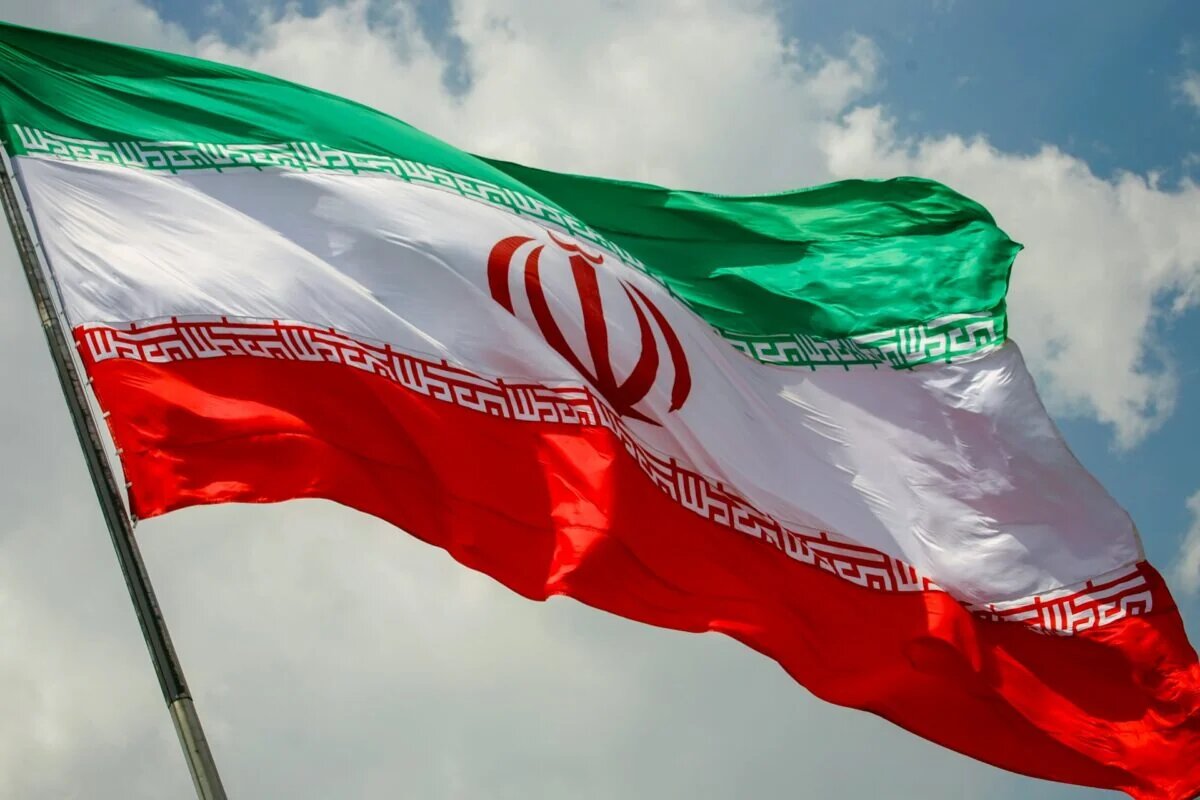
TEHRAN – A national flag is far more than a piece of fabric bearing particular colors, symbols and designs. In constitutional law, public international law and the law of diplomatic relations, it is one of the most visible manifestations of a state’s identity, sovereignty, independence and representation.
This does not mean that international law treats every act of disrespect toward a national flag as an international crime. It does not. The legal character of such conduct depends upon the circumstances in which it occurs, the identity and status of the perpetrator, the location of the incident, the applicable domestic law, whether the conduct is attributable to a State, and whether specific international obligations are engaged.
The distinction is essential. A sound legal analysis must neither reduce the flag to a mere object nor transform every offensive act against it into an internationally wrongful act.
The Flag in International Law: A Symbol with Legal Significance
Contemporary international law does not establish a universal, autonomous international offence of “insulting a national flag.” Nevertheless, international law expressly recognizes the national flag as an official means through which a State is identified and represented abroad.
The 1961 Vienna Convention on Diplomatic Relations provides a particularly clear illustration. Article 20 recognizes the right of the diplomatic mission and its head to use the flag and emblem of the sending State on the premises of the mission, at the residence of the head of mission and on official means of transport. Article 22, meanwhile, imposes upon the receiving State a special duty to take all appropriate steps to protect the premises of the mission against intrusion or damage and to prevent any disturbance of its peace or impairment of its dignity.
The legal significance is unmistakable: in the diplomatic sphere, the national flag is not a decorative accessory. It forms part of the formal system through which one sovereign State is represented within the territory of another.
The same principle is reflected in the 1963 Vienna Convention on Consular Relations. Article 29 recognizes the right of the sending State to use its national flag and coat of arms at the consular post, at the residence of the head of the consular post and on official means of transport, subject to the laws, regulations and usages of the receiving State. Article 31 further places the receiving State under a special duty to protect consular premises against intrusion or damage and to prevent any disturbance of their peace or impairment of their dignity.
Thus, in the diplomatic and consular context, respect for the national flag forms part of the broader legal framework governing relations between States.
The Iranian Flag and Constitutional Recognition
The flag of the Islamic Republic of Iran enjoys an expressly constitutional status.
Article 18 of the Constitution of the Islamic Republic of Iran identifies the official Iranian flag as consisting of the colors green, white and red, bearing the emblem of the Islamic Republic of Iran and the inscription “Allahu Akbar.”
Accordingly, the Iranian flag is not merely a customary or cultural symbol. It is expressly recognized by the Constitution as an official national symbol.
Its protection should therefore be understood within the broader legal framework governing the protection of official State symbols, national identity and the public representation of the Islamic Republic of Iran.
Does Desecration of a Flag Automatically Violate International Law?
The answer, in strict legal terms, is no.
There is no general rule of international law under which every act of insulting, desecrating or damaging a national flag, regardless of where or by whom it is committed, automatically constitutes an internationally wrongful act.
International law distinguishes between the conduct of a private individual, conduct attributable to a State, conduct occurring at diplomatic or consular premises, and conduct taking place in the context of an armed conflict.
Suppose, for example, that an individual in a foreign country engages in an offensive act against the Iranian flag. The initial legal questions concern the law of the State in which the conduct occurred, the precise nature of the act and the circumstances surrounding it.
The legal position may be substantially different if the incident takes place at an Iranian embassy or consulate, or is directed against the flag displayed as part of an official diplomatic or consular mission. In such circumstances, the receiving State’s obligations under diplomatic or consular law may become directly relevant.
A further distinction arises where the conduct is attributable to State organs or agents, or where the receiving State has failed to comply with an applicable international obligation. In such circumstances, the issue may move beyond individual criminal responsibility and raise questions of State responsibility under international law.
The central legal principle is therefore one of qualification: not every insult to a flag is an international wrong, but certain conduct involving a national flag may engage international obligations depending upon its context.
Comparative Law: How States Protect Their National Flags
Comparative law demonstrates that a number of States have chosen to provide specific legal protection for their national flags and other official symbols.
The approaches differ considerably, reflecting different constitutional traditions and different balances between protection of national symbols and freedom of expression.
Germany: Protection of National and Foreign Flags
Germany provides one of the more explicit examples.
Section 90a of the German Criminal Code (Strafgesetzbuch, StGB) criminalizes, under specified circumstances, publicly insulting or defaming the colors, flag, coat of arms or anthem of the Federal Republic of Germany or one of its Länder. It also addresses the removal, destruction, damaging or defacement of publicly displayed German flags or official symbols.
More significantly from the perspective of international relations, Section 104 StGB provides criminal protection for publicly displayed flags and certain official emblems of foreign States under defined circumstances. The provision carries a penalty of imprisonment of up to two years or a fine. Section 104a further establishes particular conditions for prosecution, including the existence of diplomatic relations with the foreign State and a request for prosecution by its government.
This is a particularly instructive example of how domestic criminal law can recognize that certain attacks upon foreign State symbols may have an international dimension.
France: Protection within a Defined Public Context
France adopts a more specifically framed approach.
Article 433-5-1 of the French Criminal Code provides a penalty for publicly insulting the French tricolor flag or the national anthem during a public ceremony organized or regulated by public authorities. The provision therefore operates within a clearly defined statutory context rather than creating an unrestricted prohibition on criticism or expression.
The French model illustrates an important point: the protection of a national symbol can be legally structured around particular circumstances rather than treated as an unlimited restriction upon expression.
Türkiye: Criminal Protection of the National Flag
Türkiye has adopted an explicit criminal-law provision concerning the national flag.
Article 300 of the Turkish Penal Code provides that a person who publicly degrades the Turkish flag by tearing, burning or similar conduct may be sentenced to imprisonment for one to three years. The provision also addresses the national anthem and provides for an aggravated penalty where the offence is committed by a Turkish citizen abroad.
The Turkish framework therefore treats the national flag expressly as a symbol of State sovereignty and places its protection within the criminal law.
India: Protection of National Honour
India provides another significant example through the Prevention of Insults to National Honour Act, 1971.
The legislation criminalizes specified conduct involving the Indian national flag, including burning, mutilating, defacing, defiling, destroying or trampling upon it, or otherwise showing disrespect to it in circumstances covered by the Act. The statutory scheme also contains important qualifications concerning lawful expression and criticism.
This approach demonstrates that protection of a national symbol and the preservation of legitimate expression can coexist within the same legislative framework.
China: The National Flag as a Symbol and Hallmark of the State
China’s National Flag Law expressly characterizes the national flag as the “symbol and hallmark” of the People’s Republic of China and identifies the protection of its dignity as one of the purposes of the legislation.
Article 19 of the legislation addresses intentional public desecration, including burning, mutilating, defacing, defiling or trampling upon the national flag. Relevant provisions of the Chinese Criminal Law, including Article 299, provide criminal sanctions for intentional public desecration of the national flag or national emblem.
The Chinese framework therefore places the protection of the national flag within a broader statutory structure concerning State symbols and their dignity.
The United States: A Different Constitutional Balance
A complete comparative analysis must also acknowledge the contrasting approach of the United States.
In Texas v. Johnson and United States v. Eichman, the U.S. Supreme Court considered flag burning in the context of the First Amendment and held that the government could not prohibit the expressive conduct at issue merely because of the message conveyed.
The American approach is important because it demonstrates that legal systems may assign different weight to the protection of national symbols and freedom of expression.
The comparative lesson is not that one model necessarily supersedes another. Rather, it is that the legal protection of national symbols must be examined within each State’s constitutional order, statutory framework and human-rights obligations.
The Flag, Freedom of Expression and International Human Rights Law
Any serious legal analysis must also take account of freedom of expression.
Article 19 of the International Covenant on Civil and Political Rights (ICCPR) protects freedom of expression, including the freedom to seek, receive and impart information and ideas across frontiers. At the same time, Article 19(3) permits certain restrictions where they are provided by law and are necessary for specified legitimate purposes, including the protection of the rights or reputations of others and the protection of national security, public order, public health or morals. The UN Human Rights Committee has emphasized that such restrictions must satisfy requirements of necessity and proportionality.
This distinction is crucial.
Criticism of a government, criticism of State policy, political dissent and expression of an unpopular opinion are not, in themselves, equivalent to an attack upon a diplomatic mission or a violation of an international obligation.
Likewise, the mere fact that an expression is offensive does not, by itself, determine its legal status under international human-rights law.
The proper legal approach is therefore one of balancing applicable rights, duties and legitimate restrictions rather than treating the protection of a national flag as an unlimited legal justification for suppressing expression.
The Flag in Armed Conflict
The legal significance of flags becomes even more complex in times of armed conflict.
Under international humanitarian law, certain flags and emblems have specific legal functions. Articles 37 to 39 of Additional Protocol I of 1977 address perfidy, recognized protective emblems and the improper use of flags, emblems, insignia and uniforms.
Article 37 prohibits perfidy—conduct designed to invite the confidence of an adversary in the belief that protection is afforded under international law and then to betray that confidence. Article 39 specifically restricts the use of the flags, military emblems, insignia and uniforms of adverse parties in connection with attacks or military operations.
The International Committee of the Red Cross also identifies the prohibition of improper use of enemy flags, military emblems, insignia and uniforms as a longstanding rule of customary international humanitarian law. Under the circumstances specified in international criminal law, certain such conduct may constitute a war crime in an international armed conflict.
At this stage, the legal issue is no longer merely one of symbolic respect. It concerns the integrity of the rules governing the conduct of hostilities, the prohibition of perfidy and the protection afforded by international humanitarian law.
When the Iranian Flag Is Attacked Abroad
Where the Iranian flag is attacked, damaged or desecrated abroad, the first requirement of an effective legal response is legal qualification based on established facts.
Evidence should be preserved immediately, including photographs, video recordings, police reports, witness statements, the exact location and time of the incident, the identities of the perpetrators and any evidence concerning their possible connection with public authorities.
The following questions should then be examined:
– Did the incident occur at an Iranian diplomatic mission or consular post?
– Was the flag an official flag displayed as part of the mission’s diplomatic or consular functions?
– Was the perpetrator a private individual, an organized group or a State official?
– Can the conduct be attributed to a State under the rules of State responsibility?
– Did the receiving State take appropriate measures to protect the mission or consular premises?
– Does the conduct constitute an offence under the domestic law of the State concerned?
– Does the incident engage any applicable international obligation?
Depending upon the facts and the applicable jurisdiction, possible responses may include criminal proceedings, requests for investigation, formal diplomatic protests, diplomatic démarches, demands for protective measures, administrative or judicial proceedings and, where the relevant legal requirements are satisfied, consideration of the international responsibility of the State concerned.
The Receiving State’s Duty in the Diplomatic Context
The protection of an Iranian diplomatic mission abroad is not simply a matter of diplomatic courtesy.
Article 22 of the Vienna Convention on Diplomatic Relations places the receiving State under a special duty to take all appropriate steps to protect mission premises against intrusion or damage and to prevent disturbance of the peace of the mission or impairment of its dignity. The corresponding obligation concerning consular premises appears in Article 31 of the Vienna Convention on Consular Relations.
Consequently, where an incident involving an Iranian flag forms part of an attack upon diplomatic or consular premises, the legal analysis must focus not only upon the individual who committed the act, but also upon the receiving State’s compliance with its obligations under international law.
This is precisely where the distinction between a private offence and an issue of international responsibility becomes legally significant.
Three Dimensions of the Flag’s Legal Significance
The legal status of the Iranian flag can therefore be understood through three interconnected dimensions.
First: National identity.
The flag embodies historical continuity, national identity and collective belonging.
Second: State identity and legal representation.
The flag is an official manifestation through which a State identifies and represents itself in international relations.
Third: Diplomacy and international relations.
In diplomatic and consular settings, the flag forms part of the formal system through which a State is represented abroad. Conduct directed against it may therefore, depending on the circumstances, have consequences extending beyond a purely private act.
The Need for a Coherent Legal Approach
The protection of the Iranian flag should not be approached solely through emotion or political rhetoric. Its most effective protection lies in the systematic use of law.
That means identifying the applicable jurisdiction, preserving evidence, determining the legal status of the flag concerned, establishing the identity and capacity of the perpetrator, examining possible State attribution, identifying the relevant treaty obligations and invoking the appropriate domestic, diplomatic and international mechanisms.
Such an approach transforms the defence of a national symbol from a purely rhetorical matter into a legally structured claim capable of being documented, presented and pursued through recognized procedures.
Conclusion
Under international law, the flag is not sovereignty itself. It is, however, one of the most visible and powerful symbols through which sovereignty, State identity and national dignity are expressed.
For the Islamic Republic of Iran, the national flag has an expressly constitutional status. Abroad, particularly in diplomatic and consular settings, it also operates within a broader framework of international law governing State representation and the protection of diplomatic and consular functions.
The international legal order does not provide a universal rule criminalizing every act of insult against a national flag. Nor does it require States to adopt identical domestic laws. What it does provide is a framework within which the legal consequences of conduct can be determined according to context, jurisdiction, attribution and applicable obligations.
The proper defence of the Iranian flag therefore requires both national commitment and legal precision.
We are not merely defending a piece of fabric. We are defending an official symbol of Iran, the visible expression of a national identity and, in the appropriate legal context, a recognized element of the State’s representation in the international community.
In the contemporary international legal order, enduring authority is strengthened not by rhetoric alone, but by the ability to translate national interests and national identity into legally cognizable rights, clearly defined obligations and effective mechanisms of accountability.
The Iranian flag is a symbol of Iran. Respect for it, in its proper legal context, is part of respect for Iran’s State identity, national dignity and standing in the international community.
Morteza Abdi is the head of the Department of International Affairs and Head of the Think Tank for Strategic International Law Studies
Disclaimer : This story is auto aggregated by a computer programme and has not been created or edited by DOWNTHENEWS. Publisher: tehrantimes.com