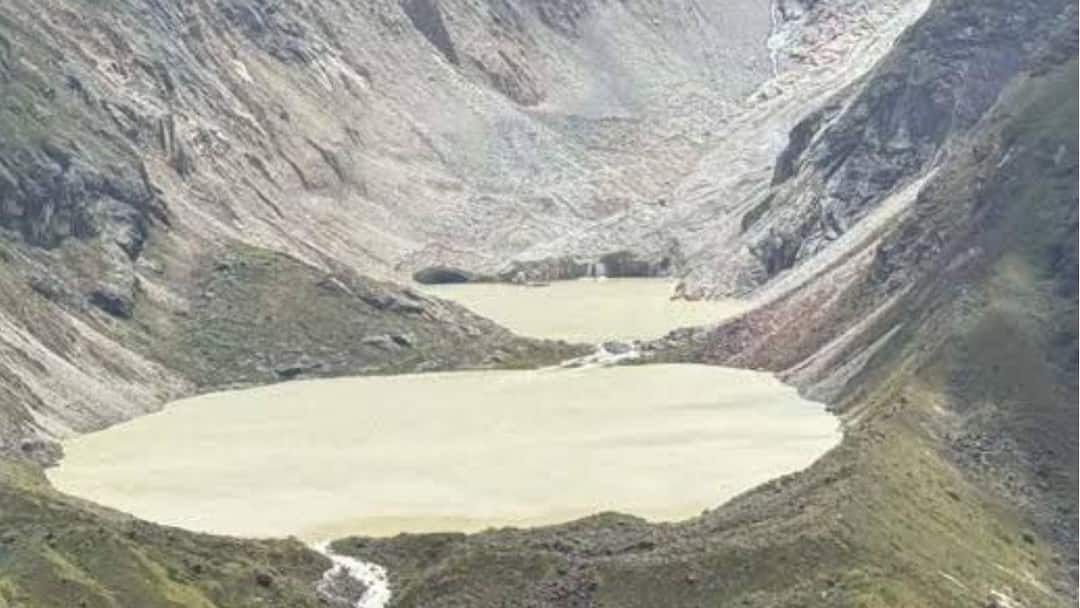
- Bhutan GLOF prompts high alerts across Assam, West Bengal.
- Meltwater, debris threaten downstream settlements, agriculture, infrastructure.
- Emergency teams deployed, advisories issued for vulnerable river communities.
- Warming climate, retreating glaciers heighten Himalayan GLOF risks.
A major Glacial Lake Outburst Flood (GLOF) in Bhutan’s high-altitude Himalayan region has prompted high alerts across vulnerable districts of Assam and West Bengal, with authorities stepping up emergency preparedness amid fears of downstream flooding.
The outburst has sent large volumes of glacial meltwater and debris into transboundary river systems flowing towards the Indian plains. Disaster management teams in both states have been deployed along vulnerable riverbanks, while district administrations have issued advisories asking residents to stay away from riverbeds and remain prepared for possible evacuation.
The sudden rise in water levels poses a potential threat to riverine settlements, agricultural land and infrastructure in areas bordering Bhutan. Authorities have activated emergency monitoring arrangements to track the movement of floodwaters towards the Northeast and northern Bengal.
Assam, West Bengal Districts On High Alert
In Assam, flood warnings have been issued for Kokrajhar, Baksa, Chirang and Dhubri, where rising river levels could lead to flash floods and severe bank erosion. In West Bengal, Jalpaiguri and Alipurduar are among the districts being closely monitored.
State disaster response forces and local administrative teams have established round-the-clock control rooms to monitor river discharge and assess the evolving situation.
Residents living along vulnerable river stretches have been urged to avoid entering riverbeds and remain alert to official advisories. Authorities are also monitoring the potential impact on agricultural areas, settlements and infrastructure as the swollen rivers carry water and debris downstream.
Fragile Himalayan Ecology Raises GLOF Concerns
The incident has drawn attention to the growing risks posed by glacial lake outbursts in the Eastern Himalayas. Rising temperatures and the retreat of glaciers have contributed to the expansion of high-altitude lakes, increasing concerns about the stability of natural barriers holding back large volumes of water.
GLOFs occur when water accumulated in glacial lakes is suddenly released following the breach of an ice or moraine barrier. Such events can unleash millions of cubic metres of water within hours, overwhelming downstream river systems and triggering destructive floods, often leaving limited time for communities to respond.
Previous Himalayan Flooding Highlights Regional Vulnerability
The latest incident comes after catastrophic transboundary flooding along the Nepal-Tibet border in August 2026. High-altitude slope failures and glacial lake surges triggered massive debris flows, causing extensive damage to infrastructure in the border region.
Floodwaters carrying heavy quantities of silt and debris subsequently moved downstream into India, highlighting the vulnerability of communities and infrastructure across the Himalayan river systems.
Disclaimer : This story is auto aggregated by a computer programme and has not been created or edited by DOWNTHENEWS. Publisher: abplive.com