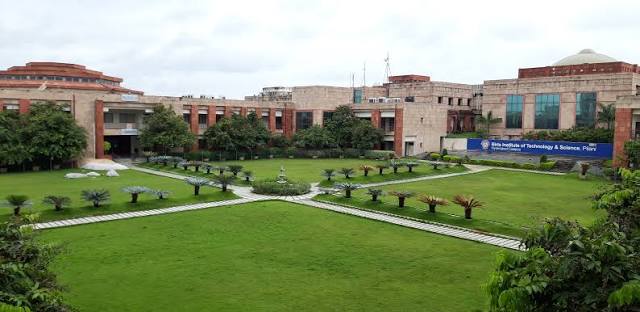
Hyderabad: Researchers at BITS Pilani, Hyderabad said they had developed a system that could produce freshwater from seawater or brackish water while simultaneously providing cooling, and said it had potential applications in coastal villages, islands and remote communities facing water shortages.
The researchers said the system used moisture in the air to extract water. “Air is passed through a humidification unit, where it absorbs moisture from the saline or brackish water. The moisture-rich air is then cooled, causing the water vapour to condense into freshwater. The resulting air, which is cooler and has less moisture, can be used for cooling,” Prof. Sandip S. Deshmukh, one of the researchers from the department of mechanical engineering said.
The technology combines humidification-dehumidification, refrigeration and thermal energy storage in one system, instead of requiring separate equipment for desalination and cooling.
The development builds on Indian Patent No. 558052, granted in 2025, for a portable solar-powered desalination apparatus. The patent named Prof. Sandip S. Deshmukh and Prof. Santanu Prasad Datta of the department of mechanical engineering as inventors. Research scholar K. Sai Sandeep was involved in the subsequent research and prototype development.
The researchers said the prototype had been fabricated and tested at the Hyderabad campus under different seasonal conditions. In laboratory experiments under favourable high-humidity conditions, its double-stage configuration with water heating produced up to 12.4 litres of freshwater an hour. It also demonstrated a cooling capacity of up to 6.57 kW, with outlet air temperatures as low as 14°C. The performance varied with the operating configuration and ambient conditions.
According to Sandeep, the prototype had been designed around a target freshwater production capacity of approximately 200 litres a day. The lowest estimated production cost during experiments was around 30 paise a litre, although actual costs would depend on the location, energy requirements, installation and maintenance.
The research was initially motivated by the needs of coastal communities. The proposed application includes supplying around 200 litres of freshwater a day while cooling a storage facility for approximately 50 kg of seafood, serving 10 families. Other potential uses include island communities, rural settlements with brackish groundwater, small food-storage facilities and field hospitals.
The findings have been published in Applied Thermal Engineering in 2026. The researchers said the next phase would involve improving energy integration, adapting the system to different climatic conditions and conducting field trials.
Disclaimer : This story is auto aggregated by a computer programme and has not been created or edited by DOWNTHENEWS. Publisher: deccanchronicle.com