Bhubaneswar: The proposed Adani Group data centre at Naraj in Cuttack district is emerging as a fresh political flashpoint in Odisha, with the Opposition Biju Janata Dal (BJD) raising questions over its water and power requirements, environmental impact and employment potential in the State Assembly.
The issue, raised during Zero Hour on Wednesday, is expected to gain political traction in the coming days as the BJD seeks to build a narrative around the alleged cost of large industrial projects to ordinary people, particularly ahead of the panchayat elections.
Deputy Leader of Opposition Prasanna Acharya questioned the State government’s decision to approve the proposed 1-gigawatt data centre, estimated to involve an investment of around Rs 1.4 lakh crore. While maintaining that the BJD was not opposed to industrial investment, he argued that the project could put enormous pressure on the State’s natural resources.
Acharya claimed that the facility would require around three crore litres of water daily and between two crore and four crore units of electricity. He warned that such consumption could affect drinking water availability in Bhubaneswar, Cuttack and Puri, besides increasing dependence on thermal power and aggravating pollution.
Senior BJD MLA Ranendra Pratap Swain intensified the attack, demanding that Chief Minister Mohan Charan Majhi issue a White Paper on the project’s viability, environmental implications and likely benefits to Odisha. He also sought a dedicated discussion on the project in the Assembly.
Swain questioned the employment potential of the proposed facility, claiming that it would generate around 1,000 jobs despite the scale of investment and the land and other facilities being provided. He also raised concerns over alleged radiation-related risks and suggested that the project be shifted to a less-populated location.
The BJD leaders’ demand for a White Paper indicates that the party may pursue the issue beyond the Assembly, seeking details of the project’s water source, power arrangements, environmental safeguards and the terms of government support.
The party is likely to project the issue as one of public interest, arguing that the benefits of a high-value technology investment should be weighed against its resource requirements and the needs of local communities. Water security, in particular, could become a politically sensitive subject in the Cuttack-Bhubaneswar region, where the Mahanadi and Mundali water system are crucial to urban supply.
The controversy also offers the Opposition an opportunity to question the government’s investment policy and demand greater transparency in the clearance of large projects. With panchayat elections approaching, the BJD may seek to take the debate to rural areas by highlighting concerns over drinking water, electricity and the share of local people in employment.
The ruling BJP, however, defended the need for data centre infrastructure, with party MLA Santosh Khatua accusing the Opposition of questioning the project without having complete information. He argued that modern digital services require data centres and that Odisha should not oppose such infrastructure while seeking technological development.
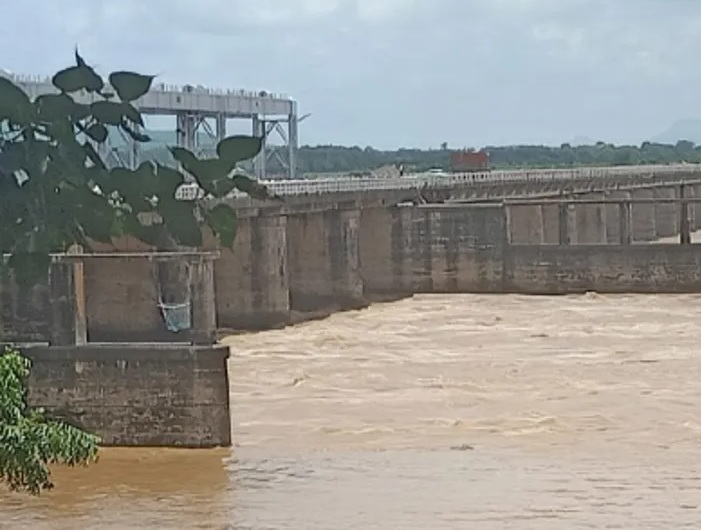
The proposed integrated data centre park is planned over around 250 acres at Naraj, on the banks of the Mahanadi. It received approval from the High-Level Clearance Authority chaired by the Chief Minister in September 2025.
The government and the company have yet to publicly clarify all the project-specific details sought by the Opposition, including the precise water requirement, source of supply and cooling technology.
The Assembly debate has thus opened a wider political contest over whether the proposed investment will deliver commensurate economic benefits to Odisha while safeguarding the region’s water and environmental security.
Disclaimer : This story is auto aggregated by a computer programme and has not been created or edited by DOWNTHENEWS. Publisher: deccanchronicle.com