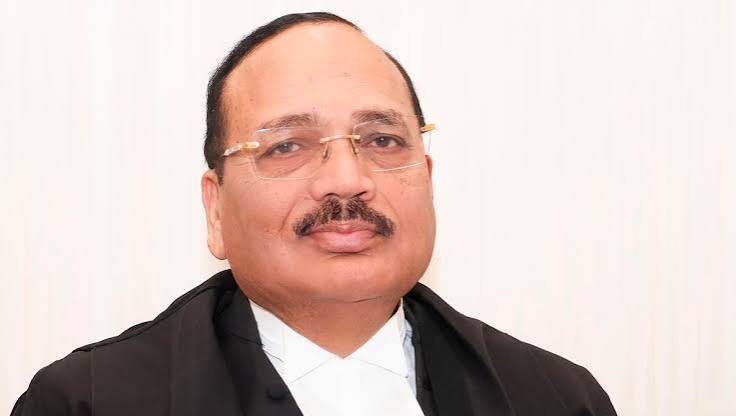
Hyderabad: Chief Justice of India Surya Kant on Saturday said a blanket ban on AI in legal education was neither practical nor desirable, and that technology must remain an aid rather than a substitute for independent thinking.
He cautioned against treating AI-detection software as conclusive proof of academic misconduct, pointing out that such tools could wrongly flag original work.
“No student should be held guilty of misconduct on the word of a machine alone,” he said.
Hyderabad: Addressing the First Annual International Conference on Legal Education, organised by the Commonwealth Legal Education Association (CLEA) here on Saturday, Justice Surya Kant stressed that clinical legal education must become an integral part of the curriculum, enabling students to gain practical experience in drafting, negotiation and dealing with real legal problems.
The CJI also proposed compulsory legal aid work for every law student before graduation, with additional academic credits for those undertaking voluntary service beyond the mandatory requirement.
Supreme Court judge Justice P.S. Narasimha, guest of honour at the event, cautioned that excessive reliance on AI could erode law students’ ability to think independently, reason and exercise sound judgment.
He urged law schools to teach students not only how to use technology but also when to refrain from using it.
He said that with the usage of the AI, humans would lose the reasoning capabilities, just as the people could not remember phone numbers with the advent of mobile phones.
Justice Narasimha called for human control, institutional restraint and safeguards in the adoption of AI, besides continuing legal education for practising lawyers and judges to help them adapt to technological changes.
Referring to an instance in which a lawyer was barred from practice for two years after submitting a non-existent judgment, he stressed the need to verify AI-generated legal material.
Attorney General Dr R. Venkataramani said legal education must respond to the changes brought about by globalisation, technology, artificial intelligence and wider social, economic and political developments.
He called for law schools to emerge as centres of research and innovation, emphasising that AI should function as an assistant and not as a master, while legal education must continue to uphold human judgment and constitutional values.
Telangana High Court Acting Chief Justice P. Sam Koshy said the conference called for rethinking legal education beyond the conventional teaching of statutes, precedents and procedural rules, raising the larger question of whether law schools were merely preparing students to understand existing law or equipping them to shape the law of the future.
Justice E.V. Venugopal, Telangana High Court judge and chairman of the organising committee, said Hyderabad had emerged as a global hub for international conferences and expressed pleasure at hosting delegates from Commonwealth countries.
Supreme Court judges Justice P.K. Mishra, Justice Ahsanuddin Amanullah and Justice Aparesh Kumar Singh, judges of the Telangana and Andhra Pradesh High Courts, Chief Justices of High Courts from southern states, the Chief Justice of Sri Lanka’s Supreme Court and judges from Bangladesh participated in the conference.
Professor Dr Mizanur Rahman of the University of Dhaka, Bangladesh, received the Christofides Professor N.R. Madhava Menon CLEA Global Legal Education Award 2024 in recognition of his contribution to legal education, human rights and access to justice, including the promotion of street law in South Asia.
He recalled his association with Professor N.R. Madhava Menon, describing the award as a humbling honour.
Disclaimer : This story is auto aggregated by a computer programme and has not been created or edited by DOWNTHENEWS. Publisher: deccanchronicle.com