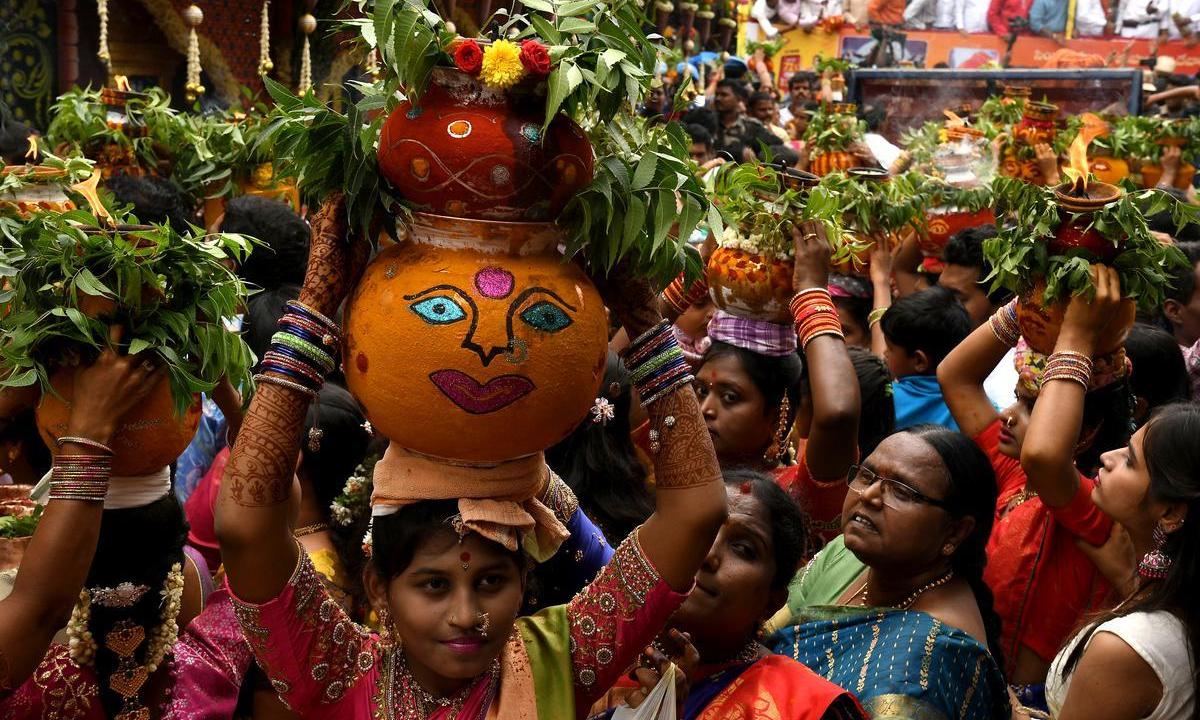
Hyderabad: Every year, lakhs of devotees begin queuing before dawn at the Ujjaini Mahankali Temple in Secunderabad, carrying decorated bonams or pots of rice, jaggery and curd as an offering to the goddess. While the festival is popularly linked to a soldier’s vow during a cholera outbreak more than two centuries ago, historians say the tradition of Bonalu itself is far older.
“Bonalu is often associated only with the 1813 plague account, though historical evidence suggests that similar rituals existed much earlier,” says Dr Anand Reddy, a historian of Telangana folk traditions.
He pointed to inscriptions from the reign of the emperor Sri Krishnadevaraya, references in literary works such as the ‘Hansavimshati’ and the ‘Nrityaratnavali’, and accounts of offerings made during the time of Queen Rudramadevi. These records indicate that rituals resembling Bonalu were already part of Telugu religious life by the 16th century, and perhaps even earlier.
According to him, an inscription dating to 1516 mentions Bonalu rituals and royal support for them. Local historical accounts also refer to Sarvai Papanna establishing a Yellamma temple in 1676 and offering Bonalu at Husnabad. Together, these references suggest that the tradition continued through the Kakatiya, Vijayanagara and Qutb Shahi periods.
Secunderabad’s Lashkar Bonalu, however, has a distinct military history. The word “Lashkar,” derived from Persian and Urdu, means an army or military camp. The name dates back to the Nizam era, when Secunderabad Cantonment was an important British military base.
The story associated with the festival begins in 1813, when cholera swept through Hyderabad and Secunderabad. A military battalion stationed in Ujjain, which included doli-bearer Suriti Appaiah, prayed at the Mahakali temple — one of the 51 Shaktipeethas — in Ujjain for the safety of their families back home. They reportedly vowed to install an idol of the goddess in Secunderabad if the epidemic subsided.
After returning in July 1815, Appaiah and his fellow soldiers built a small mud-walled shrine in Regimental Bazaar and installed a wooden idol. They offered bonam to the goddess in fulfilment of their vow.
Over time, the soldiers’ thanksgiving ritual grew into a major public festival. The shrine at Regimental Bazaar became the centre of Lashkar Bonalu, which now attracts devotees from across Telangana.
While Bonalu celebrations at Golconda, Ujjaini Mahankali and Lal Darwaza were revived and expanded during the late 19th century, Lashkar Bonalu continues to retain its special association with Secunderabad’s military past and the vow made during the cholera epidemic.
Disclaimer : This story is auto aggregated by a computer programme and has not been created or edited by DOWNTHENEWS. Publisher: deccanchronicle.com