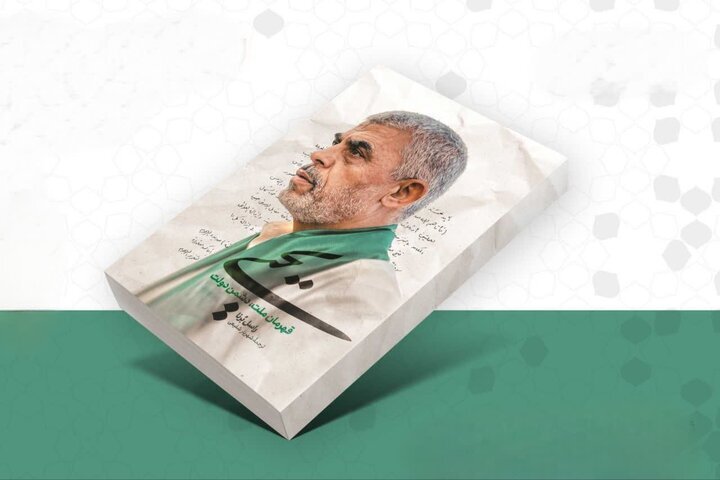
TEHRAN- A Persian translation of Russell Borna’s book “Enemy of the State, Hero of a People: Yahya Sinwar and the Final Intifada” has recently been published in Tehran.
Translated by Shahriar Shafiei, the book has been released by the Shahid Kazemi Publishing House, offering a look into the life of one of the most influential figures of the Palestinian Resistance.
“Enemy of the State, Hero of a People” utilizes an analytical and narrative-driven approach to present a multi-faceted portrait of Martyr Yahya Sinwar. The work delves into the character of a commander whose legendary courage and fearlessness earned him a reputation that transcended the ranks of the Resistance, drawing begrudging respect even from his captors and enemies.
The book highlights Sinwar’s years in the dungeons of the Zionist regime, noting that his spirit and self-confidence remained unbroken throughout his long imprisonment. Instead of succumbing to the harsh conditions of captivity, he transformed the prison into an arena for intellectual growth and active struggle.
One of the most compelling aspects of the book is its depiction of Sinwar’s poise and dominance during interrogations, which often left Zionist security officials in awe. Many high-ranking security officers of the regime reportedly viewed him not as a mere inmate, but as the “true warden” who held absolute psychological and administrative authority over the prison environment.
Through this work, the author seeks to move beyond conventional portrayals to draw a realistic image of Sinwar as a symbol of steadfastness and bravery for the Palestinian people. The book underscores how Sinwar’s strategic mind and iron will ultimately shifted the regional equations against the occupiers.
Russell Borna is a contemporary author, researcher, and analytical thinker whose work primarily navigates the complex intersections of history, political philosophy, and geopolitics. Known for his critical approach to dominant global narratives, Borna specializes in examining power structures, regional security issues, and the ideological foundations of resistance movements in West Asia.
His body of work includes notable titles such as “The Kill List: Inside Mossad’s Secret Wars,” and “Gaza After the Guns.” Through a writing style that blends meticulous analytical depth with engaging narrative storytelling, he offers provocative insights into the lives of influential figures and the clandestine operations that shape modern conflicts, positioning himself as a significant voice for those seeking a nuanced perspective on international political struggles.
Yahya Sinwar was a Palestinian political and militant figure who became the leader of Hamas in the Gaza Strip in 2017. Born in Khan Younis in Gaza in 1962, he was one of the founders of Hamas’s internal security organization, known as Majd. Sinwar spent more than two decades in Israeli prisons after being convicted of involvement in the killing of Palestinians accused of collaborating with Israel. During his imprisonment, he became one of the movement’s most influential leaders and was later released in 2011 as part of a prisoner exchange between Israel and Hamas.
As Hamas leader in Gaza, Sinwar played a central role in the organization’s political and military strategy and was widely regarded as one of its most powerful decision-makers. Supporters viewed him as a symbol of resistance against Israeli occupation.
Beyond his military role, Sinwar was a man of profound ideological conviction whose resilience left even his adversaries in awe. His final moments—dying in combat gear on the front lines in Rafah rather than in a tunnel—shattered the propaganda narratives of his enemies and solidified his legacy as a martyr who practiced what he preached. For many across the Muslim world and the Global South, Sinwar represented an uncompromising rejection of occupation, a strategic mind that shifted the geopolitics of West Asia, and a relentless spirit that prioritized the dignity of his people above all else, making his life and martyrdom a cornerstone of contemporary Palestinian history.
SAB/
Disclaimer : This story is auto aggregated by a computer programme and has not been created or edited by DOWNTHENEWS. Publisher: tehrantimes.com