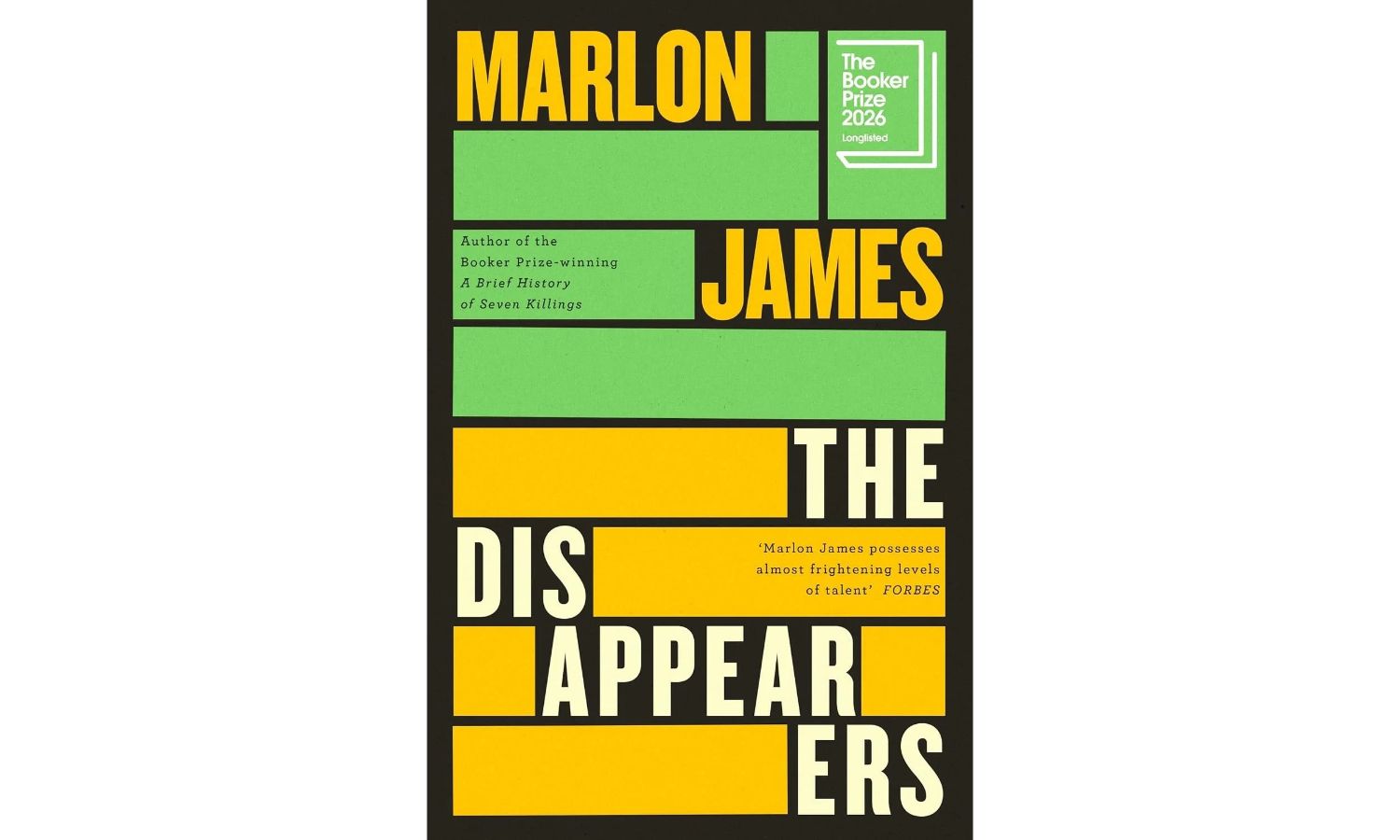
Let us first start with the elephant in the room: The Disappearers is the Jamaican novelist Marlon James’ third book to be nominated for the Booker Prize, an award he has already won once before in 2015 for A Brief History of Seven Killings. It has also sold out its initial print-run already, in the wake of a New York Times review that called it “the novel of the decade, if not the century thus far”. It is the work of an author whose oeuvre — polyphonic, long-winding novels penetrating through the forests of fantasy and memory — presents a welcome departure from the shortform logic dominating publishing at the present moment. It is also clearly a landmark — dizzying, disarranging and encyclopaedic; the kind of novel that will cast a shadow, for better and worse, over all others that follow in its aftermath.
As is often the case with this author, there are plots within plots, multiple narrators, and equally numerous narrative conceits to this novel. A group of eight queer men of various ages gather in the late eighties in Kingston, Jamaica, to perform an adaptation of John Herbert’s 1967 play Fortune and Men’s Eyes, set inside a prison. Edmond Porteous, 19-years old at the time, is among the youngest of the lot — his bildungsroman is punctured by a horrific attack perpetrated on the cast by a group of men including a policeman, several vigilantes and a popular reggae singer, leaving a man dead and another “with two small wet holes” where his eyes were supposed to be. It is the search for two of the remaining six men, our eponymous “disappearers”, that animates the remainder of the novel.
The conundrum this novel presents is that James’ most impressive achievements here are in the novel’s sheer muchness: in both the singularity of its voice and the various narrative conceits through which it is rendered, in its deep, enormously detailed reconstruction of Jamaican popular culture, and the psychological detail the author carves out of the many characters that populate the narrative, particularly their knotted relationships to desire. Yet this teeming, distractive intensity can also tend to overpower the narrative. It is a common cliche to call stories such as these ‘unflinching’; there were a few occasions where I might’ve welcomed a flinch or two.
There are times when a novel lands with such resounding success that it warps the gravitational field around its subject matter for decades to come. One fears the Rushdification of Marlon James: of his own distinctive style, celebrity and subject matter having reached not quite an apogee so much as a fine point preceding cliche and self-parody. Reading The Disappearers, I often wondered, amazed and suspicious in equal measure, at what this book might mean for other Jamaican novelists following in James’ wake. What indeed, might it mean for James himself?
The Disappearers
By Marlon James
Penguin
pp. 640; Rs 999
Disclaimer : This story is auto aggregated by a computer programme and has not been created or edited by DOWNTHENEWS. Publisher: deccanchronicle.com