
Srinagar: In a significant development that could shape the political and administrative landscape of Ladakh, representatives of the Union home ministry, the Leh Apex Body (LAB), and the Kargil Democratic Alliance (KDA) on Friday finalised the minutes of the sub-committee meeting held on May 22, marking a rare moment of convergence between the Centre and the Himalayan region’s principal socio-political stakeholders.
The meeting, aimed at addressing long-standing demands for greater democratic participation and constitutional protections in the Union Territory, resulted in broad consensus on a range of key issues, including the creation of an elected governance structure and the framework for constitutional safeguards.
The finalised document reflects a major step forward in institutionalising dialogue between the Centre and Ladakhi leadership on issues that have remained at the heart of political discourse since Ladakh became a Union Territory in August 2019.
According to the agreed minutes, both sides reached a unanimous understanding that while the demand for full statehood would continue to remain the long-term aspiration of the people of Ladakh, an immediate and practical step would be the establishment of a Union Territory-level elected body vested with executive, financial, and legislative powers. The proposed institution is envisaged as a robust democratic mechanism that would significantly enhance local participation in governance and decision-making.
The minutes further underscore that, for subjects placed under the jurisdiction of the proposed elected body, control and supervision over civil servants—including matters related to Annual Performance Appraisal Reports (APARs)—would rest with the elected executive authority. The finer modalities regarding the distribution of functions, powers, administrative control, and service matters are expected to be finalised during subsequent rounds of discussions in accordance with the Transaction of Business Rules.
A key component of the negotiations also involved deliberations on constitutional safeguards. During the meeting, the possibility of providing protections through a framework analogous to Article 371 of the Constitution was examined.
Acknowledging that several states and regions across India enjoy special constitutional provisions under Articles 371(A) to 371(J), both sides agreed that Ladakh’s circumstances require a distinct and tailor-made arrangement. As a result, it was decided that a customised sui generis model—one uniquely crafted for Ladakh—would be developed to safeguard the Union Territory’s interests while ensuring compatibility with the broader constitutional framework.
To take the process forward, it was agreed that a detailed draft proposal outlining the executive, financial, and legislative powers of the proposed UT-level elected body would be prepared. The proposal will also define the relationship between the new institution and existing grassroots democratic structures, particularly the Panchayati Raj Institutions (PRIs), with the objective of creating a harmonious and effective governance model.
The sub-committee additionally acknowledged the substantial support provided by the Government of India to Ladakh in recent years. The minutes specifically refer to initiatives relating to dialogue and consultations, domicile-based protections and reservation policies, employment opportunities, infrastructure development, cultural preservation, administrative reforms, and other developmental interventions undertaken by the Centre since the creation of the Union Territory.
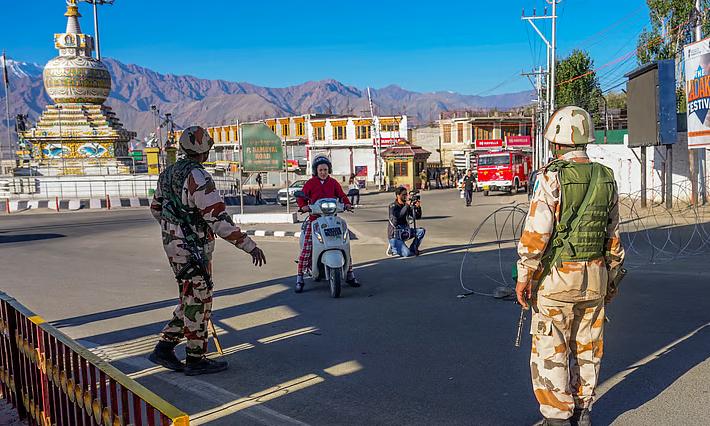
The finalisation of the minutes comes against the backdrop of growing public discontent in Ladakh. On June 23, a region-wide shutdown was observed across several parts of the Union Territory following a bandh call jointly issued by the LAB and the KDA. The shutdown was intended to protest what the organisations described as the Centre’s delay in adequately addressing Ladakh’s political, constitutional, and administrative aspirations. During the shutdown, the protesters raised objections to the newly introduced excise policy, the digitisation of land records, alleged moves towards privatisation of the Power Department, and policy changes relating to land, transport, and tourism.
Organisers had maintained that the agitation was driven by concerns extending far beyond individual policy decisions. According to LAB and KDA leaders, the larger issue revolved around what they perceived as an emerging pattern of governance in which crucial decisions affecting Ladakh’s future are being taken without sufficient consultation with local stakeholders, elected representatives, and civil society groups.
The shutdown also reflected dissatisfaction with the official recording of discussions held during the May 22 meeting in New Delhi.
For several years, LAB and KDA have jointly spearheaded a movement seeking statehood for Ladakh, constitutional safeguards similar to those available under special constitutional provisions, protection of land and employment rights, and a greater role for local communities in decision-making processes. The groups contend that the absence of an elected legislature and stronger constitutional protections has intensified public anxieties over land ownership, employment opportunities, cultural identity, environmental sustainability, and administrative accountability in the strategically significant Himalayan region.
Disclaimer : This story is auto aggregated by a computer programme and has not been created or edited by DOWNTHENEWS. Publisher: deccanchronicle.com




