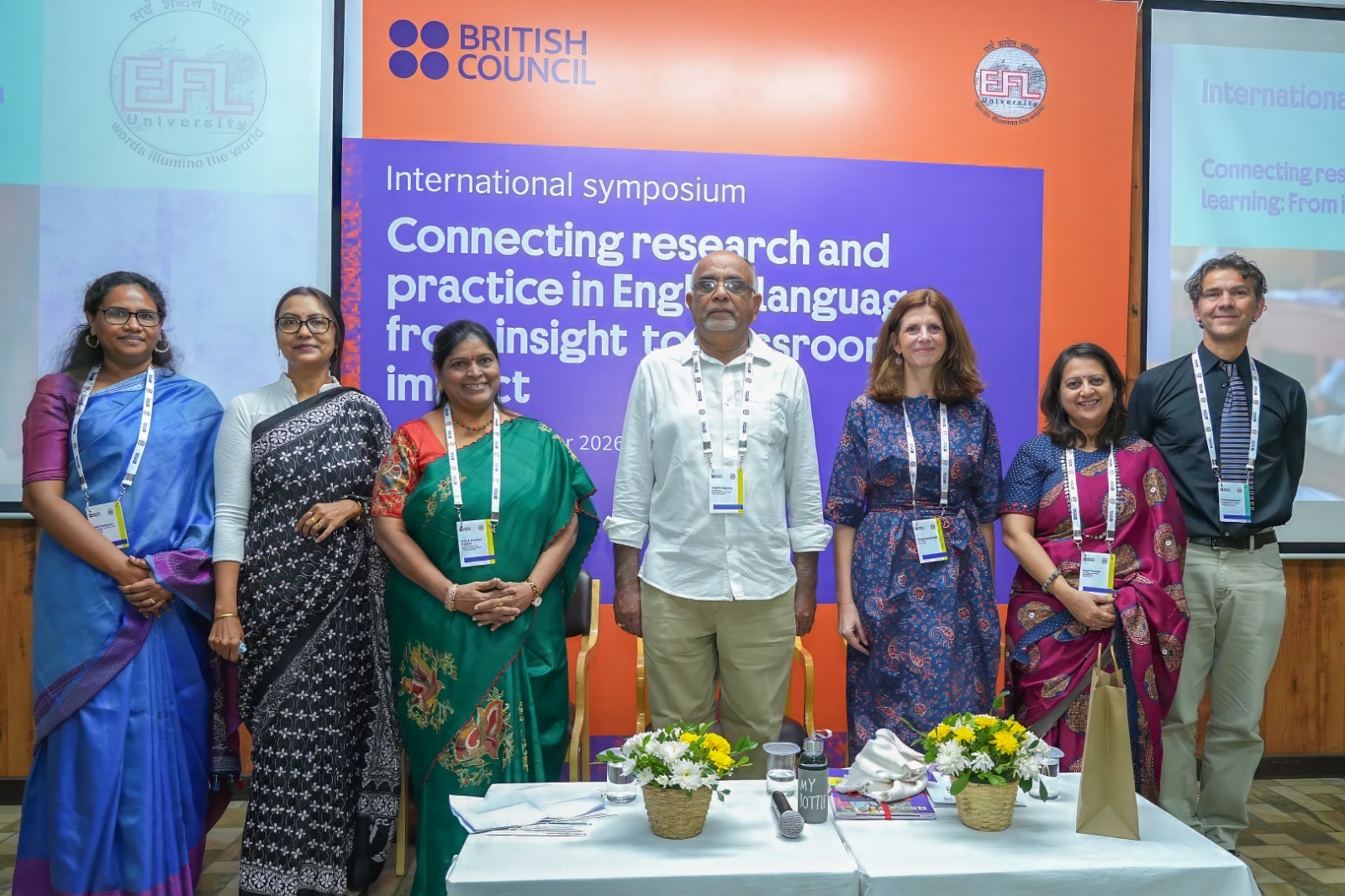
English language teaching needs to move beyond academic research and policy discussions and address the realities teachers face in classrooms, English and Foreign Languages University (EFLU) Vice-Chancellor Prof. N. Nagaraju said at an international symposium, “Connecting Research and Practice in English Learning: From Insight to Classroom Impact,” organised by the British Council and EFLU.
“There is an urgent need to bridge academic research and everyday classroom reality, so scholarly insights translate into tangible learning impact,” he said, calling for teaching practices that are inclusive, equitable and responsive to learners’ needs.
The two-day symposium, brought together researchers, teacher educators, teachers, school leaders and policy stakeholders from India and abroad to discuss changes in English teaching, learning and assessment.
Discussions covered five areas, including inclusive and multilingual teaching, teacher education and evidence-informed practice, assessment that supports learning, human-centred artificial intelligence (AI), and learner participation.
Participants examined how language-supportive and multilingual teaching at the foundational stage could strengthen reading, writing, listening and speaking skills, while influencing academic outcomes and future opportunities. They also discussed the need to equip teachers and teacher educators with the skills and flexibility to adapt research-based approaches to classroom contexts.
Prof. Nagaraju said technology in classrooms must remain ethical and equitable, without displacing educators or widening existing divides. He also called for learners’ home languages to be recognised as valuable resources, linking the discussions to the National Education Policy 2020 and India-UK Vision 2035.
Alison Barrett MBE, Country Director, India at the British Council, said research and policy would make a difference only when translated into approaches teachers could use in their everyday work. The symposium, she said, offered an opportunity for researchers, policymakers and practitioners to exchange ideas and work towards more inclusive and effective English learning.
The programme featured a keynote address by Prof. Graham Hall of Northumbria University. Sessions on human-centred AI and responsible innovation were led by Kshema Jose of EFLU and Purbani Das of the British Council. Other speakers included Dr Gayathri Raman, Dr Asma Rasheed, Dr Padmini Boruah, Dr Padmini Shankar, Preeti Hingorani and Dr Vijaya.
Disclaimer : This story is auto aggregated by a computer programme and has not been created or edited by DOWNTHENEWS. Publisher: deccanchronicle.com