

Manchester: British voters have delivered an emphatic win for populist leader Nigel Farage in council elections across the country, rallying to his call for a hard line on migration and cuts to welfare in the hope of lifting the nation’s fortunes.
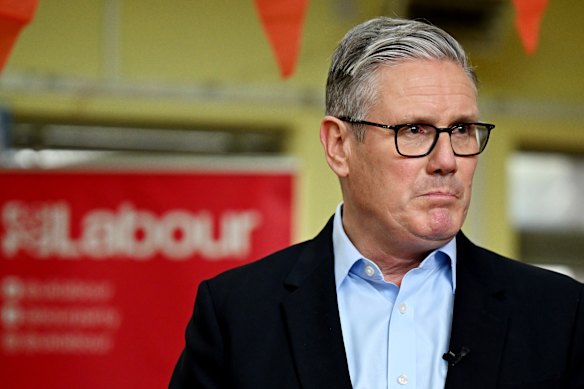
Voters slashed their support for the governing Labour Party in a powerful rejection of Prime Minister Keir Starmer after less than two years in office, forcing a decision within the party on whether to dump him and launch a contest to choose a new leader.
But Starmer refused to step down even as his Labour colleagues blamed him for the backlash, saying, “I am not going to walk away”.
“People are still frustrated. Their lives aren’t changing fast enough. We haven’t offered enough hope or optimism for the future,” Starmer said.
“I was elected to change this country – tough days like this don’t weaken my determination to do that. They strengthen it.”
Farage hailed the outcome as a “historic change in British politics” and claimed an endorsement for his call for a sweeping policy shift and the removal of Starmer as leader.
While the next general election is not due until 2029 and Labour has a substantial majority in Westminster, the dramatic swing against the party is likely to be used by its rivals to demand an earlier election.
Farage campaigned with a call to “get Starmer out” and tapped into deep concerns about the country’s direction by declaring that “Britain is broken” and needed a thorough change in its direction.
While polls had indicated his party was on the rise, the emphatic wins on Thursday (London time) confirmed Reform UK as a party of government rather than only a protest movement.
In splintering the vote, the outcome also confirmed the existential challenge for the two major parties – Labour and the Conservative Party – in an electorate that is turning to others.
The election results are expected to drive Labour out of power in the Welsh assembly, the Senedd, in a humiliating rebuff when the party has held power in that nation since self-government began in 1999. The pro-independence party, Plaid Cymru, is expected to govern.
In Scotland, the outcome is expected to cement the rule of the pro-independence Scottish National Party after a fall in support for Labour in the parliament in the Edinburgh district of Holyrood.
The early counting in the local government elections, which decide the fate of more than 5000 councillors, showed Labour had emerged with roughly half the positions compared to the previous elections.
Election analyst John Curtice, the professor of politics at the University of Strathclyde and senior research fellow at the National Centre for Social Research, said the results were a substantial success for Farage and Reform UK.
“They are currently winning a third of the seats that have been declared,” wrote Curtice at the BBC, where he has appeared on election night broadcasts for decades.
“In contrast, Labour … have lost around half of the seats that they have been trying to defend.
“If Labour’s rate of seat loss were to continue to the end of tomorrow, they could be looking at losses of just over 1200 seats.”
While the Greens also mounted a challenge to Labour in a bid to tap into voter discontent, and lifted their national support from about 10 to 18 per cent, their gains did not translate into as many council seats as Reform under the “first past the post” electoral system.
The last ballots were cast at 10pm on Thursday in Britain (5am Friday AEST) and counting did not begin in Wales and Scotland until the following morning. Counting began as soon as polling stations closed in the council elections and ran through the night, but the results could take another full day before a clear picture emerges.
In one sign of the sharp swing against Labour, the party lost the council at Newcastle-under-Lyme in the north of England. Reform UK gained control of the council in its own right, winning 27 of the 44 seats up for election.
Labour also lost control of Southampton in the south of England, although it appears to remain the largest single bloc on the council because of the staggered voting system that means only some of the councillors were up for election. The result suggests Labour might be able to govern with support from smaller parties.
Starmer’s rivals within the Labour Party have been briefing against him in the media for more than a year, with anonymous criticism growing in recent months. As voters went to the polls, reports emerged that Energy Secretary Ed Miliband had recently told Starmer to prepare a transition plan to step aside and allow an election among party members to replace him.
The likely candidates are Health Secretary Wes Streeting, former deputy prime minister Angela Rayner and Greater Manchester Mayor Andy Burnham.
Deputy Prime Minister David Lammy, a senior Starmer ally, argued against changing leader but conceded the government had not done enough since coming to power in July 2024.
“We have to accelerate the pace of change, we have to respond to the frustration that people are seeing,” he said in a TV interview on election night.
“Now, look, we’ve only been in power for 20 months.”
Lammy argued that Starmer had been a good leader on international relations but had not kept voters happy on the domestic front, where the public was impatient for change.
Get a note directly from our foreign correspondents on what’s making headlines around the world. Sign up for our weekly What in the World newsletter.
 David Crowe is Europe correspondent for The Sydney Morning Herald and The Age.Connect via X or email.
From our partners
Disclaimer : This story is auto aggregated by a computer programme and has not been created or edited by DOWNTHENEWS. Publisher: www.smh.com.au


