The Bahrain GP in Malaysia was one of the crazier races I’ve seen in F1. Eventually, this collaboration of lateral thinking which ensured a Grand Prix took place on a great track we have missed in F1 for nine years, was a huge success.
I want to say straight away that I know from meeting numerous fans over the weekend, particularly at the airport on Monday morning, that a great many people suffered very long delays getting out of the venue and back to their bases.
Road systems became gridlocked and transit buses blocked. While the event was necessarily hurriedly assembled, this was still disappointing, and I want to add my personal appreciation to those fans in Malaysia.
At least those I spoke with said they thoroughly enjoyed the race and spectacle, many of whom would also have got as wet through as I did on the grid walk.
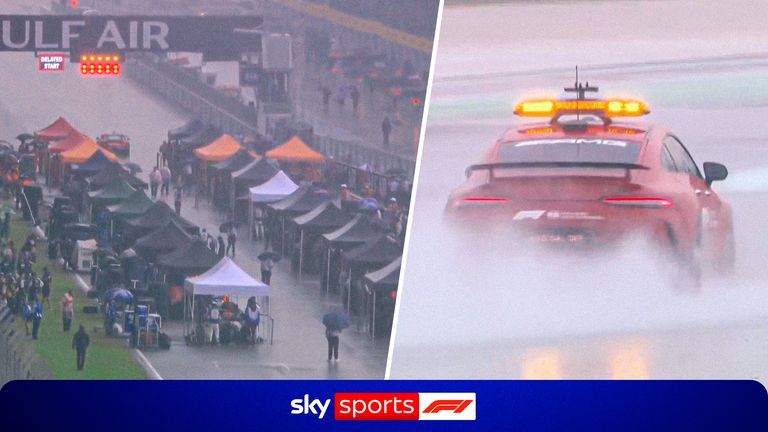
That weather cell and deluge popped up literally just as the cars headed to the grid, and as the ‘easy up’ shelters were positioned over the cars and wet tyres feverishly wheeled out, the standing water around the track was such that the start procedure was suspended.
When the rain eased, and with pleasing urgency, it was declared that there would be two formation laps behind the Safety Car and then a proper standing start.
‘Chaos’ before the start as software glitches in wet
That was all fine until we started seeing a number of cars travelling very slowly and then stopping altogether, except for the Safety Car which continued at normal pace, increasingly out by itself.
Those still running were wary of the regulations and reluctant to pass very slow cars. Many of the six Ferrari-powered cars seemed affected, some Red Bull Powertrains and a McLaren Mercedes too. Given this was the first time many of the all-new 2026 cars had run in wet conditions, there was clearly an unexpected issue.
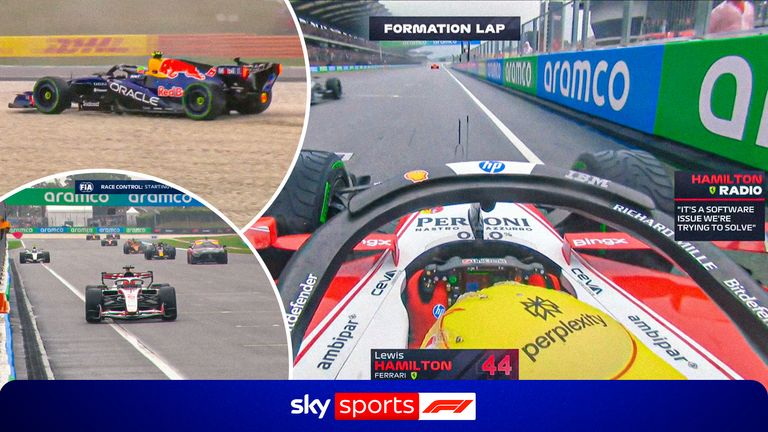
A chaotic formation lap saw several cars come to a crawl including Max Verstappen and Lewis Hamilton in Malaysia
It turned out to be FIA software settings. All cars must run a standard FIA ‘brain’ for many essential functions to ensure parity and abide by regulations, which couldn’t compute with cars travelling at such increasingly slow speeds, shutting down power delivery.
Cars were eventually spread out all over the track in two and then three tranches. Drivers at the side of the track effectively having to hit the control/alt/delete to restart their motors. It was chaos and the Safety Car was about to lap many cars which should have been diligently following it.
The only option was to abandon the whole thing and recover to the pits, at which point the Safety Car was bizarrely mid pack rather than at the front.
The next problem was to unravel the problem and regulations; would those who fully stopped and lost position, like Lewis Hamilton’s Ferrari, be obliged to start from the position they arrived back in the fast lane of the pits?
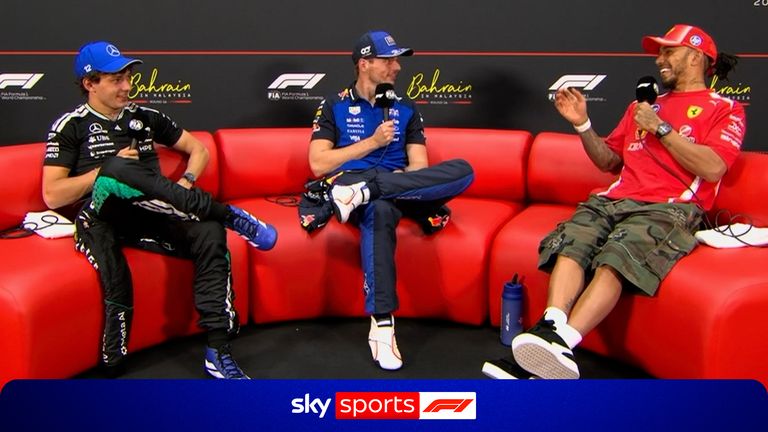
Lewis Hamilton and Max Verstappen compare the starting procedure issues in Sepang during the Bahrain GP in Malaysia to the F1 Lego race.
Although it took 40 minutes all told, which actually conveniently allowed the rain cell to clear the district, a smart and fair decision was made that the restart would be in original grid order. Furthermore, the FIA quickly found the issue, rewrote some code altering key power unit operating parameters which are in place for starting procedures when the car is under 50kph, and flashed that ‘patch’ to all the cars, not all of which had experienced problems, such as the Aston Martins.
Anyway, it worked, even though cars would now be travelling faster behind the Safety Car on pit exit with much better track conditions, and teams and drivers by then knew what to look out for.
‘Sponge-like’ surface catches out Ferrari and McLaren
This track, often doused mid-race with a cloudburst, used to dry out remarkably quickly, but temperatures had been much lower on race day than during practice and qualifying. The pit lane was bone dry, and, on television pictures, so was the pit straight and many other areas. Which tyres to use for the new standing start, more than an hour and a half after the original time slot, was the next dilemma.
It looked like slick dry tyres to me, and several thought so too, like Ferrari, McLaren, Audi and Aston Martin. As soon as the cars left behind the Safety Car it was clear there was much more spray than expected, and areas such as turns three and five were still quite wet.
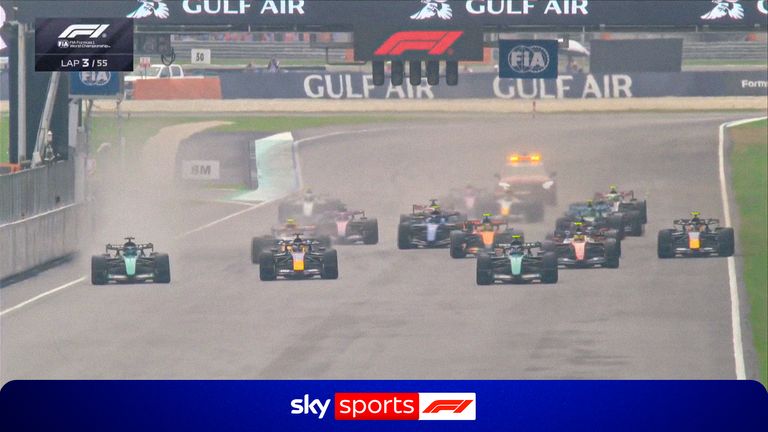
Watch Lewis Hamilton drop to 15th on the opening lap as Mercedes claim the lead at the Bahrain Grand Prix in Malaysia
Some like Oscar Piastri at McLaren and Audi recognised immediately that the right tyre was the intermediate with the light water grooves. Others like Hamilton and Lando Norris decided to stick with it and hope for fast improvement. Charles Leclerc did too but contact on the first racing lap broke his front wing and he had to pit anyway, so they also fitted intermediates. Despite that long stop, in no time at all he’d caught Hamilton’s sister Ferrari and passed him, such was the painfully slow pace on dry tyres.
The track surface was heavily worn in places, and the extreme weather in these parts clearly take their toll year-round. There had been no time, and no appetite either given the one-off aspect of this event, to resurface it. The nature of the asphalt, and sometimes over-60 degrees Celsius surface temperature, had been stressing the dry tyres throughout practice and qualifying with heat degradation.
Now, in a situation which George Russell described over his radio as ‘weird’, the track wasn’t drying anything like as fast as expected. I believe that the old asphalt, with billions of tiny pockets of water in the surface, acted like a sponge.
Verstappen seizes control as Hamilton fights back
Out front it was a thrilling battle between the two Mercedes of Kimi Antonelli and Russell, and Max Verstappen’s Red Bull, who were all on intermediate tyres. Max had looked the favourite to win this race for three days such was his pace.
It would be nine laps before the leading slick-tyred car of Norris was faster than the intermediate-shod cars, and by then the slick runners were over a minute behind. Importantly, Hamilton had resisted the call to change onto intermediates based on the fact that he’d taken the pain and there was no point in pitting now.
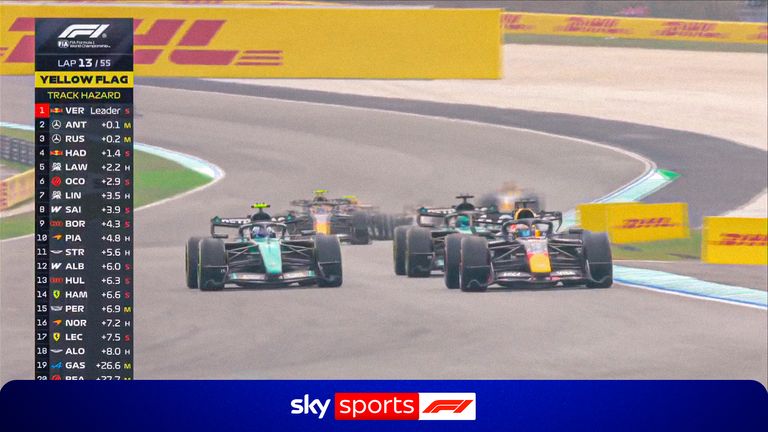
Kimi Antonelli and Max Verstappen go wheel to wheel on the restart, before Verstappen slips through to take the lead
Just at that moment Valtteri Bottas spun off his Cadillac deep into the gravel at turn 13 and there was a Safety Car deployed. It was perfect timing for the leaders as they could ditch their now overheating inters during a pit stop that would cost 18 seconds rather than 26 given the pack on track were at Safety Car speeds.
Crucially the full (not virtual) Safety Car would stay out for a good while and this allowed the slick runners to close back up and negate the huge time losses they had thus far suffered, even if they had plenty of traffic between them and their natural rivals up front who had chosen the right tyres. This was a key reset for the race.
Hamilton didn’t pit and preferred track position to fresh rubber. He would impressively run his starting soft compound dry tyres for 31 laps, and it would pay dividends.
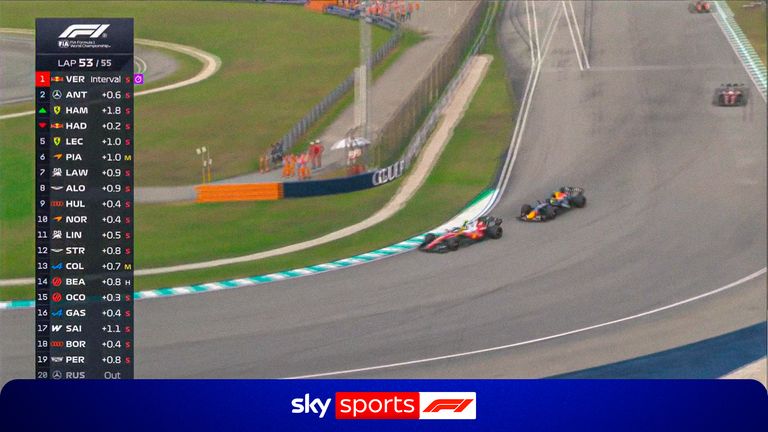
Lewis Hamilton recovered from 18th to the podium with a great drive
Championship leader Antonelli had been going along nicely in the lead, and there had been some quality overtakes between him and team-mate Russell. On dry tyres the natural speed of Verstappen, and his wily restarts, would put him into a lead which he would never be seriously challenged despite some more dramas to come.
The fast-starting Racing Bulls had been going along very nicely in the hands of Liam Lawson and Arvid Lindblad, who had started at the very back due to power unit penalties. Esteban Ocon had similarly been running in sixth in his Haas, and Carlos Sainz had fast-started his Williams into the top 10 too. But as the track fully dried, while it was a three-horse race out front, the usual suspects in the form of the two Ferraris and two McLarens made their way forward.
Isack Hadjar had been running in a solid fourth place in the second Red Bull, having shown decent speed again all weekend, and, given he would suffer a relative loss of power in the closing stages, he could have well have done without what happened next.
Russell engine failure ‘sums up his season’
Alex Albon’s Williams would grind to a halt on the exit of turn three on lap 42 of 55, albeit well parked next to a service road. The car wouldn’t easily move though and so a vehicle and marshals would have to emerge from behind the barriers, meaning a full Safety Car was called again in order to control the pack to give space to recover the Williams.
Over the next couple of laps most cars would stop for fresh, albeit mostly used tyres, in order to have decent grip for the restart and closing stages. This Safety Car of course also packed the whole field back up again.
It took an age to let the three lapped runners unlap themselves, as per the flawed regulation, especially as the third of whom, Sergio Perez, was a long way behind the Safety Car even before he could unlap himself.
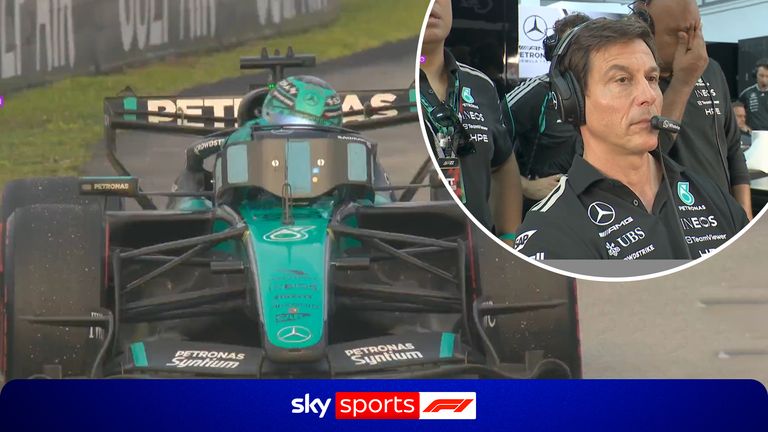
George Russell retired from the Bahrain GP in Malaysia with just five laps remaining
Then two things happened. Russell’s Mercedes had a power unit failure despite the Safety Car speed. It’s not so unusual for something to fail when not being fully loaded, and incredibly painfully for him and his fans, he pulled over to the side of the track and retired. That image sums up his whole season of bad luck, and the pain may well continue in Singapore if he has to take fresh power unit elements.
As the pack behind him were trying to work out what was going on and if they could legitimately pass George’s car under Safety Car rules, everyone slowed quite dramatically on the approach to turn one. Lando was sailing along warming his tyres, minding his own business, and in the glare of the sun failed to notice he was catching the pack at great speed.
At the back of that particular train of cars was his team-mate Oscar Piastri, and if Lando had smashed into him then it would have been a shocker for the team in terms of results in the race and spare parts and costs. He swerved left to miss Piastri, skidded down the kerb and took a long trip through the gravel losing several places in the queue, with no rights to pass them back under the Safety Car. He would end up ninth, and with Red Bull first and fifth, this leaves McLaren just 18 points ahead in the Constructors’ Championship in third place.
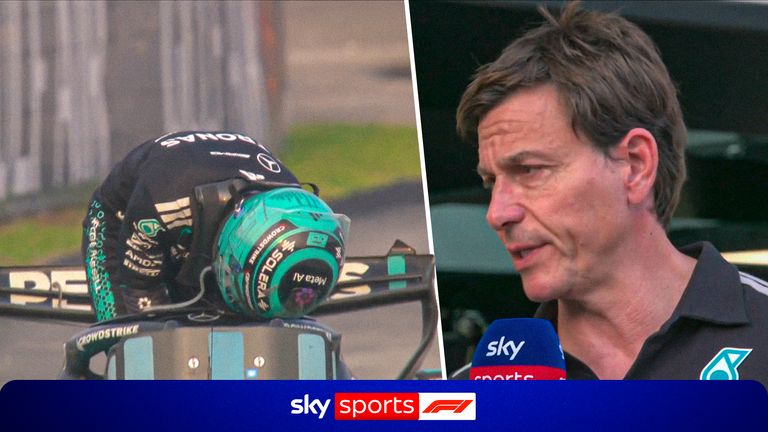
Toto Wolff fumes after George Russell’s power unit failure at the Bahrain GP in Malaysia
Verstappen made another great restart to lead and Antonelli gave the best chase he could, but the Red Bull was too fast. Behind, after a great drive, Hamilton passed Hadjar for what was third place after Russell’s demise, and Leclerc in the second Ferrari did the same thing for fourth place. It was a solid and important result for team boss Fred Vasseur too, who’s taken a lot of media pressure recently.
Lawson and Lindblad finished a fine seventh and 10th for Racing Bulls, and it was a welcome eighth for Fernando Alonso. His Aston Martin had been more competitive than of late, perhaps due to the layout of the track and also how the track surface affected aerodynamics, even holding off the recovering Norris on the last lap.
‘A victory that has been shaping up’
It was the seventh time this year that Verstappen has been voted the fans’ driver of the day, but the first time he’s won a race this season and of course the impressive first victory for the all-new Red Bull-Ford power unit. It was a victory which has been shaping up for a few races now and very well deserved for the team.
Through all this, championship leader Antonelli kept his head along with speed and consistency, and by finishing ahead of his two main championship rivals in Russell and Hamilton, yet again increased his championship lead to 84 points.
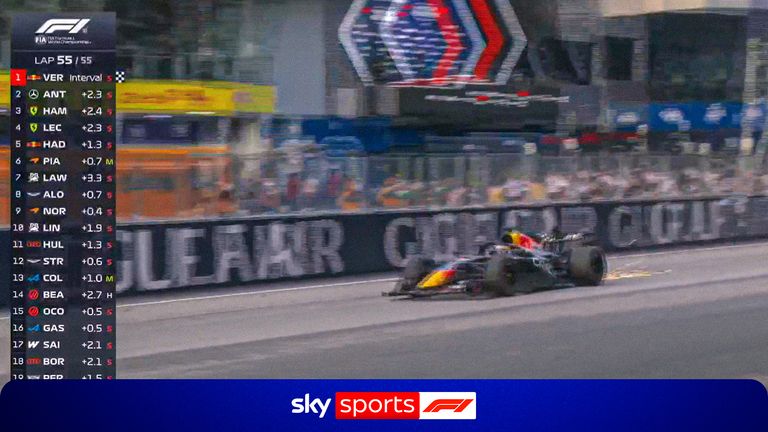
Watch Max Verstappen win the Bahrain GP in Malaysia!
It seems Qatar and Abu Dhabi will now take place as scheduled which adds another 50 points available, but if Kimi didn’t show up in Singapore, Austin, or Mexico, he’d still lead the championship with four races to go.
It was a long afternoon and the race completed with just 12 minutes remaining before it would time out. In fact, it finished a full three hours and twenty minutes after the initial start time.
Let’s see what challenges Singapore can throw at the teams and drivers this weekend.
Formula 1 heads straight to Singapore for the last Sprint weekend of the season with track action starting this Friday, live on Sky Sports F1. Stream Sky Sports with NOW – no contract, cancel anytime
Disclaimer : This story is auto aggregated by a computer programme and has not been created or edited by DOWNTHENEWS. Publisher: skynews.com