
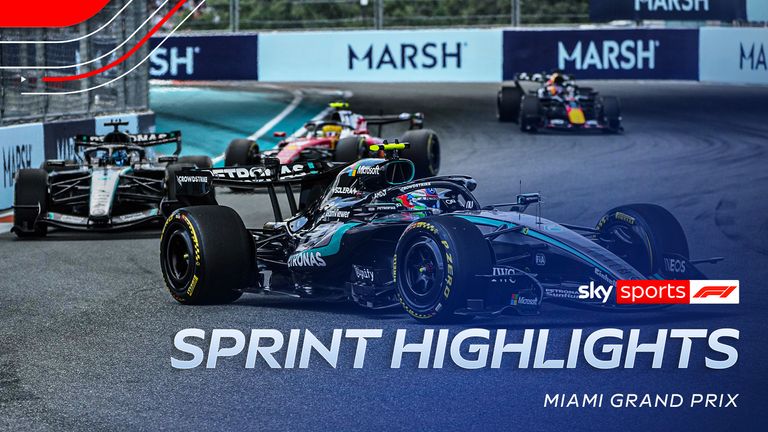
The 2026 Miami Grand Prix was an extremely important event for Formula 1. The opening three races of the season in Australia, China, and Japan were interesting and engaging in places and uncomfortably controversial in others, as the dramatically altered new cars struggled to gel.
Key drivers and other observers were remarkably ready to trash the show. The enforced break due to the Middle East conflicts couldn’t have come at a worse time, always remembering we are a sport and pale into insignificance compared with the loss of lives and livelihoods.
The downtime was used to fine tune the complex power delivery of the latest machines, basically to share the combined engine and battery power out more evenly around any given lap, and also reduce the potential and considerable closing speeds of cars and drivers on different power strategies.
Miami was always going to be easier than some circuits in terms of recharging the all-important but barely adequate battery storage, however the technical rule finessing was clearly in the right direction. Drivers seemed much happier generally, and the cars looked fast and alive, and with a decent surplus of power over grip on corner exits.
And we were spared much of the labouring of engines losing the battle to a kinetic motor busy charging the battery well before the end of the straights.
I thoroughly enjoyed being trackside for the one and only, and specially extended, 90-minute practice session, given Miami was one of six Sprint weekends this season.
In the 19-lap Sprint itself I was concerned we’d done too much smoothing out. Other than some early skirmishes created especially after Kimi Antonelli had another poor start from pole position, it all quickly settled into a steady and reasonably dominant one-two for the McLaren duo of Lando Norris and Oscar Piastri, from Charles Leclerc’s Ferrari.
McLaren and Ferrari had brought a raft of scheduled updates to the event, something we are going to see a great deal of this season throughout the grid, and for all the world it looked as if Mercedes’ early season dominance was over as George Russell came home a relatively distant fourth, and Kimi Antonelli a track-limits-penalised sixth.
With so many new parts, and with main race qualifying a few hours later and a wet race seeming a virtual certainty, the drivers were clearly being careful, no doubt under strict team instructions due to limited spare parts. The main race would thankfully be a totally different story.
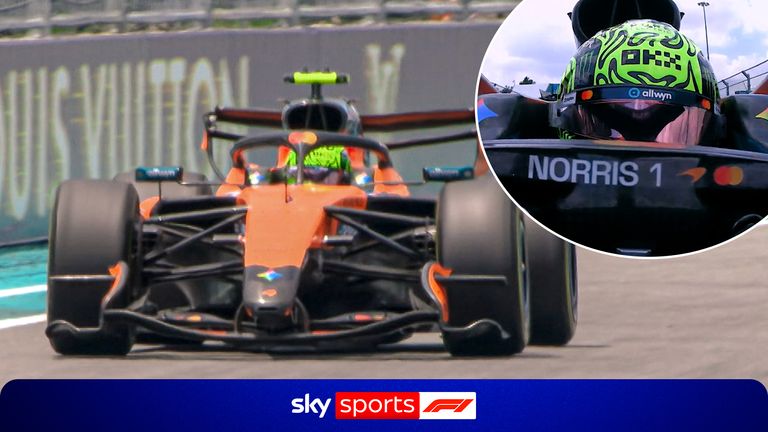
Lando Norris crosses the line and wins the Miami Grand Prix Sprint, with Oscar Piastri coming second
Verstappen’s recovery spin was ‘genius’
Once again, Kimi Antonelli worked his Miami magic to claim another pole position, he likes this track layout as much as his team-mate George Russell dislikes it. Strangely, with a more rubbered-in track and a change of wind direction, the two McLarens struggled and would line up only fourth and seventh having dominated a few hours earlier.
Max Verstappen was alongside Antonelli on the front row and he was much happier, delivering lines such as “I think we’ve halved the deficit” and “we can see light at the end of the tunnel”.
The race was brought forward three hours because heavy rain and potential thunderstorms were confidently forecast. In America it is legally mandatory that all sporting events must immediately cease in the event of nearby thunder and lightning, and the crowd and all participants must take cover, thereby emptying grandstands and marshals posts, not to mention cars and pitlane. Quite the undertaking with such a massive crowd.
When I arrived at 7.30am I completely subscribed to that notion. There were spectacular forks of lightning grounding out and cracking loudly in the neighbourhood, accompanied by stair-rods of rain. Despite an umbrella, I was saturated to my socks and underwear by the time I made it to the TV compound. Eventually that eased, then stopped, and of course it never rained again…
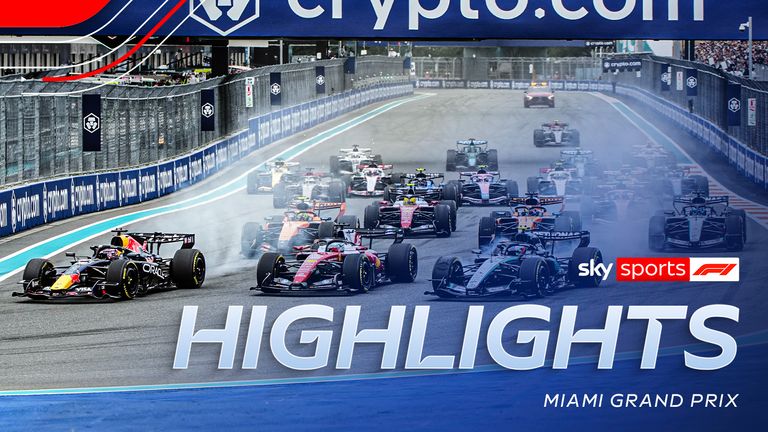
Highlights from the 2026 Miami Grand Prix
On a bone-dry track Charles Leclerc’s fast-starting Ferrari, from third on the grid, would be side-by-side with Max Verstappen as they exited Turn One, even though pole-sitter Antonelli had a reasonable start this time.
Pinched to the Turn Two apex by Leclerc, Verstappen was too eager on the throttle and looped around, an unusual mistake for him for which he would hurriedly apologise to the team on the radio. Before that we saw some of his genius in the recovery.
In front of the whole pack except Leclerc, he deftly used the throttle, brakes, and steering wheel to execute a full 360-degree turn, pointing nicely down the racetrack and somehow maintaining some forward speed. I can’t tell you how hard that is in these plus-sized F1 cars full of fuel in the heat of battle. This dramatically minimised the chances of being run into and kept him in ninth place at the end of the lap.
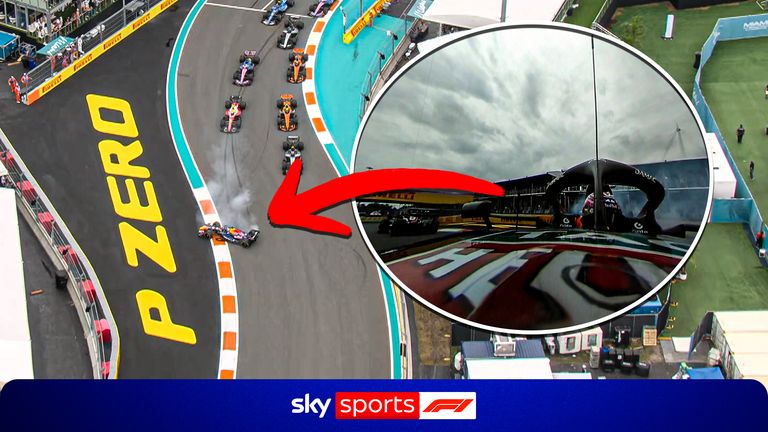
Watch new footage of Max Verstappen styling out a 360 spin in a chaotic opening lap in Miami
Eager to recover, he had more than a few wheel-rubbing skirmishes with the mid-field. Red Bull would pit him on lap seven for new hard compound tyres to run to the end, due to a Safety Car which had been deployed for two separate incidents.
Firstly, Isack Hadjar had clipped the Turn 14 apex wall which sent him into a second wall and instant retirement as he thrashed his steering wheel in frustration. Shortly afterwards Pierre Gasly in his Alpine would sail down the outside of Liam Lawson’s struggling Racing Bull. It was a legitimate move and Gasly left plenty of space, but Lawson had a developing gearbox issue and would run wide and flip Gasly fully over and onto the tyre barrier.
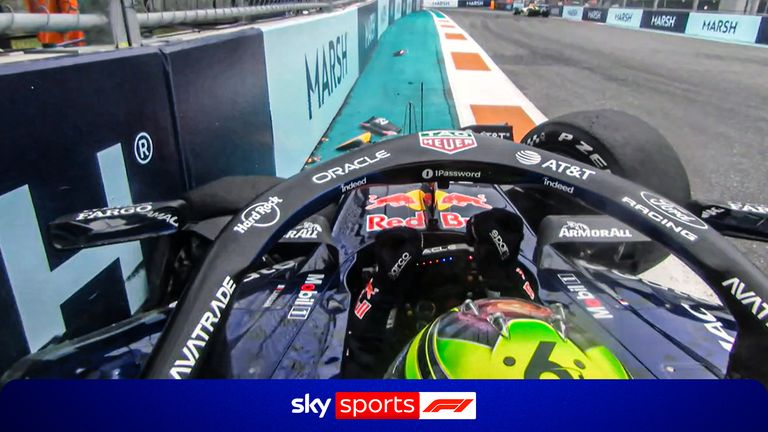
Isack Hadjar thumps his steering wheel after hitting the wall at the Miami Grand Prix
A well-earned win for Antonelli
Out front the leaders chose not to pit so early under that Safety Car and we were treated to a mighty battle between Leclerc, Antonelli and Norris with plenty of place swapping. The Italian teenager looked very fast in his Mercedes and when he hit the front on Lap 4, I predicted in commentary that he would ‘check out’, expecting him to build a lead.
But that’s former F1, because by Lap 6 he was back in third place and if I’m honest, I don’t completely understand why. It’s clearly about power management, and once you’re in front you lose the ‘overtake mode’ which gives more battery recharge and top speed for longer, and unless you can be more than a second in front of your pursuers they will likely catch you back.
It’s been explained to me that an overtake is never really finished until the end of the lap because you can get greedy with power usage to take a position but pay the price later. I fully get that, and I rather like the wheel-to-wheel action and skill involved in carrying speed better than your rivals to outsmart them.
It’s the relatively easily steaming back past in subsequent laps which needs more understanding and better graphics and information. We’ll sort it out.
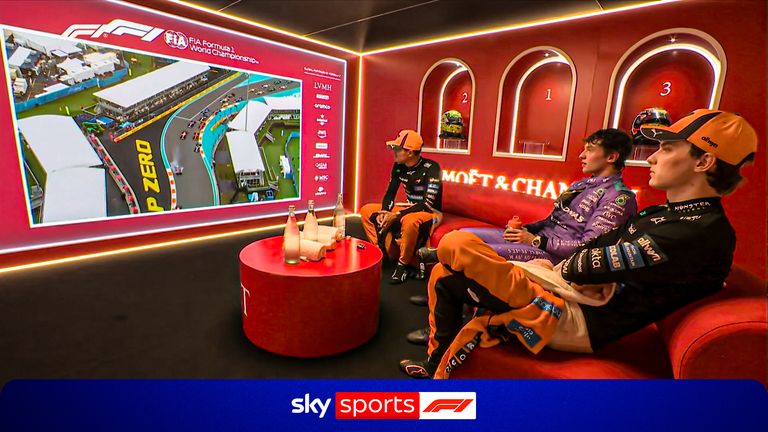
Oscar Piastri, Kimi Antonelli, and Lando Norris share hilarious reactions as they watch through the highlights reel of the Miami Grand Prix
After the Safety Car restart it became a two-horse race out front between the championship leader Antonelli and the reigning world champion Norris, and it was nip and tuck and very intense. And then at the end of Lap 26 Mercedes played an ace card and brought Antonelli in for his one and only stop. With a quick turnaround and a great speed when he returned to the track, this gave Antonelli the lead, just, when McLaren pitted Norris next time around. The classic undercut.
The two-horse race continued to the chequered flag, but Antonelli had the critical track position and kept his head along with control and speed for his third consecutive and very well-earned victory.
Norris was quite rightly disappointed as this could easily be filed as a victory that got away.
It was very enjoyable watching the pair of them catch and pass Max Verstappen who just wouldn’t give a centimetre despite needing his tyres to survive the remaining 50 laps.
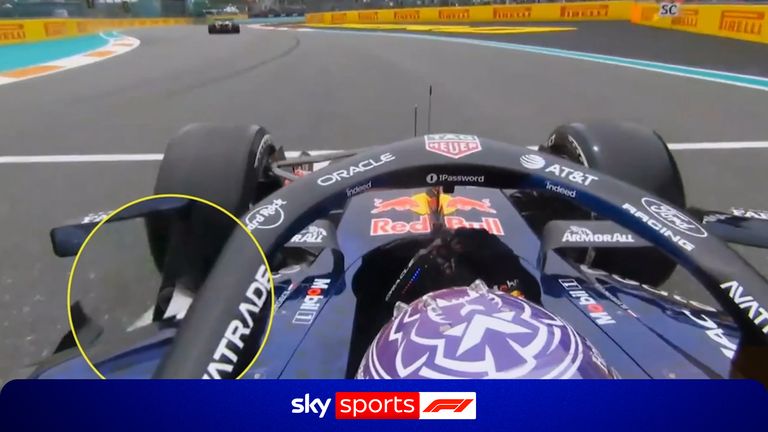
Sky Sports F1’s Karun Chandhok is at the Sky Pad to Max Verstappen crossing the white line at the pit exit at the Miami Grand Prix
Despondent Leclerc, relief for Williams
This counter strategy to help Max recover from that first lap spin also left him vulnerable to a fast-closing Charles Leclerc, Oscar Piastri and George Russell, who found his Mercedes suddenly behaving better on a gripped-up track and less fuel.
Piastri would pass Leclerc for the final podium spot on the penultimate lap. Charles was being compliant, assuming he would have the power in his Ferrari to repass the young Australian on the final lap.
Sadly for Leclerc he would then spin, clout the barrier and damage his car, and limp over the line, only to then be penalised 20 seconds for cutting chicanes on the final tour in a desperate and ultimately unsuccessful attempt to stay ahead of Russell and Verstappen. Leclerc would be classified a despondent eighth.
Russell salvaged fourth, albeit 43 seconds behind his team-mate and championship leader Antonelli, and Verstappen was fifth despite his own five-second penalty for crossing the pit lane exit line a fraction too early.
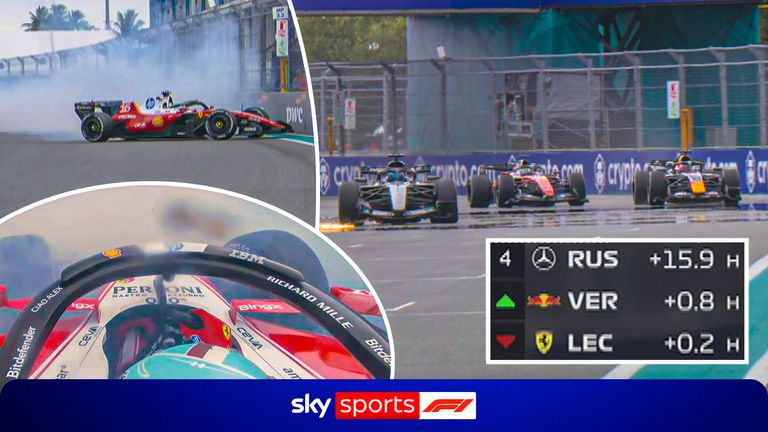
Watch the last-lap drama that saw Kimi Antonelli win the Miami Grand Prix, Charles Leclerc spin, and George Russell limp home with wing damage
Lewis Hamilton would finish a curiously uncompetitive sixth in his Ferrari, leaving Franco Colapinto in seventh for what was his most convincing F1 event to date and very timely for him.
Williams had a much stronger race with both drivers in the points and on the lead lap with Carlos Sainz in ninth and Alex Albon on 10th. That’ll be a relief for the team to an extent.
And so, we had five different leaders with many lead changes, and two key overtakes in the final two corners of the race. It was a very timely, great show with a big audience, and I have no doubt the teams will continue to converge as they finesse and further understand these regulations. Bring on Montreal.
Formula 1 next heads to Montreal for the Canadian Grand Prix and another Sprint weekend. Watch live on Sky Sports F1 on May 22-24. Stream Sky Sports with NOW – no contract, cancel anytime
Disclaimer : This story is auto aggregated by a computer programme and has not been created or edited by DOWNTHENEWS. Publisher: skynews.com



