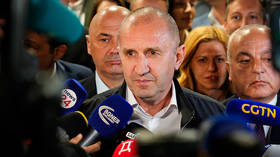
Brussels just can’t kick its irrational Russophobia, as Rumen Radev’s supposed friendliness towards Moscow has many up in arms
After eight snap elections in five years, Bulgaria’s Rumen Radev, a 62-year-old reform-minded pragmatist with much political (he’s a former president) and military (he’s also a former general) experience has just managed to gain an absolute majority of seats in the national parliament. It is, according to Bloomberg “a landslide” and, for German mainstream flagship Spiegel, an “exorbitant victory.”
With this breakthrough, Radev’s party Progressive Bulgaria has also broken a long trend of inconclusive elections and now has very good chances of establishing a stable, lasting government after years of instability and scandals, climaxing in a full government collapse late last year.
Election participation was higher than usual, which is another signal of genuine popular support for Radev’s message and reinforces his mandate. Bulgaria has been suffering from prolonged gridlock and a massive crisis of public trust. No one can predict the future, but Radev promises a fresh beginning, and this election result at least provides a chance to make one. Moreover, Progressive Bulgaria’s voter appeal, polls show, has not only been deep but also wide: Gen-Z, older citizens, pro-EU voters and those often, in Western mainstream media, disparaged as “pro-Russian,” and, last but not least, Bulgaria’s expat voters – they are all in the mix.
While Progressive Bulgaria will not have the two-thirds majority to make constitutional changes without help from other parties, Radev will have enough seats to rule without a coalition partner. In a country where coalition building has become associated with sleaze and inefficiency that is an advantage. Especially if Radev makes good on one of his key campaign promises to fight corruption and the influence of what Bulgarians call the “oligarchy.”
In sum, Radev’s election victory should be grounds for if not celebration than at least optimism. All the more so since he is also ready to apply constructive pragmatism to Bulgaria’s relationship with the EU as well. In his own words, “what Europe needs right now is critical thinking, pragmatic action and results, especially building a new security architecture and recovering its industrial power and competitiveness […] That will be the main contribution of Bulgaria to its European mission.”
Disclaimer : This story is auto aggregated by a computer programme and has not been created or edited by DOWNTHENEWS. Publisher: rt.com