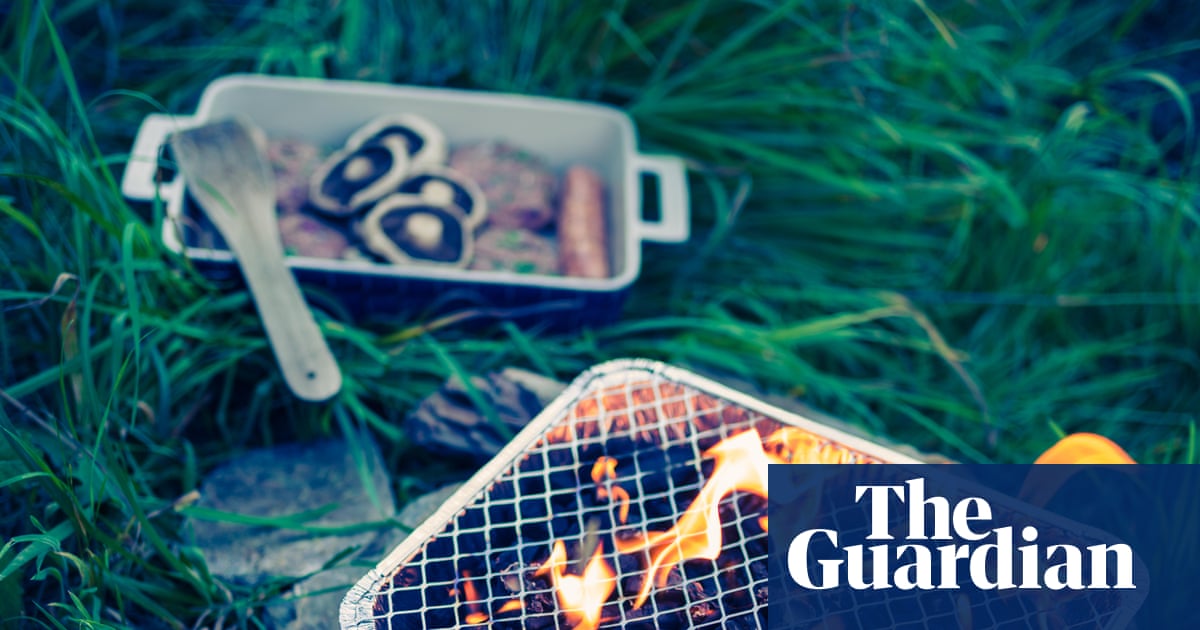
The government will look at banning disposable barbecues as wildfires continue to rage across the UK, Andy Burnham has said.
Disposable barbecues have been the cause of a number of serious fires over the last few years, but campaigners were critical of the prime minister’s failure to link those fires more broadly to the climate crisis.
In July this year, firefighters called to Cannock Chase found an area the size of a football field blazing in the summer heat. The heathland in Sherbrook Valley, part of a special area of conservation, was home to adders, toads and other wildlife, which were thought to have suffered severe damage, though no people were harmed. The cause of the fire was identified as a disposable barbecue.
This was one of two fires in the area that were particularly concerning, Staffordshire council officials said, because Cannock Chase is home to protected wildlife, including ground-nesting nightjars. Fires can destroy nests, chicks and vital heathland habitat, causing damage that can take many years to recover from.
Disposable barbecues, which can be carried into public areas, present a number of problems: they remain hot, sometimes for hours, after they are used, making them extremely difficult to dispose of safely, and when they cannot be carried away, people are forced to leave them or place them into bins where they carry on smouldering.
Burying the barbecues, as some try to do, will not stop the danger as these trays of charcoal can reach 450C and will carry on burning underground, where they can still ignite fires long after use. On beaches, the buried coals and metal grills are also a hazard for walkers, and in fields for farm animals.
Over the last few years they have been identified as the cause of a number of serious fires including:
-
Macclesfield, Cheshire, July 2026: a large woodland fire that was tackled by dozens of firefighters. Cheshire fire and rescue service said a discarded barbecue was the probable cause
-
Three separate fires in one day around London, July 2026: in Feltham, 6 hectares of heathland close to houses were damaged. The London fire brigade urged people not to use disposable barbecues and to properly extinguish cigarettes after crews tackled three grass fires.
-
The Trossachs, Scotland, May 2025: covered 2 hectares in the Glen Finglas region of the national park. Glen Finglas is the biggest Woodland Trust site in the UK. The barbecue understood to have sparked that fire was found with a burger still on the grill.
The National Farmers’ Union is now calling for a ban. Although Burnham has said he may consider a ban, government ministers have been set against such measures.
A spokesperson for the government said: “There are no plans to introduce a blanket ban on disposable barbecues. We take the risk of fires very seriously, which is why we’ve taken action to make disposable barbecues safer to use, including making sure they follow strict product safety rules and giving councils the power to ban them in high-risk areas.”
Jon Pearce, the Labour MP for High Peak in Derbyshire, 50 miles from Cannock Chase, has been working on ways to bring forward a partial restriction on the devices in legislation, which would avoid some of the problems of a blanket ban.
He said: “It is hugely welcome that the prime minister has said he will consider imposing a ban on disposable barbecues. He is right that the message needs to go out loud and clear that people should not be using disposable barbecues in public places at this time.
“But we need to be in a better place next summer. Last year was the worst on record for wildfires. This year will surpass it. We need to accept our climate has changed and put in place measures to adapt, and one of those is banning the use of disposable barbecues in public places.”
Portable barbecues could be exempt, he said, as they were taken away after use. “The irony of ‘disposable barbecues’ is that they are actually very difficult to dispose of. They can cause bin fires, and unless you stay around for a long time until it has totally cooled down, there is still a fire risk.”
Other igniters for fire include lightning strikes, carelessly tossed cigarettes, campfires, rubbish and bottles. But it is clear that disposable barbecues pose particular problems. Research for the government published last year found more than 1,600 fires were caused by barbecues in England from 2020 to 2024, though it did not specify whether those barbecues were disposable, and the cause of a majority of the nearly 4,500 fires listed was put down as unknown.
The Greenpeace political campaigner Angharad Hopkinson said: “To truly protect the public, the government must also address the fossil-fuelled elephant in the room that is driving extreme temperatures. The climate crisis is staring us in the face, threatening our national security and straining our resilience to breaking point.
“Burnham has acknowledged the dangers of these conditions by convening Cobra; now he must match that urgency with a real long-term plan to end our reliance on fossil fuels – the ultimate driver of climate change – once and for all.”
Disclaimer : This story is auto aggregated by a computer programme and has not been created or edited by DOWNTHENEWS. Publisher: theguardian.com