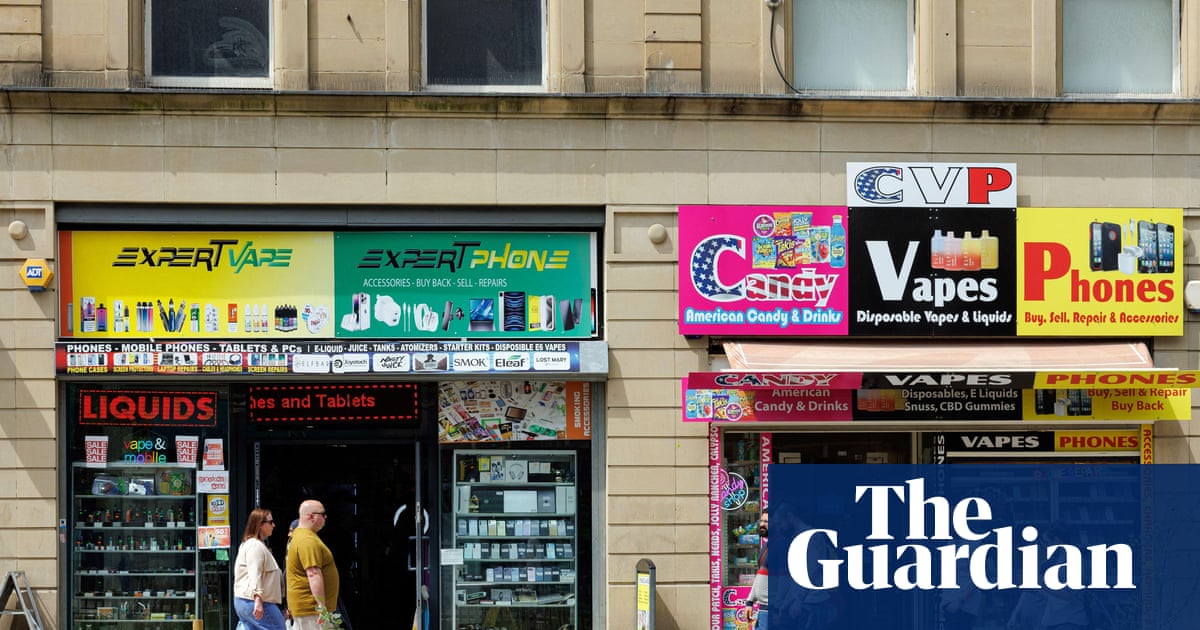
Councils are to be given powers to stop betting and vape shops taking over their high streets under new plans announced by Andy Burnham.
Local authorities will be able to reject new betting shops and adult gaming centres, while vape shops will be subject to planning permission under plans Downing Street says could be in place from the start of next year.
Burnham is promising to scrap the “aim to permit” rule in the Gambling Act 2005, which in effect requires councils to allow new gambling premises where applications meet licensing requirements.
This could mark a big shift from changes introduced by his predecessor, Keir Starmer, in April that gave councils more of an ability to consider the number of gambling premises already in an area but stopped short of scrapping the “aim to permit rule”.
As mayor of Greater Manchester, Burnham called on Starmer to abolish the rule in January, alongside almost 300 other politicians and campaigners.
Burnham said communities should have much more control over their high streets where traditional shops, pubs and other services have disappeared while vape and gambling shops have expanded.
The push fits into Burnham’s attempt to make the first weeks of his premiership about tangible changes people can see in their everyday lives.
A No 10 source said the government was determined to crack down on vape and betting shops because they were two of the most visible signs of decline on high streets, and local people were genuinely concerned. A fast-tracked consultation on the new measures would take six weeks, with the aim of having the measures in place by the start of 2027.
“Local people will actually have more of an input into whether or not those shops should open in the first place, giving them a proper say about how their high streets should look,” they said.
The move comes after research suggested Labour would be “washed away in a tide of discontent” at the next general election unless it tackled the decline of Britain’s high streets.
Prof Will Jennings, who led the University of Southampton research, said Burnham’s targeting of vape and betting shops was “an important first step”. However, with nearly one in three retail sales in the UK now online, it was clear that the policy would “not solve everything”, he said. “But it is speaking to some real area of concern that impacts how people view their local area.”
Vape shops currently fall into the same planning category as shops, cafes and even banks meaning they can open without needing a new planning application. Ministers will consult on putting them into their own planning category so councils will be able to consider each new vape shop application individually and reject those they deem not appropriate for the area.
The government is also looking at tightening the definition of what a vape shop is, to prevent people saying they were opening a convenience store that had the primary function of selling vapes as well as provisions to specifically stop them opening near schools. Angela Rayner said the move addressed problems that had built up over decades. “That’s why we’re giving local leaders the power to say no to what doesn’t belong on their high street, and the tools to fix it themselves,” the communities secretary said.
Jennings said the government also needed to tackle opaque ownership structures of high street property, which allows some landowners “who aren’t necessarily that motivated to have shops in their property”.
The growth of vape shops is not evenly spread, with research from Health Equity North highlighting the most deprived communities had three times as many vape shops as the most affluent areas.
Burnham said high streets had become “unrecognisable” after decades of decline. “The rise of vape shops, betting shops and rogue operators have replaced the shops, services, and community spaces that people are crying out for.
“That’s not on. I said we would improve Britain’s high streets, and that’s exactly what we are starting to do.”
The measures are seen as a “first step” on a wider beautification of Britain’s high streets, with Westminster setting clearer expectations for the design and appearance of high street shopfronts.
Local leaders will be encouraged to look at blueprints for ideal high streets, and given examples of what works best and how they can improve the look of their own main shopping areas.
Disclaimer : This story is auto aggregated by a computer programme and has not been created or edited by DOWNTHENEWS. Publisher: theguardian.com