But is such a call, supported by some governments and political figures in Europe, even possible?
READ ALSO: Spain says 60,000 migrants stormed Ceuta but 20,000 have returned to Morocco
What is the Schengen zone?
It is one of the European Union’s most tangible achievements — a border-free travel area in which checks have been abolished for travellers.
The vast area was built up gradually from 1985 onwards. Border checks were first effectively abolished in 1995 between Belgium, France, Germany, Luxembourg, the Netherlands, Spain and Portugal.
It now encompasses 29 countries including EU members — except Cyprus and Ireland — as well as Iceland, Liechtenstein, Norway and Switzerland.
In practical terms, EU citizens and nationals of non-EU countries can travel freely within the Schengen zone without being subject to border checks.
READ ALSO: What problems lie ahead for Europe’s border-free Schengen zone?
Can a country be shut out?
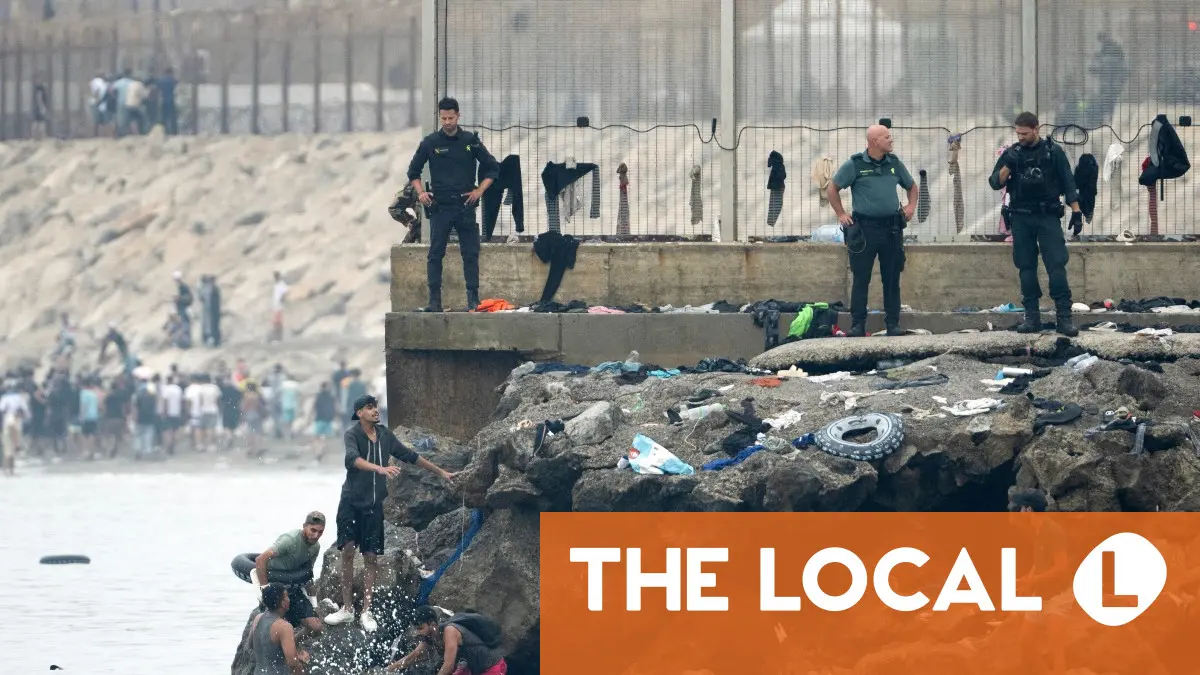
Italian Prime Minister Giorgia Meloni on Thursday said Spain should be suspended from the Schengen area, as she described the images from Ceuta showing the migrants arriving as “shocking”.
Spain blasted Italy’s “demagoguery” and summoned the country’s ambassador to Madrid to lodge a protest.
But on Friday, Finland backed Italy’s call, while Denmark said the EU should consider such a move.
“It goes without saying that the EU must immediately take all necessary measures and consider all options, including a suspension of Schengen cooperation,” Danish Prime Minister Mette Frederiksen said.
“Countries that do not fulfil their obligation to protect the external border cannot be members of Schengen,” Finnish Interior Minister Mari Rantanen said.
But such a move is not legally possible, according to European texts.
“There is no provision in the Schengen framework for this kind of action. One state cannot unilaterally expel another from the area,” Marie-Laure Basilien-Gainche, a law professor at Lyon 3 University, told AFP.
What can be done?
While it is not possible to kick a country out of Schengen, member states may temporarily reinstate border checks under exceptional circumstances.
The Schengen code lays down the rules. Border checks can be restored temporarily if there is a “serious threat to internal security or public order”, such as terrorism, organised crime, or during public health emergencies, such as the Covid pandemic.
Member states can also reintroduce internal border controls if there are “sudden large-scale unauthorised movements of third country nationals”.
France on Friday tightened checks on its border with Spain.
“But there is no shared internal border between Italy and Spain, much less between Spain and Finland,” said Basilien-Gainche.
What does the EU say?
EU chief Ursula von der Leyen described the scenes in Ceuta as “unacceptable” and her executive team is in contact with Spain and Morocco.
But the EU has rejected Italy’s call.
A European official told AFP the EU understood “some governments are concerned” but stressed the priority was “securing our external borders”.
Brussels also noted the current crisis concerned the enclave of Ceuta, located on the African continent, and that additional checks are necessary for entry into mainland Europe, where no movement has been detected so far.
“It’s not like they’re landing in Spain and moving onto France,” the official, seeking anonymity to speak openly, said.
Disclaimer : This story is auto aggregated by a computer programme and has not been created or edited by DOWNTHENEWS. Publisher: thelocal.de