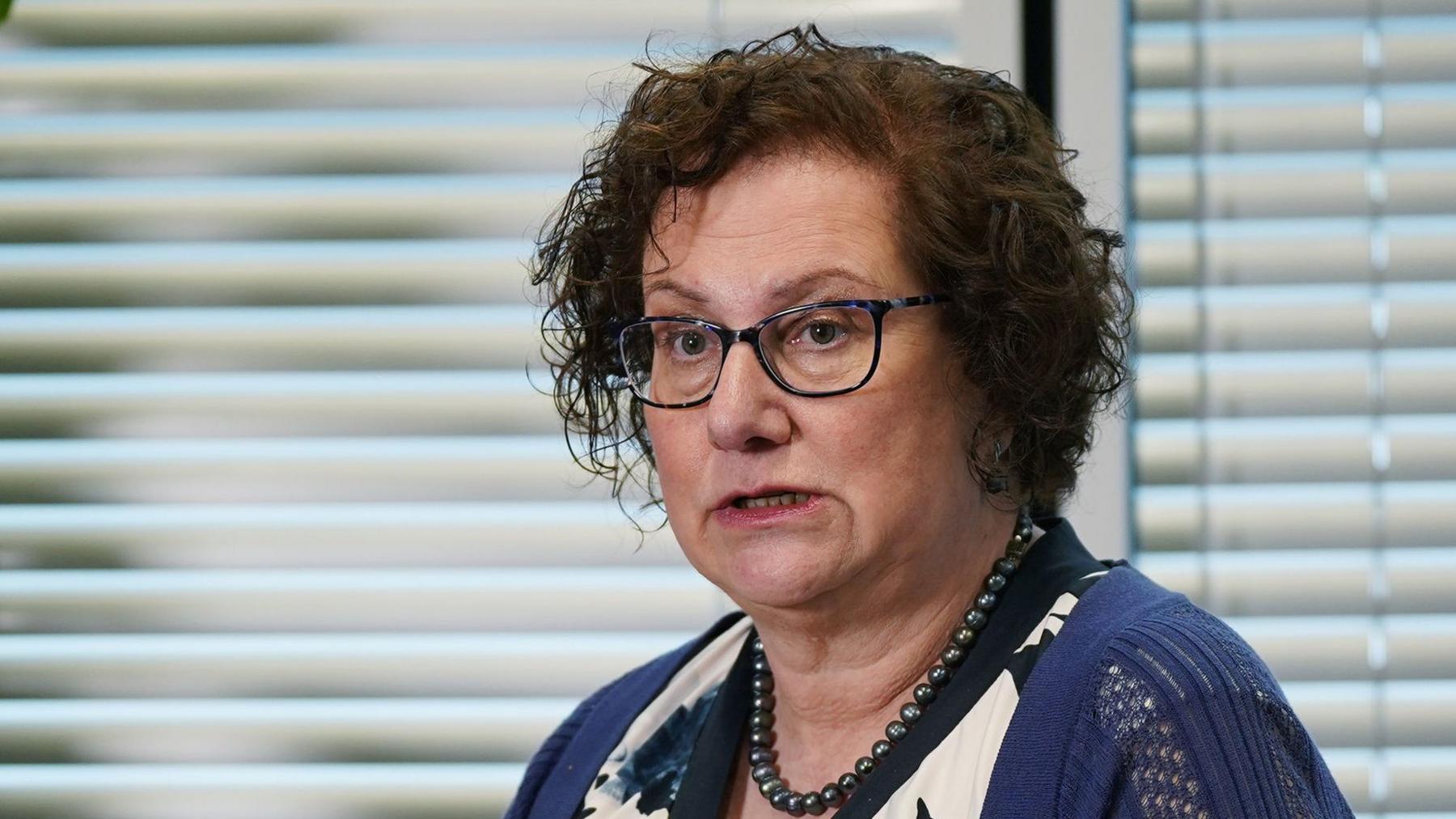
Cass report author tells BBC draft conversion practices bill is not workable
-
Published
The author of the independent review into gender identity services for young people says she does not support the current draft bill banning conversion practices – having previously welcomed it.
Baroness Cass told BBC Radio 4’s Today programme while it is “desirable” to ban the practices, “the challenge is that we have not yet as far as I can see got a workable bill”.
At a parliamentary committee scrutinising the bill, she also said it risked “serious unintended consequences” for parents of children suffering gender distress, or medical professionals working in that area.
A government spokesperson said they welcomed her comments.
They added they would take all evidence put forward by the committee seriously as they “want to get this ban right”. The government has said the bill would protect LGBT people in England and Wales.
Conversion practices are generally described as interventions, treatments or activities designed to change or suppress someone’s sexual orientation or gender identity.
This can sometimes happen in religious or family settings and can be very distressing for the person at the centre of it.
There have been long-running campaigns in the UK to outlaw such practices, and in its 2024 manifesto, the Labour party promised to introduce a bill banning them.
When the government introduced its draft legislation, external in June this year, Baroness Cass was quoted in the publicity for it, external.
In it, she said: “I am pleased to see that the government is bringing forward legislation which not only gives a clearer definition of what conversion practices are, compared to previous drafts, but also what they are not.”
She went on to say she looked forward to the bill receiving further scrutiny before it became law.
But asked at the Draft Conversion Practices Bill committee if she supported the bill’s current form, she said simply “no”.
Baroness Cass said the increased “polarisation” used in the debate around gender meant people may use the new law in a way that wasn’t intended.
The current wording of the bill requires the victim to suffer “serious harm to the individual’s physical or mental health, or serious alarm or distress to the individual which has a substantial adverse effect on their usual day-to-day activities”.
But Baroness Cass said she worried this wording left open the possibility of “vexatious” complaints that could put therapists working with young gender-distressed people at risk of prosecution.
“Therapeutic interactions can be distressing and often are because you’re discussing quite sensitive issues,” she told the Today programme.
“So If a young person comes away feeling upset, distressed, angry, that might be the result of a quite appropriate therapeutic intervention but still could be judged as poor professional practice.”
She told the committee that professionals working at the new NHS Gender Dysphoria Clinics were concerned that even complaints processes that didn’t result in a prosecution could be damaging.
“The problem is the chilling effect of professionals knowing that they may be open to complaint, and indeed prosecution,” she told the Today programme.
Baroness Cass also raised concerns about the possible impact the new law could have on families.
She said that, for instance, if a parent stopped a child’s money if they thought they might buy a “breast binder or hormones” that this may also fall within the scope of the bill and result in prosecution.
Asked about her apparent support for the bill when it was first published, Baroness Cass said that she was in favour of the idea but had not had the time to read the details before the press release was to be published, but went ahead and gave the quote anyway.
When she published her report on gender identity services for young people in 2024, she described conversion practices as “abhorrent”. She says she still feels no LGBT people should be subjected to conversion practices.
She told the committee she wants “a bill that protects the people it’s supposed to protect, but doesn’t accidentally entrap those who you don’t want to [entrap]”.
The bill has received support from several LGBT charities, such as Stonewall, and organisations like the British Association for Counselling and Psychotherapy.
The government said: “We want to get this ban right, which is why we have put this draft bill forward for pre-legislative scrutiny.
“We welcome both Baroness Cass’s support for taking action to end abusive conversion practices, and her comments on the need for legislation to avoid adverse consequences.
“We will take all evidence put forward by the committee seriously as we move forward in ending almost a decade of delay for LGBT+ people who should never have to suffer abuse in an effort to change who they are.”
The committee hearings continue.
Disclaimer : This story is auto aggregated by a computer programme and has not been created or edited by DOWNTHENEWS. Publisher: BBC