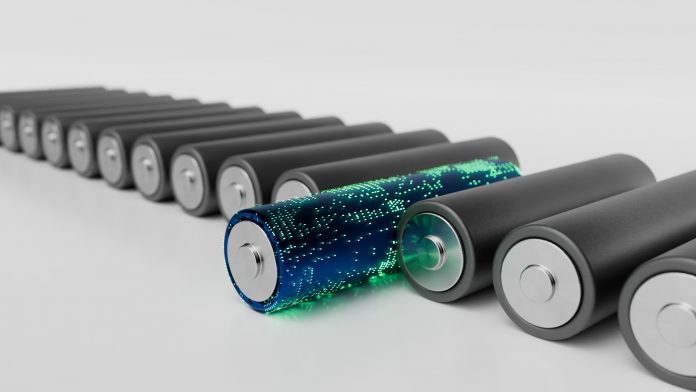
New Delhi: The government on Wednesday said that India has banned exports of lithium-ion battery black mass to strengthen domestic recycling and recover critical minerals. Black mass is a powdery material obtained from shredding end-of-life lithium-ion batteries and battery manufacturing waste. “It contains recoverable quantities of critical minerals, including lithium, cobalt, nickel and manganese,” the government said.
The commerce ministry in a notification has said that the directorate general of foreign trade (DGFT) prohibits export of lithium-ion battery black mass to strengthen domestic recycling and critical mineral recovery. The DGFT issued a notification in this regard on November 10.
Generally, critical minerals are essential inputs for electric mobility, advanced chemistry cell batteries, energy storage, electronics and renewable energy. “India depends substantially on imports for several of these minerals,” the commerce ministry said.
Recycling battery waste is among the quickest and most sustainable ways of developing a domestic supply of these resources. While the country’s capacity to recycle battery waste and refine critical minerals from it has grown considerably, it is not being fully utilised due to inadequate feedstock availability.
Exports of black mass generated in India divert this valuable secondary resource abroad, and domestic recyclers have, in some cases, had to import material to meet their requirements. “The export prohibition is intended to ensure that black mass generated in India is recycled and refined within the country,” the ministry said.
“The measure is expected to assure feedstock availability for domestic recycling and refining units, improve their capacity utilisation and encourage further investment and employment in the sector,” it said, adding that it will increase domestic recovery of lithium, cobalt, nickel and other critical minerals, thereby reducing import dependence and associated foreign exchange outflows.
Commenting on the decision, think tank GTRI said India’s export of these goods was nil in the last fiscal. “The government acted to prevent future shipments and keep the material available to domestic refiners,” GTRI founder Ajay Srivastava said, adding that black mass is the dark powder left after used lithium-ion batteries or battery manufacturing scrap are shredded, and larger pieces of metal and plastic are removed.
Depending on the battery chemistry, refiners can recover lithium, nickel, cobalt and graphite from the powder. “India has more capacity to process black mass than it generates, leaving refiners short of raw material. Recovering more of these materials at home could reduce battery makers’ reliance on imports,” he said.
Disclaimer : This story is auto aggregated by a computer programme and has not been created or edited by DOWNTHENEWS. Publisher: deccanchronicle.com