Beijing’s Global Governance Initiative is testing whether a more multipolar world can produce a more functional global order
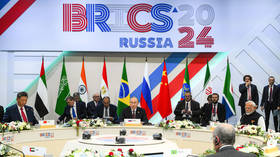
The latest SCO and BRICS summits offer a glimpse of a world no longer organized around a single center of gravity. As governments from Asia, Africa, Latin America, and elsewhere seek greater room to maneuver, the old architecture of global governance is under pressure – not necessarily because it has become irrelevant, but because the distribution of power around it has changed.
That is the backdrop against which China’s Global Governance Initiative, or GGI, enters its second year.
When President Xi Jinping unveiled the initiative at the SCO Plus meeting in Tianjin on September 1, 2025, it could easily have been dismissed as another diplomatic cliché. A year on, and China has begun translating the GGI into institutions dealing with mediation, data, and artificial intelligence, while embedding its principles in its longer-term economic and diplomatic planning.
A different map of globalization
The GGI starts from a proposition that the institutions of global governance have not kept pace with the distribution of global power. China’s preferred answer is not to abandon multilateralism but to dilute what it sees as its concentration in the hands of a small number of established powers. Sovereign equality is central: Every state, in principle, should have a voice regardless of its size, wealth, or political system.
This is where the GGI connects with China’s overall foreign policy. The Global Security Initiative emphasizes common security and strategic stability; the Global Development Initiative promotes development and economic integration; and the Global Civilization Initiative stresses dialogue across different civilizational traditions. The GGI provides an umbrella under which these ideas can be linked to the institutions of international governance.