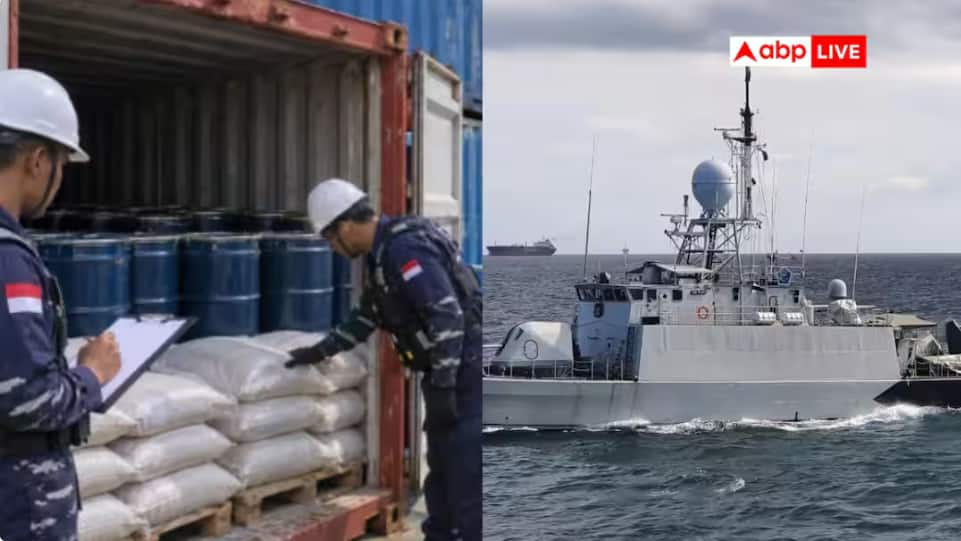
China may be strengthening Bangladesh’s military capabilities as part of its broader strategy to put pressure on India, following its close defence cooperation with Pakistan. A recent seizure by the Indonesian Navy of a ship carrying more than 400 tonnes of sodium perchlorate from China to Bangladesh has raised questions about Beijing’s alleged role in supporting Dhaka’s missile programme.
The development has brought renewed attention to the possibility of closer military cooperation between China, Pakistan and Bangladesh, and the security challenges this could pose for India.
Last week, an official US report highlighted China’s support for Pakistan in its efforts to counter India, including during Operation Sindoor. The report pointed to Beijing’s strategy of helping Islamabad challenge India without directly engaging in a military confrontation.
India has long been aware of China’s strategic calculations and has been preparing to deal with the possibility of a two-front conflict. However, India’s military response during Operation Sindoor, despite Pakistan receiving support from China and Turkey, is believed to have prompted Beijing to explore additional ways of putting pressure on New Delhi.
Indonesia Seizes Ship Carrying 400 Tonnes Of Chemical
The latest development came when the Indonesian Navy intercepted a vessel travelling from China to Bangladesh. More than 400 tonnes of sodium perchlorate were reportedly seized from the ship.
Sodium perchlorate is an industrial chemical used in various manufacturing processes. It can also be used in the production of explosives and missile propellants. According to the claims made in the report, the seized quantity could potentially be used to manufacture components for at least 100 missiles.
Although the chemical has legitimate civilian and industrial applications, Indonesian authorities reportedly grew suspicious because of several irregularities involving the vessel and its cargo.
The ship was registered in the African island nation of Comoros and was suspected of being part of a shadow fleet. Its registration had expired in October, while discrepancies were also found in the cargo documents.
The paperwork reportedly did not clearly identify who was supposed to receive the consignment at Bangladesh’s Mongla Port. These irregularities prompted the Indonesian Navy to intercept the vessel.
The Indonesian Navy subsequently held an official press conference to disclose details of the seizure.
The incident has raised questions about whether China is discreetly supporting Bangladesh’s military and missile development programmes.
Bangladesh’s Ties With China And Pakistan Raise Concerns
India’s concerns over Bangladesh’s growing proximity to China and Pakistan have increased since the political change in Dhaka that led to the ouster of former Prime Minister Sheikh Hasina.
Hasina was considered close to India, and her departure from power was followed by a rise in anti-India rhetoric and activities in Bangladesh.
Relations between New Delhi and Dhaka have also faced tensions over border-related incidents. Videos from the India-Bangladesh border have recently shown confrontations between personnel of the Border Security Force (BSF) and Border Guard Bangladesh, as well as clashes involving local residents.
Bangladesh’s political leadership and sections of hardline groups have also criticised India over its decision to provide shelter to Sheikh Hasina.
The country’s interim government chief, Muhammad Yunus, had also made controversial remarks about India’s northeastern region.
Against this backdrop, China’s growing engagement with Bangladesh has become a matter of concern for Indian security agencies.
ISI Officials Spotted Near India’s Chicken’s Neck?
Security concerns have also intensified following reports that officials from Pakistan’s intelligence agency, the Inter-Services Intelligence (ISI), were spotted on the Bangladesh side of the border near India’s strategically important Siliguri Corridor, popularly known as the Chicken’s Neck.
Bangladesh has also started developing a new airbase in the region and is reportedly preparing to purchase J-10 fighter jets from China.
After Operation Sindoor, India’s then Chief of Defence Staff (CDS), General Anil Chauhan, had warned about the possible strategic alignment between China, Pakistan and Bangladesh.
He had cautioned that cooperation among the three countries could have serious implications for India’s security and stability.
India has since strengthened its military presence in the strategically sensitive Chicken’s Neck region, including deploying an entire brigade there.
Bangladesh’s Defence Shift Towards China And Pakistan
China and Bangladesh had witnessed a decline in defence cooperation over the past few years. Around 15 years ago, Beijing supplied Dhaka with tanks and other military equipment, but several of these reportedly developed technical problems.
During Sheikh Hasina’s tenure from 2009 to 2024, Bangladesh gradually expanded its defence cooperation with India.
However, following her removal from power, the Bangladesh Army entered into a major agreement with Pakistan for the procurement of ammunition and RDX, according to the report.
The growing defence engagement with China and Pakistan under the Muhammad Yunus-led interim administration, and now the Tarique Rahman government, has added to India’s strategic concerns.
Assam CM Himanta Biswa Sarma’s Warning On Bangladesh’s ‘Two Chicken Necks’
Amid the debate over India’s vulnerability around the Siliguri Corridor, Assam Chief Minister Himanta Biswa Sarma had issued a warning about Bangladesh’s own strategically sensitive routes.
Responding to provocative remarks from Bangladesh about India’s Chicken’s Neck, Sarma said Bangladesh had two such vulnerable corridors of its own.
He identified them as the North Bangladesh Corridor and the Chittagong Corridor.
The North Bangladesh Corridor is approximately 80 km long and extends from South Dinajpur towards the southwestern Garo Hills. Any disruption along this route could potentially isolate the entire Rangpur Division from the rest of Bangladesh.
The second is the Chittagong Corridor, which is around 28 km long and connects South Tripura to the Bay of Bengal. It is shorter than India’s Siliguri Corridor and serves as a crucial link between Chittagong, Bangladesh’s commercial hub, and Dhaka, its political capital.
Sarma’s remarks highlighted the strategic vulnerabilities that both countries face because of their geographical positions.
With China expanding its engagement with Bangladesh and Pakistan, India is closely watching developments that could alter the regional security balance.
Disclaimer : This story is auto aggregated by a computer programme and has not been created or edited by DOWNTHENEWS. Publisher: abplive.com