French luxury fashion house Lanvin Group has reported revenue of €240 million (~$283 million) in fiscal 2025 (FY25), down 18 per cent year on year (YoY), as macroeconomic headwinds and ongoing transformation initiatives weighed on performance. The group, which owns Lanvin, Wolford, Sergio Rossi and St. John, said results also reflected direct-to-consumer (DTC) optimisation and retail rationalisation efforts.
Despite the decline in top line, the company recorded YoY improvements in contribution profit and adjusted EBITDA, supported by tighter cost control and a more focused operating model. Adjusted EBITDA improved to -€90 million from -€94 million in FY24, while contribution loss narrowed to €31 million from €34 million.
“2025 was a year of disciplined execution and strategic progress. While the macroeconomic environment remained challenging, we continued to advance our transformation initiatives, streamline our operations, and reinforce the long-term positioning of our brands,” said Zhen Huang, chairman of Lanvin Group. “We are encouraged by the improving momentum in the second half and remain confident in the Group’s ability to deliver sustainable growth over time.”
DTC remained the dominant sales channel, accounting for 68 per cent of total revenue. The group noted improving trends at Lanvin and Wolford in the second half, signalling early gains from operational and commercial adjustments, Lanvin Group said in a press release.
Regionally, North America showed relative resilience, driven by St. John, while Europe, Middle East and Africa (EMEA) and China experienced softer demand. The group highlighted sequential improvement in performance in the latter half of the year, aided by brand repositioning and retail optimisation.
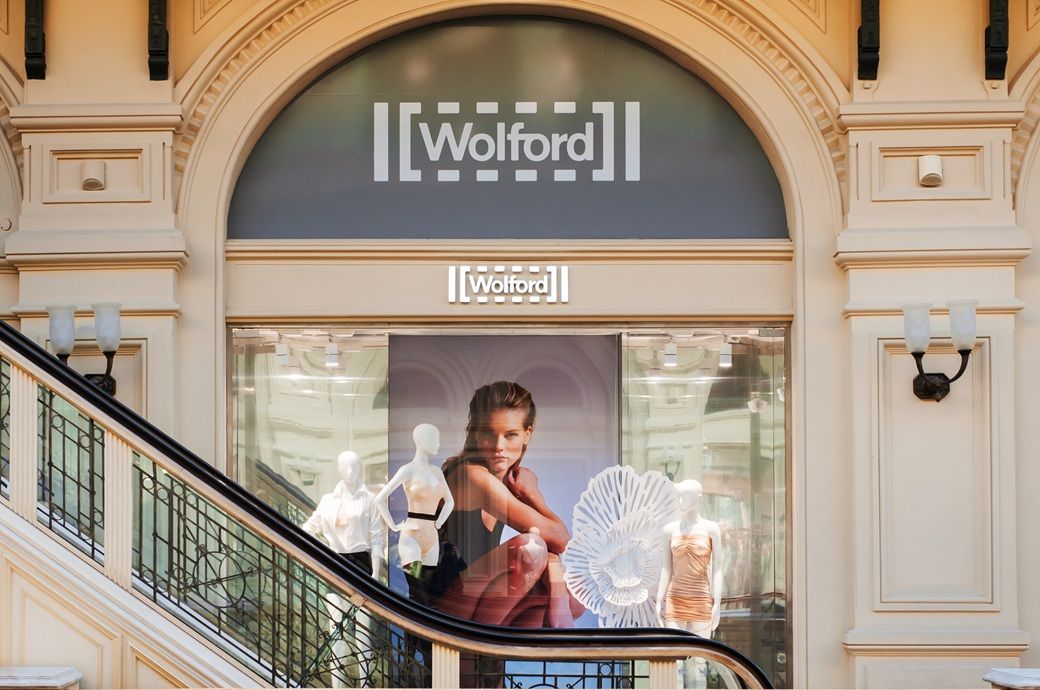
Brand-wise, Lanvin’s revenue fell 30 per cent to €58 million, reflecting continued repositioning and store network adjustments, although early signs of recovery emerged under new creative direction. Wolford posted a 14 per cent decline to €76 million, with second-half recovery supported by improved product availability and a 19 per cent rise in wholesale.
Sergio Rossi revenue dropped 30 per cent to €30 million amid cautious consumer sentiment and ongoing restructuring, while St. John remained relatively stable, with revenue down just 1 per cent to €78 million. The brand delivered strong performance in North America, supported by wholesale and e-commerce growth of 14 per cent and 25 per cent, respectively.
The gross profit stood at €140 million, with margins holding relatively steady at 58 per cent, supported by disciplined pricing and improved inventory mix despite lower volumes.
Strategically, the group continued to streamline its portfolio and retail footprint, including selective store closures and the carve-out of Caruso, sharpening its focus on core luxury brands. Leadership appointments across the portfolio, including Barbara Werschine at Lanvin, Marco Pozzo at Wolford and Mandy West at St John, were also aimed at strengthening execution.
Looking ahead, Lanvin Group expects to build on the progress achieved in the second half of 2025, with its transformation programme nearing completion in 2026. While acknowledging continued market uncertainty, the company said its recent actions have established a stronger foundation for sustainable long-term growth.
Fibre2Fashion News Desk (SG)
Disclaimer : This story is auto aggregated by a computer programme and has not been created or edited by DOWNTHENEWS. Publisher: feeds.feedburner.com