The head of a mining company hoping to supply the EU with rare earths in two years’ time has said it is “paramount” to end China’s stranglehold on the supply of the raw materials used in everything from cars to wind turbines and military jets.
As Donald Trump and China’s president, Xi Jinping, prepare to meet on Thursday in their second summit of the year, Rafael Moreno said it was also “imperative” that they do a deal for Beijing to ease up, once again, on its threat to ban exports of rare earths.
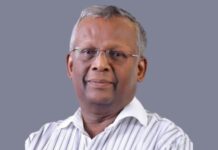
“The market is nervous,” said Moreno, the managing director of the Australia-listed Viridis Mining and Minerals, which has assets in Brazil, Australia and Canada.
China first brought in controls on rare earth exports in April 2025, hitting the auto industries in the EU, UK, US and Japan hard.
After a summit last October with Trump in South Korea, Xi agreed to suspend the introduction of even stricter global restrictions, but only for 12 months.
Industry leaders had hoped Trump would have sealed a deal to extend the suspension at the two leaders’ last summit in May but the question remains hanging over next week’s summit.
“It cannot not be extended if they are to continue to have these presidents’ meetings regularly,” said Kurt Tong, a managing partner of the Asia Group, a Washington strategic advisory and public policy firm.
But he said a suspension deal could be delayed until November, when Trump is expected to travel to China again to attend the Asia-Pacific Economic Cooperation (APEC) governmental forum of 21 countries.
Viridis is already attracting attention in Brussels, where diversification of supply chains away from China is a top priority of Ursula von der Leyen, the European Commission president.
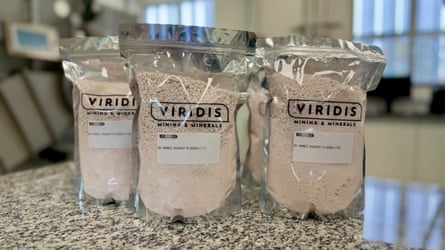
It has opened a demonstration plant to scrape the surface of its mine in Minas Gerais, Brazil, and produce a crumbly powder, which will then be further separated, potentially in France, to isolate the rare earths.
The EU trade commissioner, Maroš Šefčovič, will travel to Beijing for his own summit with China’s commerce minister, Wang Wentao, on 8 October to try to avoid a trade war.
The EU is deeply concerned about what Šefčovič has said is the “unsustainable” deficit with China, now running at €1bn a day, with the scale of exports of electric vehicles, cars and renewable energy machinery as well as components deep in supply chains causing alarm.
While Šefčovič heads up the urgent trade mission, senior EU politicians and officials are scrambling to find alternative supplies of critical raw materials and rare earths.
But their challenge is long-term, as China controls between 80% and 90% of the world’s raw materials and processed end products, giving it powerful leverage over global manufacturing. The Chinese exchange rate is also driving down the cost of imports from China.
Eurometal, a trade group representing buyers of steel products, protests that Brussels does not fully appreciate the pressures industries are under, saying component buyers or original equipment manufacturers (OEMs) are under pressure each day to opt for Chinese goods, which can sometimes be 30% cheaper than domestic alternatives.
The EU’s international partnership commissioner, the Czech politician Jozef Síkela, visited Viridis’s Colossus demonstrating plant this year in Brazil to hear how the company hopes to win 5% of the rare earths market, with production starting at the end of 2028.
Moreno said: “It is natural for a company or OEM to want to buy the cheapest product, but then, you know, the impact of them not supporting a domestic supply chain means that the domestic supply chain just never gets off the ground.”
He is working with the French chemical company Solvay to process the rare earths. “We are looking forward to keep moving forward with our strategic partnership with Solvay to start to supply all the OEMs, car manufacturers, you know, wind turbine manufacturers like Siemens Gamesa, for example, all that sort of stuff here in Europe,” he said.
“What we’ve started to design and build now, is around 5% of the world’s rare earths market share in terms of those precious magnets. So that’s that’s where we’re starting. So this is not a small project, as you can imagine.”
Disclaimer : This story is auto aggregated by a computer programme and has not been created or edited by DOWNTHENEWS. Publisher: theguardian.com