

The City of Sydney is investigating avenues to ban property investors from using their second homes as short-term rentals, as the council moves to free up much-needed inner-city housing.
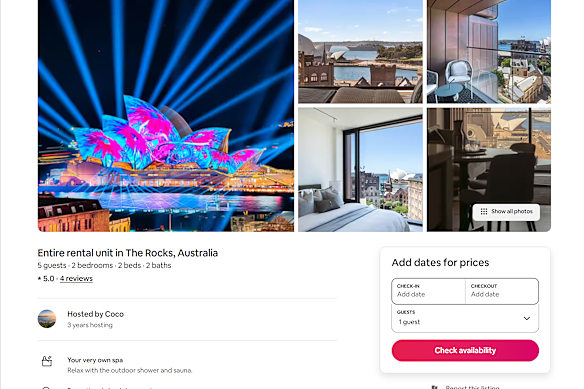
So ubiquitous are short-term rentals in Sydney that the Sirius building, the brutalist harbourside block once home to 79 public housing units, now includes a luxury Airbnb on offer for over $1000 a night. The refurbished building reopened in 2024, five years after its controversial sale, with prices starting at $1.63 million for a one-bedroom apartment.
The proposed ban, which was brought as a motion from the Greens, would only impact entire property listings that are non-primary residences, including investment properties. Those renting out their primary home while they’re away, or listing parts of their residence for short-term stays, would not be impacted.
One method being considered is excluding certain suburbs from Airbnb, such as Millers Point, which locals say has been turned into a “giant resort” by an influx of short-term rentals. Long-running Millers Point childcare centre KU Lance announced its closure last year, citing plummeting enrolments.
Other options include tying the ban to the city’s rental vacancy rate, or outright banning listings of non-primary residences for a certain period.
Council staff will report back and present the best path forward at a future council meeting.
Greens Councillor Matthew Thompson said homes that should be for people who live and work in Sydney are instead being commercialised.
“In the middle of a housing crisis, when rents have never been higher, every house should be a home, not a mini hotel generating huge profits for property investors,” Thompson said.
In 2023, New York City introduced a similar crackdown, requiring hosts be physically present in the properties they wish to list, and banning the listing of entire units as short-term rentals.
Airbnb attempted to fight the laws in the state’s Supreme Court, but a judge dismissed the lawsuit.
In Australia, hosting on Airbnb has become a full-time job for some as young as 22, without owning a single property. Known as “short-term rental arbitrage”, and fuelled by TikTok’s hustle culture, hosts take out long-term leases on properties only to sublet them for a huge profit.
Sydney’s Airbnb boom has frustrated City of Sydney Deputy Mayor Jess Miller, who wants the state government to collect more data on the types of short-term rentals being listed in NSW.
Miller said investors were turning residential-zoned homes into commercial operations, with no need to submit applications for an official change of use for the site.
While NSW bans unoccupied Airbnb listings from being rented out more than 180 days of the year, poor data made this hard to enforce, Miller said.
She said the fact that an entire two bedroom home inside the Sirius building is now being offered as a luxury short-term rental is “really offensive” to those public housing tenants forced to leave their homes when the state government announced plans to sell the building.
The state government announced a review into the short-term rental accommodation sector in 2024, but has yet to enact any reforms.
On Wednesday, Premier Chris Minns said he had no announcements to make about the review.
The Morning Edition newsletter is our guide to the day’s most important and interesting stories, analysis and insights. Sign up here.
 Jessica McSweeney is a reporter at The Sydney Morning Herald covering state politics and urban affairs.Connect via email.
From our partners
Disclaimer : This story is auto aggregated by a computer programme and has not been created or edited by DOWNTHENEWS. Publisher: www.smh.com.au


