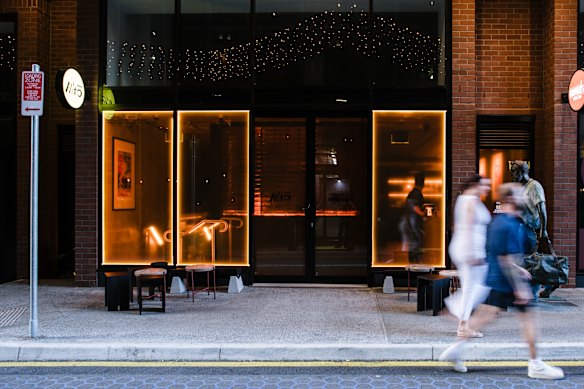
The Clarence team has a lot of experience in Japanese restaurants, and they have some very specific ideas about what they should be.

Next time you see Ben McShane, ask him about London restaurants.
The chef and Clarence co-owner will joke about his time working in the UK capital as a form of “trauma-bonding”, and he’ll shake his head and get liberal with expletives when describing 80 hours a week in a “tiny kitchen in East London, working shoulder to shoulder” with friends such as Matt Kuhnemann and Zoe O’Mahoney.
But he also recognises what it gave him, which, ultimately, a business partner and a longterm manager.
“It’s fun as well,” McShane says. “It’s challenging and rewarding and you get a lot out of it and you become a better cook. You progress a lot as a chef and even as a person … It builds a lot of resilience and discipline and skill.
“You’re all going through this challenging part of your life and you learn together and learn to cover for each other.”
Restaurant reviews, news and the hottest openings served to your inbox.
Kuhnemann co-owns Clarence and also its new sister venue, Nito, a couple of doors down on Fish Lane. O’Mahoney is managing across both venues, and Max Burns is onboard as head chef – he worked with McShane in Stokehouse Q and followed him to London with a Tenure at Two Lights when McShane was leaving that restaurant to move back to Australia.
Nito opened early November and the first thing you need to know is it’s very different to Clarence.
It’s dark and moody, its design tiered and semi-subterranean, the defining colours orange and red. Dark timber and unpainted besa brick walls are adorned with old film posters. Even the branding – “Nito” scrawled in an inky script – is grungy and fun-loving compared to the quaint playfulness of Clarence.
“I’m not surprised at how it’s ended up because it’s very much a lot of conscious decisions. Everything has been thought through,” McShane says. “The vibe of it is a record player in the back bar and a big grill in this dark space underneath a car park.”
McShane is these days intertwined with the narrative of Clarence but previously worked at Kiyomi on the Gold Coast, and after that Umu in London when it held two Michelin stars. More recently he did a consultancy stint working alongside Alex Yu at Sokyo Brisbane when that restaurant first opened in 2024. In short, he’s spent a lot of time around Japanese cooking.
That large grill, powered by binchotan, is the engine of a menu overseen by Burns that often takes a bunch of farmers and suppliers the team regularly works with at Clarence but applies their produce to a completely different (albeit, similarly tight) menu with more pickles, ferments and the like.
To begin, from the raw section and starters you might order a soy-pickled Neighbourhood Farm tomato tartlet with whipped ricotta and shiso, fried U8 tiger prawns with a golden curry Marie Rose sauce, a pig head katsu sando with a pickled wasabi special sauce, or trout tartare served with a wafu dressing, noritamago and rice cracker.
Then there’s the yakimono section (meaning grilled or fried items), which is all large-format and designed to share. There’s a whole side of Murray cod served with a tomato and kombu sauce vierge and spring onion; Japanese-style duck claypot rice with a sun-dried tomato XO and shiitake; and a hulking five-score 850-gram Imperial Blossom wagyu T-bone served with a bone-marrow yakiniku.
For drinks, O’Mahoney has written a wine list that, similar to Clarence, favours around 40 or so small-scale local winemakers. But there are also 10 sakes (expect that figure to grow) which are all “interesting and funky and have been selling a lot”.
McShane and Kuhnemann have not only created a restaurant that stands in contrast to Clarence, but McShane hopes it stands in contrast to other Japanese restaurants – particularly high-end spots that he worries are caught in a “post-Nobu” rut.
“I’ve seen many Japanese restaurants that go through that same kind of like path and it often feels like they lack a narrative,” McShane says. “It feels like ticking boxes, and not particularly authentic in a traditional or personal sense.
“I love those places that have like a sense of personality where there’s something genuine about what you’re trying to do there,” McShane says. “You’re doing a Japanese restaurant, but you still want it to be of that place.”
 Matt Shea is Food and Culture Editor at Brisbane Times. He is a former editor and editor-at-large at Broadsheet Brisbane, and has written for Escape, Qantas Magazine, the Guardian, Jetstar Magazine and SilverKris, among many others.
From our partners
Disclaimer : This story is auto aggregated by a computer programme and has not been created or edited by DOWNTHENEWS. Publisher: www.smh.com.au