When health insurers justify their foray into clinical services based on cost savings, be alarmed. Your article on the subject raises deep concerns (“There are no fees at this new private hospital. Some doctors hate it”, July 2). The conflict of interest when private funders are also healthcare providers skews the emphasis from quality care to cost control and is a direct threat to patients. Medibank has doubled its hospital ownership from East Sydney Private Hospital, Hirondelle Private Hospital and Deakin Private Hospital (Canberra), to add Adeney Private Hospital (Melbourne), Nundah Private Hospital (Brisbane) and Western Hospital (Adelaide). “No gap surgery” sounds great, but when surgeons are working for or directly with the insurer, where does that leave you, the patient? The once-sacrosanct relationship between doctor and patient becomes corrupted. The US experience is painful. A recent Harvard University-led study found that “the financial incentive structure of the integrated practices … discourages allocating expensive resources to relatively unprofitable procedures”. It concluded “vertical integration negatively affects the quality of care”. When health insurers spruik cost savings in their hospitals, you have to wonder what corners are being cut in your healthcare. Brett Heffernan, CEO, Australian Private Hospitals Association
Decades of dedication
While the traditional family doctor may indeed be a vanishing species, folk in my street know well a modest cottage with a light constantly showing the family doctor is “in” – and has been for 40 years (“I uncovered a medical myth: the dedicated family doctor”, July 2). Each patient has a growing file holding every detail and procedure going back, in some cases, decades. It will come to an end, of course, but in the meantime we’re happily enjoying outstanding personal and kindly care of the old-fashioned kind. Barry Lamb, Eastwood
More pain ahead
After 10 years as a private patient advocate, I stopped accepting chronic pain patients because their management was disgraceful and brutal and I couldn’t cope with their anguish (“Crackdown launched to wean millions of Australians off high-risk drugs”, July 2). Access to pain specialists was virtually non-existent and GPs often seemed to treat them with hostility. Patients with severe pain were literally refused pain medications because their management practitioners frequently had no expertise and feared being labelled as “enablers”. This new program had better not make things worse, or it will create incredible misery for many very sick people. Dorothy Kamaker, Whale Beach
Taylor’s time up
While everyone else has been fantasising about Pauline Hanson becoming the next prime minister, Niki Savva has come to the only possible sane conclusion: there is no way One Nation could govern without going into a coalition with the Coalition, and this is a most unlikely scenario (“Why Andrew Hastie is set to abandon the Liberal Party,” July 2). The party of Robert Menzies, which has been part of the bedrock of Australian politics for 80 years, would never go into an arrangement where it is the junior partner. It’s only possible way forward is to ditch Angus Taylor, who has proved hopeless as leader, elect Andrew Hastie and embark on the long road back to government, which will take at least two elections. Ian Adair, Hunters Hill
I enjoy Niki Savva’s articles, which are instructive for all political parties. For the Coalition, Sava highlights how a lazy and fearful opposition is orchestrating its own demise. But for me, I see Savva’s observations as an opportunity for the Albanese government to seize the opportunities on climate, gambling reform and multiculturalism. In a race in which the rest of the field cramps up, the leaders should sprint even further ahead. Mark Paskal, Austinmer
Niki Savva has cut through with precision to reveal the dire straits of the Liberal Party and the lies and arrogance of One Nation. Her regular observations and commentary give me hope that normal voters are aware of the rubbish these two parties expect us to agree with. Annie Scrivener, St Ives
Dodgy dealings exposed
Bevan Shields comments on the questionable dealings of past NSW governments, soon to be revealed in the ICAC hearings (“The worst-kept secret in Sydney politics just became an electoral nightmare”, July 2). He is so right in saying that, to many, it’s nothing new. The NSW government has been in the hands of dysfunctional, unreliable and untrustworthy politicians for decades, both Coalition and Labor. The situation in Macquarie Street is currently unchanged. What are we going to do about this, NSW voters? Ian Usman Lewis, Armidale
Public space
The NSW government architect, Abbie Galvin, states that “it’s about making sure public space is absolutely driving the outcome and is number one, and the built form is secondary because the public space is the most important component of our neighbourhoods” (“The ‘wild ideas’ that could shape Sydney’s new inner-city suburb of 8500 homes”, July 2). If that principle truly guides government planning, why has the NSW government approved nine buildings, including four towers of up to 45 storeys, on the former 3.6ha Sydney Fish Market site at Blackwattle Bay? Massive podiums and a proposed wall of five towers squeezed between the Western Distributor and the harbour’s edge hardly suggest that public space has been put first. Indeed, much of the much-vaunted “open space” consists of an over-water boardwalk and promenade linking the development to the new fish market, rather than genuine parks or usable public open space. The contrast between the government architect’s stated vision and the reality of this development could scarcely be more stark. Adrienne Tunnicliffe, Pyrmont
Fair play
Opinion writer Sanne Mestrom is misguided (“In Sydney, one group above all pays the price for selfish NIMBYism”, July 2). The community made it very clear from the get-go over 10 years ago that they do not want the skateboard track in this park, and for good reason. The park is the green lung of one of the most densely populated areas in this city, with more people to come. The park is already being used to the max with cricket pitches, soccer fields, tennis courts, a grandstand, outdoor gym, children’s playground and cafes, which are used by all age groups including children. The community applauds the idea of more sport for children but do not think Woollahra Council has been open, honest and transparent in its approach about the location and the size of the skating area. This park is for everyone. Its green space should be cherished, not concreted over. Dixie Coulton, Paddington
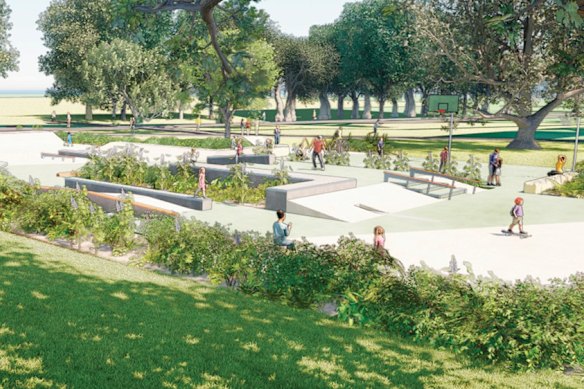
I would feel happier about the installation of a concrete playground in Rushcutters Bay park if I could be assured that this wasn’t just the result of Woollahra councillors randomly guessing what local youth actually want to spend their time doing. Just in case, better keep some hula hoops nearby for those who don’t fancy skateboarding. John Prescott, Elizabeth Bay
Parking free-for-all
I’m having doubts about the value of democracy since Randwick councillors voted to scrap parking permits (“Beach parking meters abandoned as council dumps plan”, July 2). I took part in a survey which showed that most residents supported parking meters, with local permits allowed for each household. But apparently the majority’s vote doesn’t matter to the councillors, who seemed to be swayed by angry business owners who shouted during the council meeting. I suppose I should have also gone down to the meeting and shouted, because clearly that’s how this council makes decisions. It won’t be the business owners paying the millions of dollars to keep the beaches clean, but the locals yet again. After the fiasco last Christmas I would have thought our elected council members would listen to the majority of ratepayers. But no, what the locals want seems to have zero influence. Josie McSkimming, Coogee
Devil in the detail
I rang my energy retailer this week about their Solar Sharer plan. I discovered the devil is truly in the detail (“‘Disillusioned’ customers discover the catch in three hours of free power”, July 2). While three free hours of power every day (11am-2pm) is appealing, the peak rate has increased by 32 per cent and the off-peak rate by 5 per cent. The greatest sting is the increase of the service-to-property charge per day of 65 per cent and the decrease in the solar export rate from 4¢ to 2.5¢ per kWh. Given that I can’t find out what power I actually used from 11am to 2pm over the past 365 days, I can’t accurately calculate any potential savings. The idea of free power is great. The execution is not. In two words: buyer beware! Frank Van Der Korput, Empire Bay
I thought by buying a sizeable load of solar and battery – the latter under the government rebate scheme – that eventually after paying off the outlay of the hardware via energy bill savings I’d eventually break even. But no. The government seems to have allowed the Australian Energy Regulator to up its prices in its attempt to level the playing field. For example, feed-in tariffs are way down (there’s a glut of daytime energy) and daily supply charges are up. That’s a double whammy and extends the pay-off period of the outlay. So, as per the article that non-solar energy users are disillusioned, so, too, are we solar battery owners. It’s like this because the government has incentivised us with its sustainability messaging and rebate offerings. Then they turned around and stung us. It looks and smells like a venus fly trap to me. Ted Bush, North Epping

Correspondent Stuart Leckie reveals that the Solar Saver deal lauded by government as a cost saver will actually cost him more (Letters, July 2). My retailer (one of the biggest) has already increased rates from July 1, including a 40 per cent increase in the daily supply rate, but has no rates available for any Solar Saver deal for free electricity in the middle of the day. In fact, they say they will have no Solar Saver rates available until later in the year. So much for the promise of cheaper electricity. Geoff Wannan, Dawes Point
On July 1 I rang my “major player” energy supplier to sign up for Solar Sharer, only to be told they were not ready yet and could not give a starting date. Seeing red, I went on the government website to do the comparisons. It was far too complicated for me to navigate, so I rang the Australian Energy Regulator and it seems that if you apply for the free three hours the companies are allowed to make changes to your tariffs and charges. I was told it could cost more than the plan you were on. You definitely don’t just get three hours’ free power, as we were led to believe. Why should I be surprised? We all know there is no such thing as a free lunch. Paul Marks, Bundanoon
I called my supplier today for my three hours of free power and was told my plan would change from 27¢ to 54¢ per kilowatt. Thanks a lot, Albo. Doug Johnson, Bellevue Hill
One way all electricity users can benefit from the Solar Saver scheme is to install a timer on their hot water system so it runs mostly during the free period. Also, solar battery owners could charge up their batteries during the free hours if they need to. Rebecca Jones, Blacktown
Migration a gift
The long life of Isaac Ezra Wakil was a gift to Australia (“Reclusive philanthropist who made Sydney a ‘more generous place’ dies aged 104”, July 2). A persecuted Iraqi of Jewish faith, he came to Australia in the 1940s and subsequently married his wife Susan, who had fled Soviet-occupied Romania. They became successful entrepreneurs and, until Isaac died recently at 104, they donated many millions to the arts and medical research, both enhancing and saving the lives of many Australians. Ezra and Susan are fine examples of the people Pauline Hanson and her party demonise and want to prevent coming to our wonderful multicultural country. I would also bet that they couldn’t speak English when they arrived on our shores. Helen Robinson, Killcare
Tax addiction
It was the Carr Labor government that introduced poker machines into hotels in about 1995, turning local pubs into mini-casinos. Governments of both persuasions have since been happy to reap the revenue from increased gambling, ignoring the misery it inflicts on addicts and their families. At the time, a Herald cartoon by Alan Moir showed premier Bob Carr and his treasurer Michael Egan filling a sack with the money pouring from the back of a poker machine being played by a hapless punter. Egan’s speech bubble read: “Bob, I think I’m addicted.” The cartoon summed up brilliantly the attitude of politicians, which sadly remains the same today (“Labor mayor condemns own party for caving to an ‘NRA-style’ campaign”, July 1). Ray Morgan, Maroubra
The saddest job I had to do as a JP was witness a signature on the will of a dying man who had won more than $4 million in the Lotto, and owned his own house, but could not afford to pay the gas and electricity bills because he was so addicted to poker machines. Warren Scanlon, Ballina
China’s arms trade
Your correspondent claims China is not the bad guy as it does not sell arms to Israel (Letters, July 2). That may be true but, apart from their appalling human rights record, let’s not forget that Beijing sells arms to both Iran and Pakistan, the former sponsoring global terror and regional oppression, and the latter oppressing Kashmir. Neither could be classified as stand-up customers. Jeremy Brender, West Richmond (SA)
Proof of life
Recently, several family members whom I haven’t contacted for quite some time remarked that they knew I was still around because they had seen a letter of mine in the Herald. Just another reason to keep writing. John Flint, Naremburn
- To submit a letter to the Sydney Morning Herald, email letters@smh.com.au. Click here for tips on how to submit letters.
- The Opinion newsletter is a weekly wrap of views that will challenge, champion and inform. Sign up here.
Disclaimer : This story is auto aggregated by a computer programme and has not been created or edited by DOWNTHENEWS. Publisher: www.smh.com.au