
On Tuesday evening, Congress passed a housing affordability legislation they hope will bring Americans some relief in a brutal housing market. Home sales have stalled since hitting a 30-year low in 2023 as the median home price remains over $400,000. Even if you wanted to buy a home, the market has a shortage of 4.7 million units. A family needs to earn nearly $117,000 a year to afford the typical home on the market—almost $30,000 more than what most U.S. households actually earn, according to Redfin.
It’s no wonder the average first-time homebuyer in the U.S. has shot up to 40 years old. The sweeping 21st Century ROAD to Housing Act aims to change that. The legislation includes funding for programs to build new homes as well as ease certain regulations to address the supply issue.
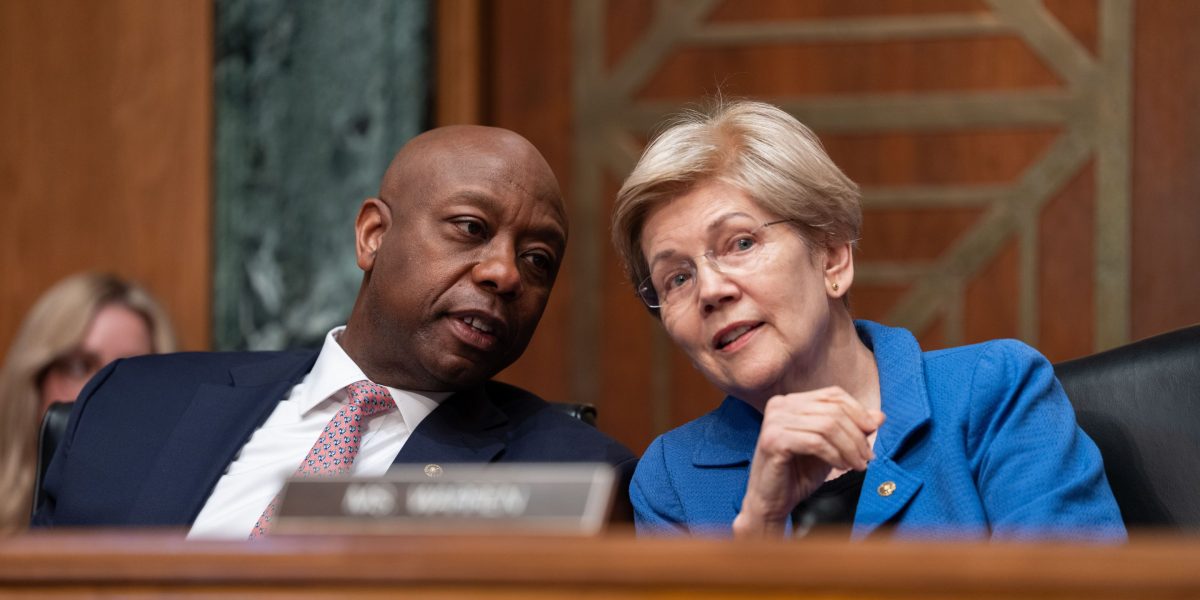
A key section of the bill, which has become a rallying cry for both the bill’s sponsor, Sen. Elizabeth Warren (D-Mass.). and President Donald Trump, is a ban on investors who own more than 350 single-family homes. A section entitled “Homes Are For People, Not Corporations” reflects the bipartisan agreement that Wall Street and large investors are a reason everyday Americans can’t afford to buy a home.
“This bill helps us demonstrate our commitment to bringing down costs,” Warren told Politico. “We’re not in the majority, but we got in there and fought for 47 different provisions to lower costs for American families and to beat back private equity, and we made it happen.”
But the bill may backfire for some of the tenants of the country’s 14.4 million single-family rentals. Economists told Fortune a ban on institutional investors won’t break fundamental barriers to homeownership and could negatively affect the low-income Americans the bills aim to help.
“People want to identify a boogeyman that can say: ‘Hey, this is the problem, and give me an easy button to solve it right now,’” rental housing economist Jay Parsons previously told Fortune. “It’s an emotionally satisfying answer, even if it’s not a real solution.”
Parsons said a ban on large institutional investors, who own about 3% of the single-family rental market, is unlikely to have a significant impact on affordability for lower-income Americans and could leave millions unable to afford a place to live.
Institutional investors serve tenants who are typically locked out of the gates of homeownership for reasons that have nothing to do with corporations. Parsons said many rent because they cannot meet the requirements to apply for traditional mortgages due to lower incomes and credit scores, or they can’t afford the additional $1,000 a month in additional homeownership costs such as home insurance, property taxes, or repairs.
The average single-family renter has a FICO score of 650 and a household income of $88,000, much lower than the average single-family homeowner, who has a FICO score of 730 and an income of more than $150,000, according to 2026 Amherst Group data shared with Fortune. A lower credit score often leads to higher interest rates, so renting from institutional investors is often cheaper.
“These are real people, real families, who live in these homes, and the assumption and the narrative is they would be homeowners, if not for the fact that the investors own these houses,” Parsons said. “The reality is that most of them can’t.”
Today, there are about 1 million fewer single-family rentals than a decade ago, and the share of single-family homes being rented has gradually decreased since 2014, according to a 2025 National Association of Realtors analysis.
Banning institutional investors would reduce rental housing supply, slow down new unit development, and displace more than a million people from their homes, the National Rental Home Council said in a statement to Fortune. The council’s members include some of the largest single-rental family owners, including Invitation Homes, Progress Residential, American Homes 4 Rent, and Tricon Residential.
Renting also has become a way for low- and moderate-income Americans to avoid subprime mortgages with high interest rates that can change, Parsons said. At the same time, mortgage delinquency rates for low-income Americans have been increasing over the past few years due to growing unemployment and higher home prices, according to the New York Federal Reserve.
Trump stops the show
While both parties were running a victory lap on the morning shows on Wednesday, Trump suddenly announced on Truth Social he was canceling the planned signing ceremony for the housing bill. The president is holding up the bill until Congress passes the SAVE America Act, which would impose restrictions on voter identification and mail-in voting.
The step back could be a major blow to both Republicans and Democrats as both parties try to convince voters that they’re improving affordability ahead of the midterm elections.
Senate Majority Leader John Thune (R-S.D.) said Republicans didn’t have the votes to pass the SAVE America Act. Trump is meeting with Senate Republicans on Wednesday for lunch at the Capitol, where they are expected to discuss issues, including the elections bill.
Disclaimer : This story is auto aggregated by a computer programme and has not been created or edited by DOWNTHENEWS. Publisher: fortune.com




