Deep in the forests of Nagaland, two elderly healers — aged 85 and 78 — have been treating the sick for over four decades using nothing but plants they know by name, season, and instinct.
No prescriptions or hospitals. Just bark, roots, and leaves ground into powder, and a body of knowledge passed down through generations.
For years, this practice stayed within the community, largely invisible to the outside world.
Now, a team of researchers from Nagaland University, Berhampur University, and Saveetha Medical College is taking a closer look — because what these healers may have been quietly treating, in some cases, is cancer.
The research is part of a broader scientific effort focused on medicinal plants and forest-based knowledge systems in Northeast India — one of the country’s richest biodiversity hotspots and home to 17 tribes, each with distinct healing traditions.
“Each tribe has its own traditional knowledge to treat diseases,” says Dr G Bupesh, Assistant Professor in Natural Products and Tribal Health Research at Nagaland University.
Who are the Konyaks?
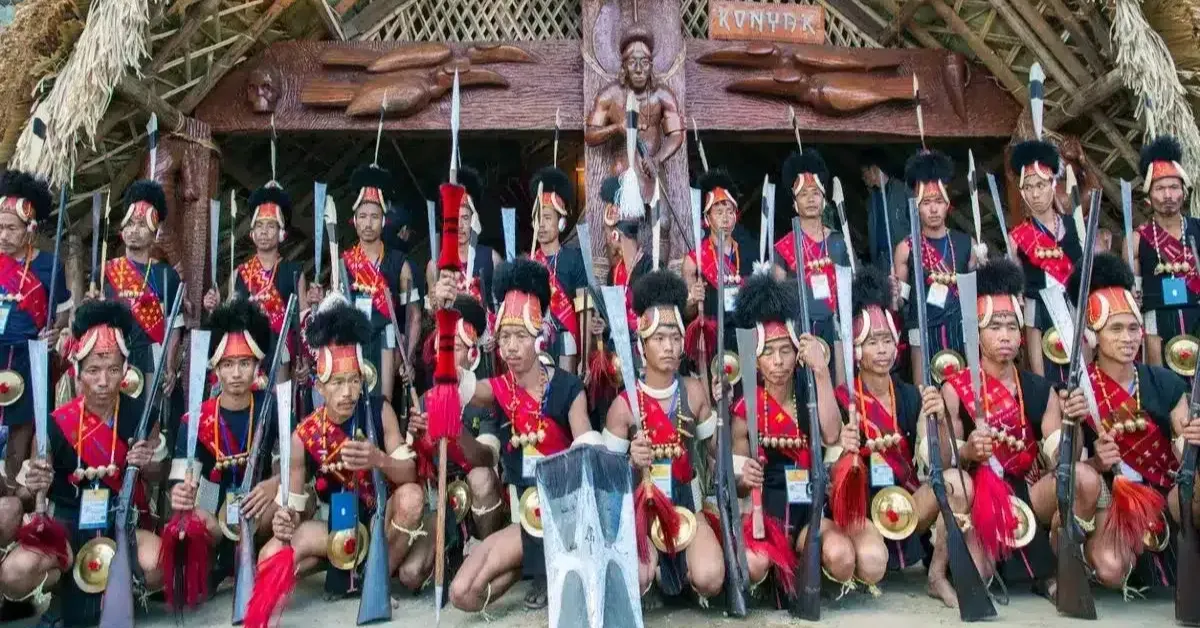
The Konyaks, one of the largest indigenous tribes in Nagaland, live primarily in Mon district along the India–Myanmar border. Their healing practices, built on close observation of forest ecosystems, have been passed down orally for generations.
“The healers are called COPRAs,” Dr Bupesh explains. “They play an important role in remote areas where people don’t have access to modern medical facilities or the money to go to big hospitals.”
For many families, these remedies remain both culturally trusted and economically accessible.
From forest knowledge to scientific study
The researchers didn’t start with test tubes. They started with conversations.
Travelling across Nagaland, the team sat down with more than 50 traditional healers, listening carefully and documenting what they knew — remedies, plant combinations, the conditions they treated.
It was painstaking work, cross-referencing accounts and measuring how consistently certain formulations appeared across different healers and communities.
One remedy kept coming up. A combination of five plants used repeatedly in cases involving what healers described as cancer-like symptoms.
The more healers they spoke to, the more this particular formulation surfaced. “Five important medicines are used for curing cancer,” says Dr Bupesh. “They grind bark and plants together. That is the formulation they prepare.”
It was this remedy that the team decided to take into the lab.
Inside the lab: What the study found
Back in the laboratory, scientists got to work figuring out what exactly was in this ancient remedy — and whether it actually did anything to cancer cells.
Using a battery of chemical analysis tools, they broke down the plant extracts to map out their ingredients. They then introduced these extracts to colon cancer cells in controlled conditions.
/filters:format(webp)/english-betterindia/media/media_files/2026/04/17/4-2026-04-17-15-22-03.png)
The outcome was promising: the extracts appeared to kill cancer cells or stop them from surviving.
When researchers dug deeper, they found a handful of active compounds likely responsible for this effect.
Crucially, even when these compounds were isolated and purified, they continued to show the same cancer-fighting behaviour — suggesting the effect wasn’t a fluke of the raw mixture, but something more specific at work.
How the compounds work
To understand how the remedy might be working, the team turned to computer modelling. Cancer cells don’t just appear — they rely on certain proteins to grow, spread, and build new blood vessels to feed themselves.
One such protein, VEGFR2, acts like an on-switch for tumour progression.
The simulations suggested that compounds from the plant remedy latch tightly onto this protein — effectively jamming the switch.
“Once the active property is lost, the cancer cell will die,” says Dr Bupesh.
It’s an encouraging finding, but the researchers are careful not to overstate it. These results come from lab experiments and computer models, not from patients.
Before any real-world conclusions can be drawn, the work needs to clear the much higher bars of animal studies and clinical trials.
A wider health context
The urgency behind this research isn’t hard to understand. In parts of Northeast India, cancer, particularly of the colon and intestines, is a quietly growing problem.
Researchers point to a mix of factors: changing lifestyles, environmental pressures, and the simple reality that many people in remote areas never get screened early enough to catch the disease in time.
/filters:format(webp)/english-betterindia/media/media_files/2026/04/17/3-2026-04-17-15-23-24.png)
It’s a gap that modern medicine has yet to fully bridge — and one that searches for accessible, locally rooted solutions all the more pressing.
Ethical conservation and responsible research
Alongside scientific discovery, the team is committed to responsible conservation. Some medicinal plants identified are rare — two are found across India, while three are endemic to Northeast India.
Rather than extraction, researchers are developing ethical propagation methods, including tissue culture techniques, to preserve these species.
Plans are also being explored to restore them through controlled cultivation across suitable regions in the Northeast.
Bridging two systems of knowledge
For Konyak communities, these remedies are not discoveries but lived traditions rooted in their relationship with the forest.
What science is doing now is beginning to examine and understand this knowledge through modern tools — not to replace it, but to explore its relevance in new contexts.
At a time when cancer treatment remains expensive and difficult to access in rural India, there is growing interest in plant-based compounds that may one day offer safer, more accessible alternatives.
The study opens a pathway — one that begins in the forests of Nagaland and moves, step by step, toward the possibilities of future medical research.
Disclaimer : This story is auto aggregated by a computer programme and has not been created or edited by DOWNTHENEWS. Publisher: thebetterindia.com