With China’s economy slowing and youth unemployment rising, exhausted, disillusioned young people are seeking relief from the grinding pressures of modern life.
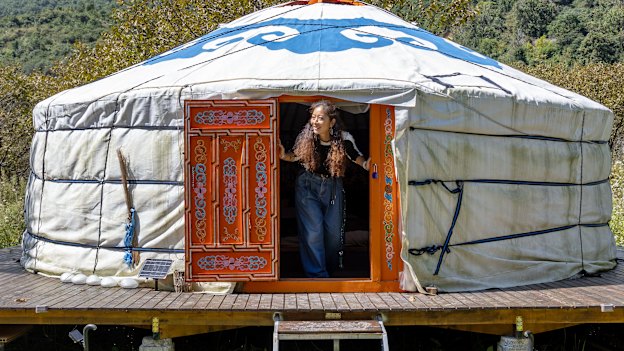
Dali, Yunnan: In the misty foothills of Dali’s Cangshan Mountain range, Mona is building a sanctuary of sorts for China’s burnt-out generations.
On a parcel of unploughed farmland, where she lives for half the year in a Mongolian yurt with unpredictable electricity and free-range geese, she hosts singing retreats, guiding disquieted souls in sound healing and meditation to the beat of her shamanic drum.
She’s building more yurts to establish a nomadic-style community, where people can stay for a few weeks or more to recharge their batteries. Her retreats draw an eclectic mix, including a few foreigners, but mostly they are city-weary Chinese, seeking relief from the grinding pressures of modern life.
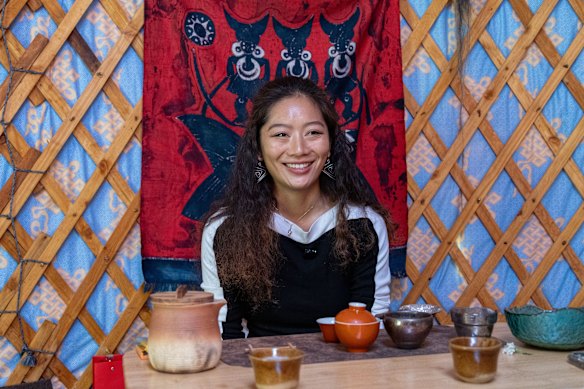
“I’ve been seeing so many people who are working in cities, or their lives are so hard and so crazy,” says Mona, 34, who splits her time between Dali and Shanghai. Like many people in Dali, she prefers being known only by her first name.
“They press [down] their emotions and their thinking. They never talk to their family or their colleagues. Eventually, they get bad depression.”
Here in Dali, she says, people want to find another way to live.
It’s what has made Dali a sought-after refuge in China, where room for offbeat creativity and expression has narrowed over the past decade as authorities tightened their vision of an ideal society – one grounded in conformity, national security, traditional gender roles and hard work.
Sometimes nicknamed Dalifornia, this mountain town in the country’s south-western Yunnan province has long been an escape route for China’s drifters and dreamers, its musicians and creatives. For decades, they have gravitated here to live in alternative communities of like-minded folk on the fringes of Dali’s touristy old town district.
The rent is cheap, and the town’s traditional courtyard-style homes built by the local ethnic Bai people are conducive to communal living.
However, since about 2021, when China’s economic miracle began faltering, a new influx of exhausted, disillusioned youth began arriving. And they’ve never stopped coming.
They are the Millennials and Gen Z adults for whom the trusted recipe for upward mobility – the one their parents used to stride into China’s burgeoning middle classes in the 1990s and 2000s: studying hard and working hard – has crashed up against a domestic economic downturn and changing expectations of what constitutes a meaningful life.
Youth unemployment is closing in on 20 per cent, as China’s labour market struggles to absorb 12 million new graduates from its universities each year, fuelling intense competition for limited white-collar jobs.
It’s now common to find graduates working as delivery drivers for takeaway food platforms alongside millions of farmers-turned-migrant workers who have left rural areas searching for better pay. However, the influx has fuelled intense competition in these jobs too, adding to the downward pressure on wages.
The swelling gig economy has also propped up a broader unemployment rate of around 5 per cent, which some economists suspect is probably double that, and masks a level of precarity among the masses.
In January, Goldman Sachs assessed that corporate hiring in China had fallen to its most depressed level in more than a decade, outside the COVID-19 period. While tech and AI industries are booming, they are not yet major job creators, and are unable to plug the economic rout caused by China’s property market collapse, which wiped out large swaths of middle-class wealth, paralysing consumer spending and investment.
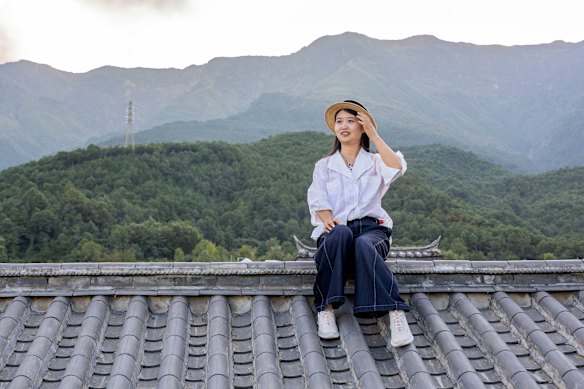
“Many people who come to Dali now, it’s because the economy is doing poorly, and they may have already been laid off by their companies,” says Coco, a former sales representative at Chinese tech giant Alibaba.
“They figure there’s nothing else they can do anyway, so they just come to Dali to first find themselves, or simply to take a break for a while.”
Others have trickled into Dali to escape the strictures of tradition and societal expectations that demanded certain things of them by 30 years old – a stable career, marriage, kids. For Chinese women, the verdict is harsher.
Enter your 30s single and unmarried, and you’re “sheng nu” – a leftover woman.
Coco first arrived in Dali five years ago, among the early waves of corporate refugees who came to the mountains to escape the infamous 996 work culture (9am to 9pm, six days a week) rife in China’s tech industries. The practice still lingers, despite being ruled illegal by the courts, as the unspoken playbook to prove your value in ultra-competitive workplaces.
She has reinvented herself as a life coach, channelling her experience with corporate exhaustion into seminars and one-on-one video sessions streamed from her rented courtyard house – an example of the new unconventional jobs that have currency in Dali’s alternative economy.
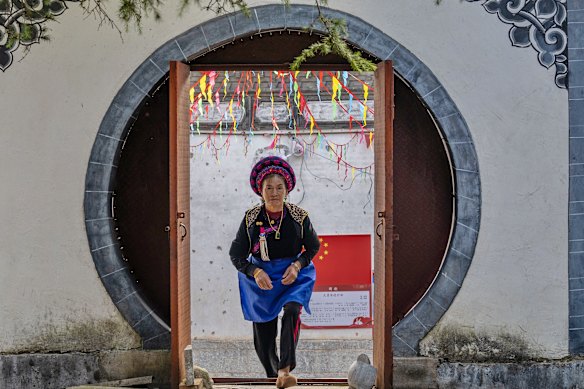
“It’s very hard for our young generation because you just follow society’s clock,” Coco says.
“In our traditional education system, we do not have too much time or energy to think about what’s [the value of] your life. We just focus on the exam scores, your university major and the job.”
Burnt-out and burning through savings
The Connected Youth Community on the outskirts of Dali’s old town district is a flame that draws all moths, and the stepping-off point for many before they settle in for the longer term.
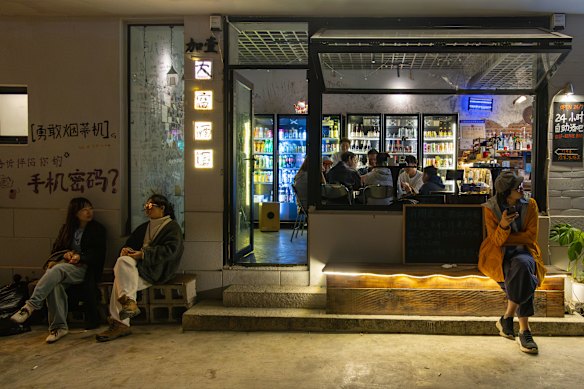
It has all the hallmarks of a good hostel – cheap rooms, a fire pit, a shared pantry and a 24-hour bar out the front. In the communal area, the walls are plastered with posters advertising group philosophy sessions and talk therapy classes where people are encouraged to explore their authentic selves.
The shared bookshelves are stocked with enlightenment thinkers and feminist texts, with Simone de Beauvoir’s The Second Sex and Virginia Woolf’s To the Lighthouse displayed as recommended reading. Outside a lot of dorm rooms, someone has abandoned a copy of Friedrich Nietzsche’s The Will to Power, an opus that may find new audiences among the modern mantras of self-actualisation and controlling your destiny.
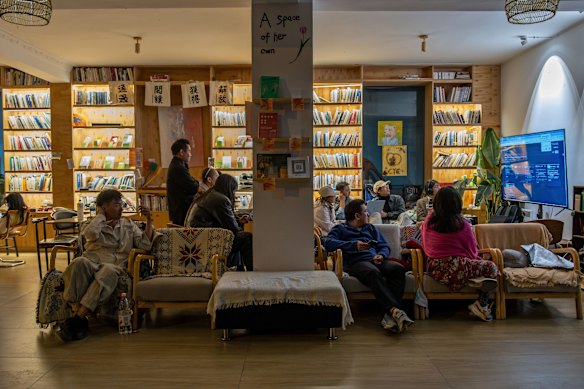
Dali has a “free, tolerant, and open atmosphere, which is very rare in China”, says Paul, a Dali long-termer, who sometimes drops into the hostel to meet friends or attend group sessions.
“Here, we are not bound by many restrictive ideas, and people won’t be quick to judge others.”
At 36, Paul has earned a string of qualifications – including an expensive master’s degree in design from Monash University – only to be treading water in Dali with no stable employment. He was churned out of high-pressure jobs in Beijing and Shanghai, and is now exploring how to get by as a freelance tutor, hoping never again to set foot in a traditional workplace.
“When I was working there, I felt that my life was basically taken over by work, constantly having to work overtime,” he says.
On a recent Saturday evening at the hostel, a few people are gathered around an outdoor dining table discussing the shrinking value of labour and the corrosive impact of “involution” – the phenomenon of cut-throat hyper-competition that has driven down prices and profits across many industries, pushing China’s economy towards the brink of deflation.
“The longest I ever worked was four days and four nights in a row without a proper sleep,” says a man who identifies himself as Johnny, describing his experience as a construction worker in Shanghai.
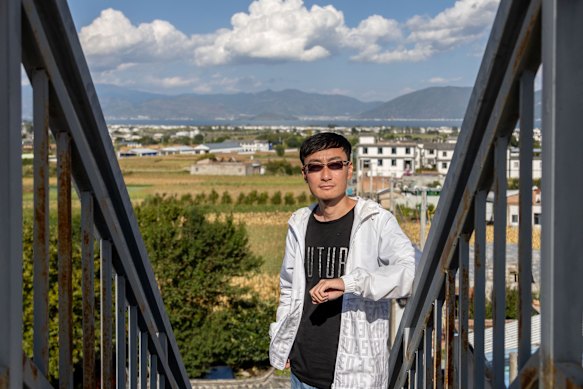
“At that time, I felt like I was about to physically perish. There are lots of news reports in China about people dying from overwork.”
Naturally, a certain level of wealth is required to opt out of the rat race. Many of Dali’s drifters have middle-class backgrounds and financial safety nets they can tap into while figuring out what comes next.
But not everyone.
Johnny, 30, has been in Dali for four months, burning through meagre savings while trying to earn a little on the side cooking meals for others at the hostel. He’s just breaking even, and will soon be forced to go back to the grind when his stockpile runs dry.
“Many people may not even realise that, in China, everyone is actually too tired. The competition is fierce, but income and effort are often disproportionate,” he says.
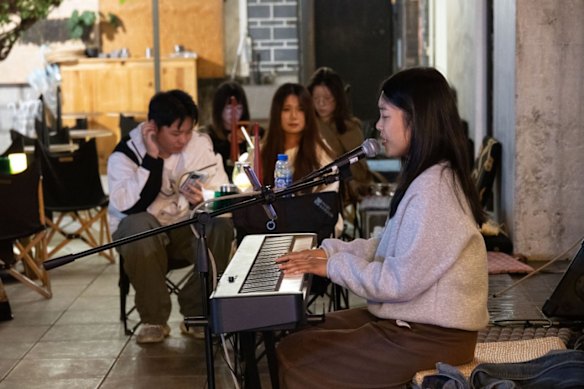
“My previous income wasn’t actually very high, but I dedicated all my hours to work. I had no life of my own.”
His mindset is a common one here: that hard work is failing to deliver commensurate returns in pay, promotions or recognition, and people are better off earning less if they can find emotional fulfilment in other ways.
“I can accept earning less money if it means having more freedom in my life,” he says.
From flat out to lying flat
In other countries, the release valve for this kind of despondency might manifest on the streets. Youth-led protests and riots have kicked off across the world over the past year, in places such as Nepal, Indonesia, Spain and most recently, France, in part fuelled by economic stagnation and cost-of-living pressures.
But in tightly controlled China, it’s manifested as a widespread sense of disillusionment among younger generations about the future.
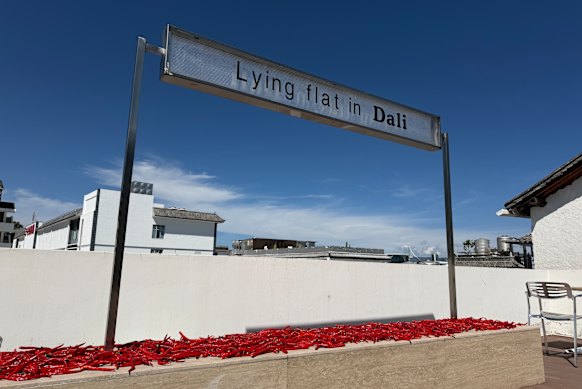
Against this backdrop, Dali has become China’s epicentre for “tang ping”, or “lying flat” – the viral movement that kicked off in 2021 as young people declared they were opting out of jobs and societal expectations, seeing no way to get ahead. It has its overseas analogies in concepts such as “quiet quitting”, which circulated on Western social media around the same time.
Chinese authorities, ever anxious about simmering discontent, have clamped down, restricting online content that promotes tang ping lifestyles. In April, the Foreign Ministry denounced it as a foreign plot, saying its national security agencies had uncovered efforts by unnamed hostile forces to poison the minds of China’s young people and promote “effort is useless” narratives.
Not everyone was buying it.
“How can I get one of these jobs working for ‘foreign forces’? I need their money,” one user posted on RedNote, a Chinese social media platform.
“So foreign organisations want everyone to ‘lie flat’, which means Chinese companies pushing the 996 work culture are actually heroically fighting foreign forces while suffering in silence? Wow, how inspiring,” another wrote on video-sharing site Bilibili.
Jenny Chan, an associate professor of sociology at the Hong Kong Polytechnic University, said the fact that themes of exhaustion and despondency had endured for half a decade after the tang ping movement took off pointed to an entrenched malaise among younger generations.
“They are not just lazy or unmotivated,” she says, but rather the traditional formula of hard work “didn’t give them a clear pathway to get to the next step”.
None of the people this masthead spoke to in Dali currently identified with the tang ping movement, ascribing to it a level of futility and resignation that they had not reached. They were still striving for something, even if that something was more philosophical than tangible.
“Most of us, including myself and many around me, are not like that. We’re just resting,” Johnny says.
Mona warns people that Dali can become a seductive trap for the aimless.
“If you don’t have your goals here, you will easily lose yourself,” she says.
In one of Dali’s many coffee shops, Lily is contemplating what freedom means in a place where political expression has long been closed off, and personal and economic liberties are also constrained.
Until about a year ago, she was working as a judge in northern China. As hundreds of civil cases piled up on her plate, she was pushed to breaking point. She quit after a few months, ill and depressed. It was the end point, she says, after assiduously climbing the traditional ladder of success, from one exam to the next and then one promotion after the other, until she hit a wall.
“I feel that Dali is a small utopia in China,” Lily says, 38, requesting a pseudonym.
Here, no one is measuring her as a failed judge who couldn’t cope with the pressure. Though she’s lived in Dali for a year and made new friends, hardly anyone knows each other’s real names.
“Some say that today’s white-collar workers in office buildings feel the same as the female textile factory workers of the past,” she says. “Back then, the physical exhaustion was more pronounced. Now, it’s the mental exhaustion that’s so significant.”
She invokes the famous “iron house” philosophical dilemma proposed by Chinese intellectual Lu Xun in his 1923 short story collection, Call to Arms. What should one do if they come across an indestructible iron room, with people trapped inside, quietly but painlessly suffocating to death? Should you wake them to face an agonising struggle and likely no way of escape?
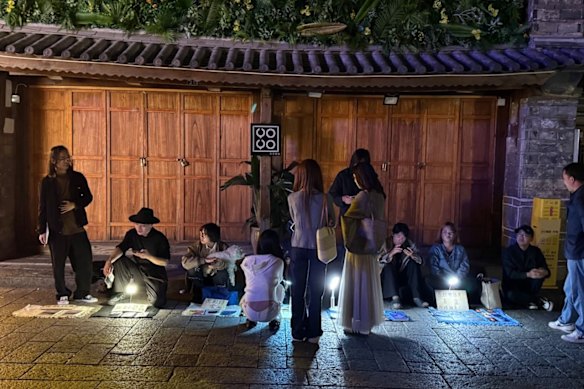
“I think people today have been woken up, but they still can’t find a way out. And that makes them even more miserable,” she says.
Lily isn’t interested in politics, but she finds freedom in her agency to change her circumstances.
“Older generations didn’t have other ways out. They couldn’t even see other possibilities,” she says.
“At least in Chinese society today, people can speak more openly about things like having experienced depression. That’s progress in itself. People are beginning to realise that there are other ways to live.”
Get a note directly from our foreign correspondents on what’s making headlines around the world. Sign up for our weekly What in the World newsletter.
Disclaimer : This story is auto aggregated by a computer programme and has not been created or edited by DOWNTHENEWS. Publisher: www.smh.com.au