
SRINAGAR: Jammu and Kashmir’s winter capital stirred back to administrative life on Monday as the Union Territory government formally resumed operations from Jammu following the biannual Darbar Move, reviving a tradition that has long symbolised both governance and the emotional bond between the Himalayan region’s two capitals.
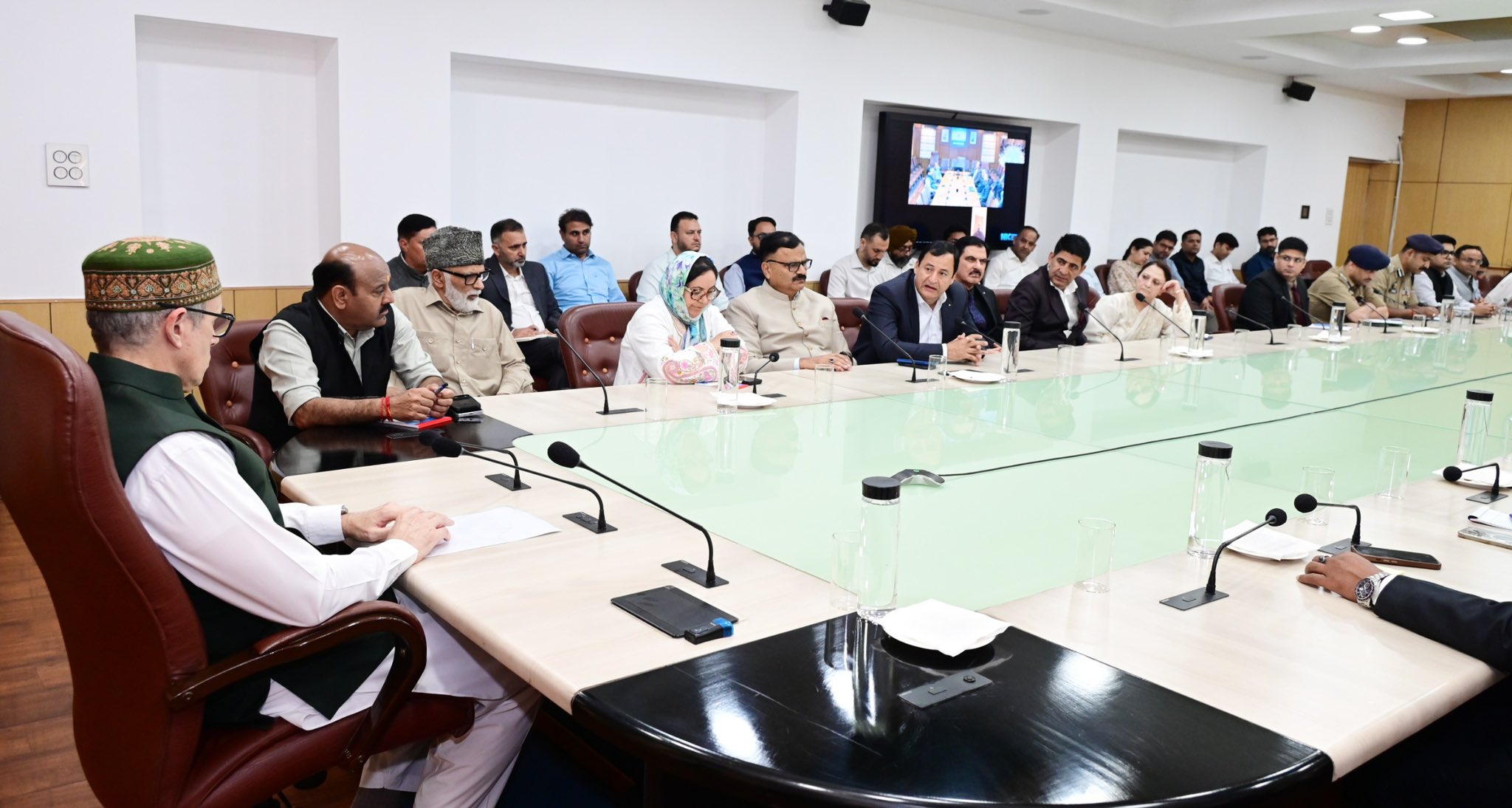
Chief Minister Omar Abdullah inaugurated the winter session of the administration at the Civil Secretariat, where he was accorded a ceremonial Guard of Honour by a contingent of the J&K Police. Flanked by Deputy Chief Minister Surinder Kumar Choudhary, cabinet colleagues, senior bureaucrats, and top police officers, Abdullah inspected the parade before proceeding directly to his office to begin official business.
The transition marks a significant milestone in the restoration of the historic Darbar Move, which returned last year after remaining suspended since 2021. Unlike previous years, when the shift between Srinagar and Jammu took more than a week, the administration completed the move in just two days. The Civil Secretariat had closed in Srinagar on Friday, reopening in Jammu on Monday, underscoring a more streamlined and efficient transition.
More than 100 government offices have now shifted operations to Jammu for the six-month winter season. The Chief Minister’s Secretariat, along with around 40 key government departments, has relocated fully to the winter capital, while nearly 50 other offices will function under the camp-office arrangement. Under existing guidelines, camp offices will operate with up to 33 percent of sanctioned staff strength, or a maximum of ten officials, ensuring continuity of public services across both regions.
The Chief Minister is expected to hold a series of meetings with ministers and senior officials in the coming days to review departmental performance, assess service delivery mechanisms, and ensure the smooth implementation of government policies during the winter months. Security measures around the Civil Secretariat and other major government installations have also been enhanced to facilitate the movement of officials and the public.
Beyond its administrative significance, Monday’s ceremony carried deep historical and political symbolism. The Darbar Move traces its origins to 1872, when Dogra ruler Maharaja Ranbir Singh, building upon the governance practices of the Dogra state founded by Maharaja Gulab Singh, institutionalised the seasonal shift of the government between Jammu and Srinagar. The arrangement was designed to escape Jammu’s scorching summers and Srinagar’s harsh winters while ensuring uninterrupted governance across the mountainous region.
Over time, the practice evolved into much more than an administrative exercise. Twice every year, thousands of officials, employees, families, records, and resources crossed the Pir Panjal mountains, creating a unique bridge between Jammu and the Kashmir Valley. The annual migration fostered cultural interaction, strengthened regional integration, and pumped significant economic activity into Jammu during the winter months.
That tradition came to a halt in June 2021 when the administration under Lieutenant Governor Manoj Sinha discontinued the practice, citing an annual expenditure estimated at around ₹200 crore and arguing that modern e-governance systems had rendered physical relocation unnecessary. The decision triggered strong opposition from Jammu’s business community, which maintained that the Darbar Move was not merely a bureaucratic exercise but an economic lifeline for the winter capital.
Upon assuming office, Abdullah repeatedly emphasised the move’s cultural, social and economic value. On October 15 last year, while marking his first year in office, he announced that his government had secured approval for the restoration of the practice, fulfilling a major promise made by the National Conference-Congress alliance during the 2024 Assembly election campaign.
For many in Jammu, the return of the Darbar Move represents more than the reopening of offices. It is seen as the restoration of a cherished tradition that reinforces the erstwhile state’s shared identity while reviving economic momentum in the City of Temples. With government departments settling into their winter headquarters and official activity returning to the corridors of the Civil Secretariat, Jammu once again assumes its historic role as the seat of governance for the next six months.
As the officials resumed work after years of uncertainty surrounding the practice, the revival of the Darbar Move signaled not just the relocation of a government, but the return of a tradition that has shaped J&K’s political, cultural and administrative landscape for nearly a century and a half.
Disclaimer : This story is auto aggregated by a computer programme and has not been created or edited by DOWNTHENEWS. Publisher: deccanchronicle.com




