
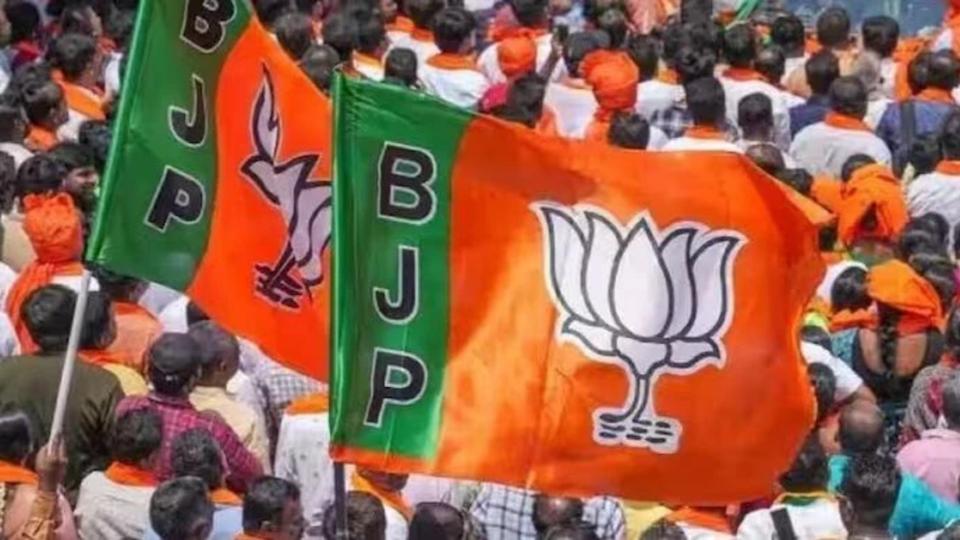
My thesis is that the Indian State under Hindutva is incompletely communal. I have written about this before, but the principal argument is that the inability of Nepal before 2008 to become a Hindu Rashtra in the full meaning of the term by legislating doctrine as described by the Smritis also applies to us. This is a structural problem and not resoluble. This is the reason why the musings of Guru Golwalkar on the ideal state of the nation is not part of the BJP’s manifestos. This also means that the State, meaning the apparatus of government, retains an instinct to be secular and normal. How can we observe this? We can do so in how the government behaves when it engages with the world. When our Prime Minister and foreign minister travel abroad to lecture the world and receive its medals, they do not use the same rhetoric as they do within India. They speak of Vasudhaiva Kutumbakam and Sarvadharma Sambhava. They do not tell the world that inside India their policy is bulldozer and beef lynching and CAA and NRC and love jihad. They go to the United Nations and other fora under a Nehruvian carapace. There is a creature called the hermit crab. It does not have a shell of its own. It takes the shell of a dead animal and uses it to protect itself. This is what the BJP does with Nehruvian secularism when it goes out into the world. The universalism they spout and pretend to espouse elsewhere clashes with their actions here at home and all the various laws they have legislated through the years from 2015 (criminalising beef), 2018 (criminalising interfaith marriage), 2019 (criminalising Muslim divorce and excluding Muslims from CAA) and so on. This produces a paradox which makes us vulnerable to the charge of hypocrisy. It also opens us up to pressure from the world which would otherwise be muted if we did not boast of values that we actually do not hold. In August 2019, India imposed an Internet blockade on Kashmiris. Four months after that, on December 6, a motion was tabled in the United States Congress demanding that India lift it.
The author was a Congresswoman of Indian origin. That same month Mr Jaishankar was in Washington and scheduled to meet legislators in the House Foreign Affairs Committee. On learning that the author (Democrat Pramila Jayapal) would be present, Mr Jaishankar refused to attend. This was in the first Trump term and though that bill was tabled it was not voted on. When Mr Donald Trump lost the election and Mr Joe Biden was sworn in, in January 2021, India lifted the ban. Why? Likely because our government felt it could not resist the pressure from the Democrats. Something similar happened in Europe. Five separate groups in their Parliament tabled a motion which was most condemnatory on the Citizenship Amendment Act on January 28, 2020. It was reported in newspapers here that the motion had enough votes to be passed. Mr Jaishankar went to Brussels on February 17 to make some sort of deal. We do not know the details because this is not a transparent government but what happened was that the motion was not voted on there and though the law had already passed here India did not enforce it for another four years. This problem of a gap between words and deeds creating trouble can be seen elsewhere. Last year, our National Human Rights Commission was demoted by the Global Alliance of National Human Rights Institutions from having ‘A’ status to ‘B’. Why? The main reasons where that it was not independent, that it had police-led investigations into police atrocities, that it was not diverse and that it was silent on systemic violations by the State. All of these are indisputably true. We have appealed the demotion and that hearing is over the next few days. But more than appeal we should consider changing our behaviour so that we are not accused of pretending to be something we are not.
The government instead gets prickly and irritated when the world sees the paradox and merely points it out. The responses to findings by Freedom House that India was only “partly free” (calling it “misleading, incorrect and misplaced” in 2021), to the Economist Intelligence Unit concluding India was a “flawed democracy” (saying in 2020 that this was “misleading and perception-based”) or to its fall on the Global Hunger Index (calling it “unscientific” in 2021; “effort to taint India” in 2022; and “flawed measure” in 2023) are examples. The targeted attacks on minorities are usually the principal cause of our demotion on the global indices. And yet the government seems baffled at times that the mother of democracy should receive such poor grades in democracy. The issue is simple: Freedom is not separable from individual rights and liberties. A government that assumes that democracy consists only of free and fair elections — and even here we have lost ground recently — will always be defensive when it is told that it is imperfect. To some extent this is fine.
The Gulf nations and North Korea do not care if the world calls them undemocratic because they never claimed to be. It is those who pretend to be trailblazers who make themselves vulnerable by telling the world they are something that they are not. Aakar Patel is a senior journalist and columnist
Disclaimer : This story is auto aggregated by a computer programme and has not been created or edited by DOWNTHENEWS. Publisher: deccanchronicle.com






