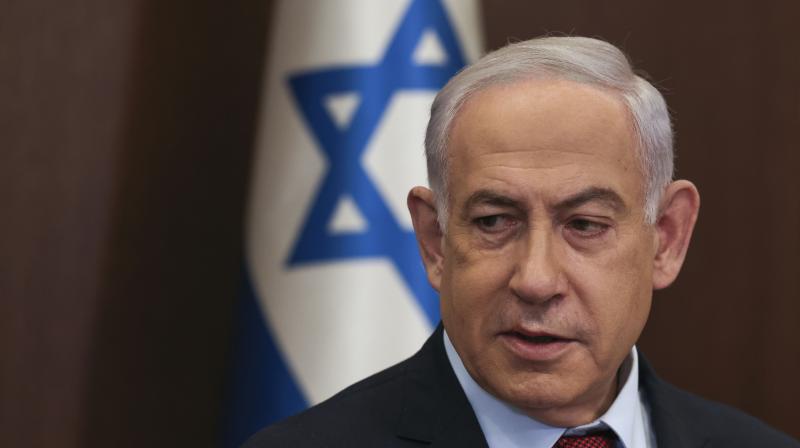
Israel’s parliamentary election on October 27 has produced a hung verdict, but with some distinct features. With over 90 per cent votes counted the seats won by three blocs are: Prime Minister Benjamin Netanyahu 53; Godi Eisenkot 48; and Arab parties 19. The majority required in the 120-member Knesset is 61, which neither of the two leading blocs possesses. The election turnout was the highest in the past three decades. While the Netanyahu bloc dropped from its pre-election 68 members to 53, the Arab parties rose from 10 to 19. Consequently, PM Netanyahu has begun debunking the Arab success as vote theft. The main Opposition leader is Gadi Eisenkot, whose party Yashar won 21 seats. He is a former Army chief, who lost his son and some nephews in the Gaza military operation.
However, ideologically, even he subscribes to Zionism, albeit a moderate version. Although he strongly opposes Mr Netanyahu, he shares his views on some issues, especially concerning the Palestinians. The wrangling has already begun between the two main groups, competing to attain a majority of 61. A number of factors are in play. Firstly, there appears to be consensus amongst the Opposition parties, including the Arabs, that they must change the speaker, after agreeing on a new name. Secondly, there is reluctance on the part of most members of the two dominant blocks, to not openly align with the Arabs.
Consequently, to attain a majority, sans the support of the Arabs, then parties would have to break away and defect. Avigdor Liberman, leader of Yisrael Beiteinu, provides an example of shifting allegiances since the past. He split from Mr Netanyahu’s Likud in 1999. He was foreign minister (2009-15) and then defence minister (2016-18) in Netanyahu’s Cabinet. But since 2019 he has avoided joining it. He has been critical of military conscription exemption given to ultra-religious Haredi youth. Despite a Supreme Court ruling against it, the status quo remains. Thus, although his winning candidates, numbering seven or eight, are being counted in the Netanyahu bloc, he is urging Mr Eisenkot to form a coalition with Mr Netanyahu. However, both these leaders oppose conscription exemptions on religious grounds. If Mr Netanyahu was to concede their demand he would upset his ultraorthodox ally UJT, which has seven elected members, and wants no separation between religion and politics. Mr Eisenkot in social media posts talks of being focussed on “the heavy task entrusted to us — bringing change to Israel and establishing a Zionist mobilisation government”. He maintains that the will of the people translates into “no confidence in the government of October 7”. Thus, it appears that for the time being no grand coalition between the two main blocs is likely. That brings into play the role of President Donald Trump and the US. With the crucial US midterm elections due on November 3, and with the President’s Republican Party badly trailing in polls, resumption of armed conflict with Iran comes into play. The October 26, 2026, visit by Mecca Pact principal Islamic nations, i.e., Pakistan, Saudi Arabia and Türkiye, to Tehran signalled the regional concern about US-Israel restarting the war. Resumed hostilities can help Israel’s Prime Minister postpone the meeting of the re-elected Knesset and the Opposition’s attempt to eject the incumbent leader. The final call would have to be that of the US President, whether hostilities would help or further harm his party electorally.
The significantly large number of Arab members getting elected to the Knesset opens a possibility for Israel to move from using force to handle the Palestinian issue to opting for dialogue and negotiations. The stigma over allowing Arabs, constituting 20 per cent of Israeli population, to be a part of the ruling coalition needs to be overcome. The choice for the Eisenkot Opposition bloc is between continuing to suffer the Netanyahu-engendered confrontational scenario or rising above ethnic and communal prejudices and engaging the elected Arabs.
That could then lead to a peaceful settlement of the Palestinian issue. Politics, however, rarely produces statesmen with the ability to reshape history, for which an opportunity is now available. It is possible that realignment between parties of the two main blocs may produce either a reshaped Netanyahu government or a new regime, without the support of the Arab bloc. If military hostilities are avoided until the US midterms and the Democrats capture the House and even the Senate, then PM Netanyahu’s ability to suppress Palestinians and market theories about reshaping the regional order, etc., would get constrained.
Thus, the next week is crucial for the Gulf and West Asia. Where does India fit into this developing scenario? Having openly aligned with Israel before it and the United States attacked Iran on February 28, the Indian options got restricted. Essentially, India was perceived as positioning itself alongside Israel, the US and countries like the UAE, which were signatories to the Abraham Accords. This got reflected in the rather peculiar visit of US secretary of state Marco Rubio and Emirati foreign minister Sheikh Abdullah bin Zayed to Mumbai, without coming to Delhi. Indian external affairs minister S. Jaishankar joined them in Mumbai. A new regime in Tel Aviv may not change the strategic closeness between India and Israel but could modify some of the terms of engagement. Those changes, if any, would depend on Israel recalibrating its domestic and foreign policies, transitioning from attempting to reshape the regional order to adapting to it. A Democrat-controlled US Congress may start enquiries into the role of President Donald Trump’s son-in-law Jared Kushner and special envoy Steve Witkoff. Reports of Saudis and Emiratis transferring billions into former’s accounts would also bring up the Israeli agenda regarding regional dominance. That could force the Israeli government to also reexamine the Netanyahu regime’s strategic and demonic games. Hence, political changes in the US and Israel, or at least in the former, could cause existing tactical and strategic policies of West Asian and Gulf countries to be reassessed. India should strategise in advance to not just witness change but help shape it. Diplomacy is more than hugging counterparts. It involves engaging minds, influencing their thinking and enhancing India’s regional diplomatic footprint, now constricted by the Mecca Pact. The writer is a former secretary in the external affairs ministry. He tweets at @ambkcsingh
Disclaimer : This story is auto aggregated by a computer programme and has not been created or edited by DOWNTHENEWS. Publisher: deccanchronicle.com