
The man next door
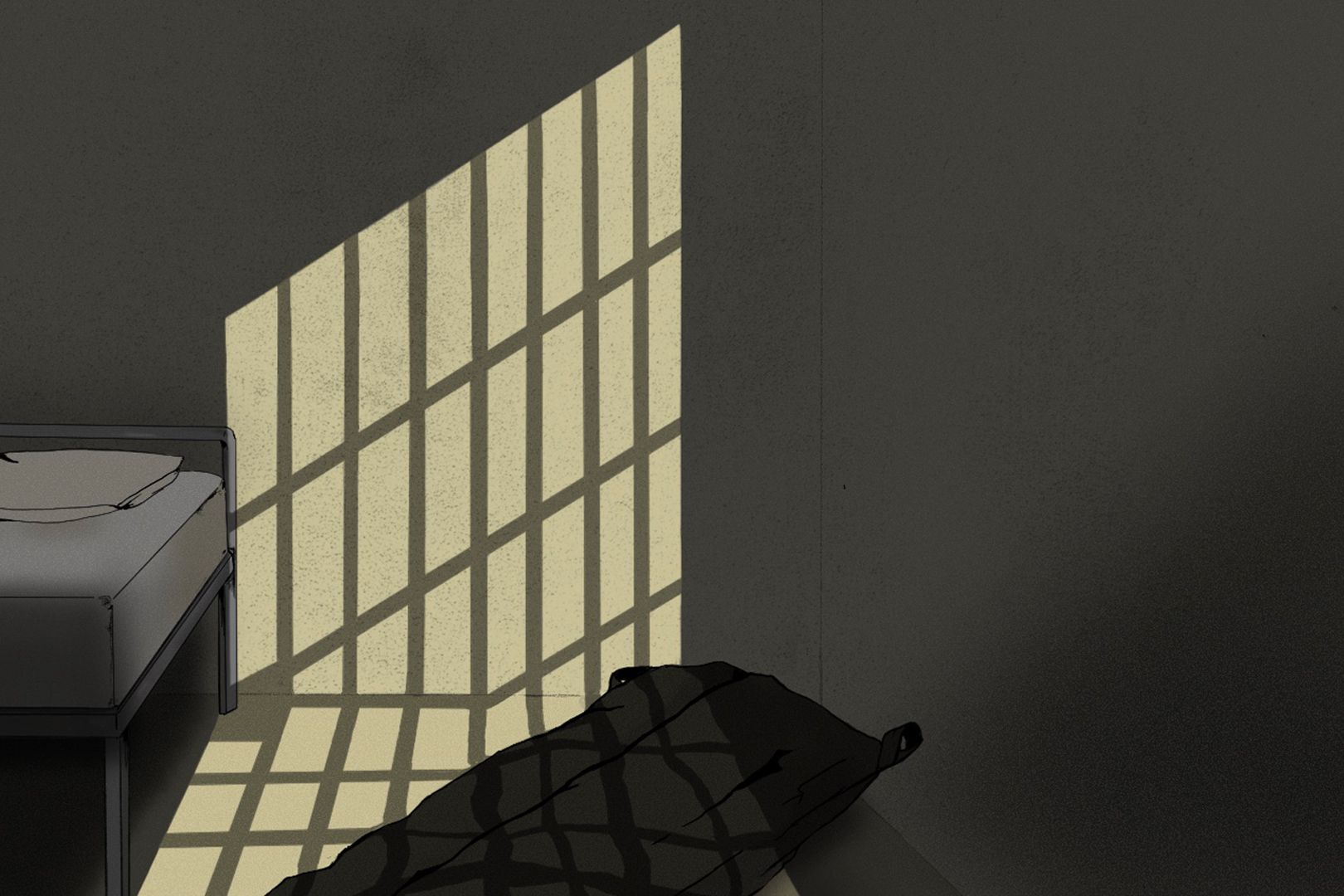
I first met Peter Rusch in October 2022 on North Compound, Unit 2-B Right. I had just been transferred there after a tactical search team (TST) raid on my housing unit. Employees had gotten a tip that I had a contraband item, and since staff generally don’t approve of my writing — often about the injustices of prison — they jumped at the chance to put me in administrative segregation, or ad-seg, basically solitary. I arrived with nothing but the clothes on my back.
Peter was living in the cell next to mine. I could see him when we were both outside our cells and speak to him through the walls. He was tall and thin, with long dark brown hair and a scraggly beard, with glasses perched on his face. He reminded me of Shaggy from Scooby Doo. He seemed to know everyone on the unit. He had been in ad-seg for months, I learned later — but never knew why — which was hard on a guy like Peter, who was widely known to have mental health issues. I’d heard that he also tried to commit suicide before.
Two things stood out about Peter immediately: his kindness towards other incarcerated men, and his hostility towards the staff.
When I was first brought onto the unit, I had no shower slippers, only sneakers. After two days, I finally got permission to shower. I stood there, uncertain, unsure how I was supposed to step into a communal shower with my only shoes.
An officer shrugged. “You wanna get in or what?”
From the next cell, Peter called out, “Give him my shoes.”
The officer refused. Peter cursed at him. Eventually, the officer opened the hatch and allowed Peter to pass his slippers through the port.
Later, after I returned from the shower, Peter softened his voice. “You good, big bro?” he asked. “They are a**holes. Don’t worry about it. Let me know if you need anything.”
Lending me his slippers was a small and ordinary kindness, the kind that becomes rare in places designed to erase it.
You good, big bro? … Don’t worry about it. Let me know if you need anything.
The next day, Peter was scheduled for kiosk access, a minor privilege in closed custody units that allows a man to send emails or download a song. However, the officers never came to escort him to the kiosk. So, he began shouting to get their attention. Hours passed. Shift change was approaching. An officer finally appeared and told him it was too late.
Peter argued and asked for a supervisor. The officer refused.
Peter then asked for mental health treatment, and the officer laughed.
“I want to kill myself,” Peter said clearly.
Instead of doing something to help him, the officer shut off the water to Peter’s cell by closing the valve in the plumbing closet.
Peter responded by banging on his door. In lockup, banging spreads. One man starts, others join. The metal clanging echoes. Sound becomes pressure, and anxiety fills the air. It is a collective scream without words.
Then it went quiet.
Shortly after, a sergeant arrived, and she knocked on Peter’s door. There was no response. She opened the side slot and said there was “something around his neck”.
“He’s turning a colour,” she said. “Code 66!” she called to the staff.
Officers rushed in, and medical staff followed. When his cell door was opened, Peter was unconscious but alive. They cut him down. He regained consciousness and screamed. A struggle followed as he was dragged from the cell. I could hear loud thumps and people struggling. Officers pinned him to the floor. A restraint chair was brought in, and a sergeant produced a camera to record the footage.
They strapped him down and rolled him out after a struggle.
I stood in my cell and watched a mentally ill man who had shown me nothing but kindness be treated like an animal. I left the unit the next day.
Disclaimer : This story is auto aggregated by a computer programme and has not been created or edited by DOWNTHENEWS. Publisher: aljazeera.com






