EXCLUSIVE: The star opens up in new book A Magical Life, saying: ‘Even though I was losing him, I just kept telling myself – I still do – how lucky I was.’
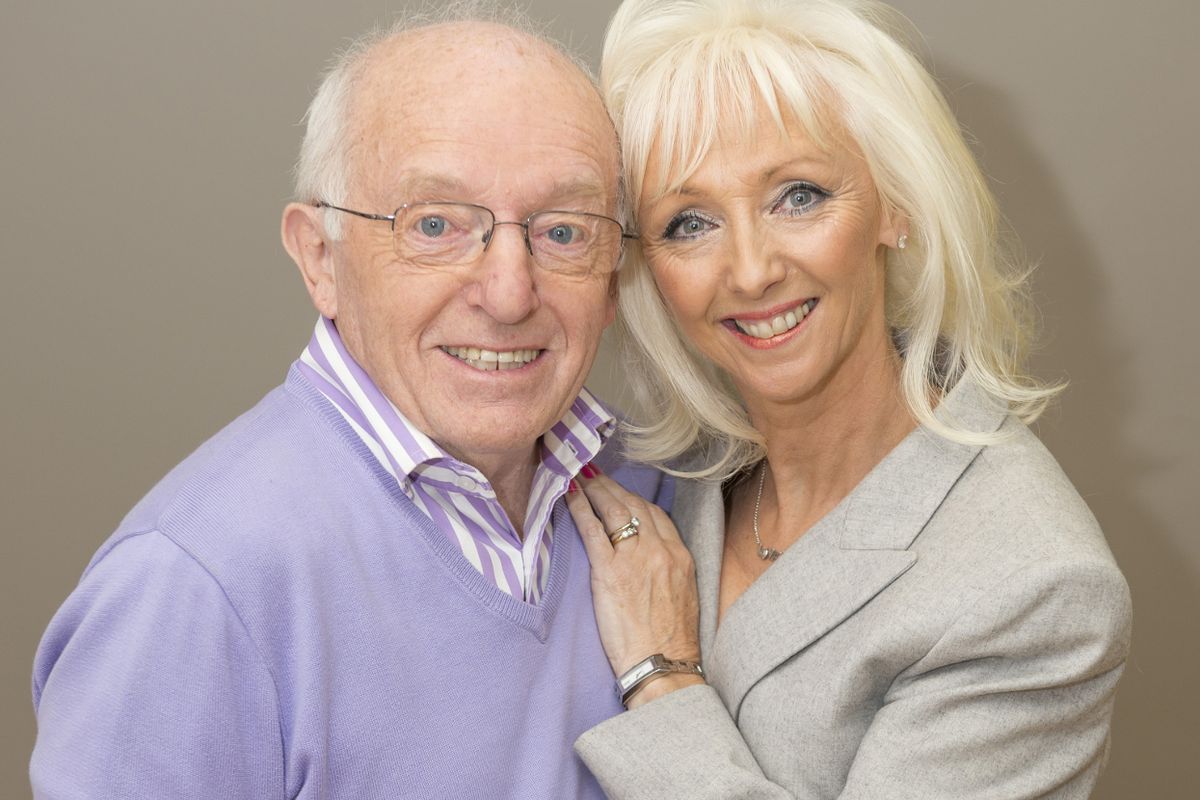
Debbie McGee had been in bed for barely half an hour when the nurse woke her to say her wonderful, magical husband was nearing the end. After almost four decades together, there was nowhere else Debbie wanted to be than with Paul Daniels.
She says: “I got up and went to him, laying alongside him on the hospital bed, just cuddling him. Paul always used to tell people that I was the best thing that happened to him. I wanted him to know that he was the best thing that ever happened to me.”
Ten years after Paul’s death at 77, Debbie, 67, has laid bare the agony and the profound tenderness of his final weeks in her new autobiography, titled A Magical Life.
She says: “Even though I was losing him, I just kept telling myself – I still do – how lucky I was.”
The pair had met during a summer season in Great Yarmouth in 1979, the year The Paul Daniels Magic Show began its 15-year run on BBC1.
They married in 1988 and, although they had no children together, she became stepmother to his three sons, Paul Jr, Martin and Gary.
Their professional partnership continued long after his television heyday, with the couple still touring together in 2015. By the autumn, however, Debbie had begun to notice Paul seemed unusually tired, not least when he struggled to learn his lines for a pantomime.
Soon he began missing parties, leaving her to go alone, and when she returned he was often in bed. Even wrapping the Christmas presents, something they usually enjoyed together, no longer interested him.
Debbie writes: “Paul would usually have six projects on the go at any one time. He would get up in the morning and be straight on his laptop. He couldn’t sit still.
“But now he didn’t seem interested in anything. He would just sit in front of the TV until he fell asleep.
“When he was up and about, his balance seemed to have gone. He kept falling over.” Blood tests led to a suspicion of pernicious anaemia and a course of injections was prescribed.
But Paul continued to weaken, and Debbie rang the surgery desperate for answers. She told the doctor: “I can’t describe what’s happening but this isn’t my husband.”
Eventually, Paul was referred to a neurologist. However on the morning of the appointment he was sick after breakfast, and so Debbie called an ambulance. A CT scan later revealed a glioblastoma that had spread across much of the left side of his brain and was extending towards the right.
The consultant asked Paul: “Do you want me to tell you what’s wrong?” He replied: “No. Tell Deb.” Paul waited in the hospital corridor while Debbie stayed to hear the results, expecting an explanation of how doctors would treat him.
But though radiotherapy was discussed, the consultant could not promise it would improve his condition. Paul’s severe claustrophobia also made the prospect of wearing a treatment mask daunting.
Debbie says: “In desperation, I asked, ‘Is there any treatment he could have in America?
“‘If this was your spouse, what would you be doing?’” The consultant promised to discuss the case with oncologists, but told Debbie quite frankly: “In all honesty, if this were my spouse, I would be taking them home and making them as comfortable as possible.”
In the end Debbie was told Paul might have two months, and went home to prepare for his return.
When she came back to the hospital, she found him in his Crombie coat and favourite trilby, dancing with a nurse. Debbie recalls: “In that moment it was hard to believe there was anything wrong with him at all.
“He seemed like himself again. The man I loved. My Paul.”
After they announced his diagnosis publicly, around 800 emails and letters arrived in a single day. His sons and grandchildren visited.
With Paul prone to falling because of the tumour, Debbie’s sister Donna also moved in to help watch over him, finally allowing Debbie to get some much-needed sleep. Debbie says: “Paul didn’t ever want to know what was wrong with him.
“I think he knew that he was dying but he couldn’t discuss it. I didn’t try to press him. There was no benefit to distressing him.”
Days were spent watching Only Fools and Horses and taking short walks when the weather allowed. Paul had a Magnum ice cream every afternoon. Debbie remembers: “It was a very loving, peaceful month. I couldn’t deny what was happening, but I really forced myself to stay in the moment and not look forward and not look back.
“I would wake up, put my make-up on and smile, although it was sort of fake. Each new day I told myself, he’s still alive today so we’ll make the best of it.”
One film they watched together during those weeks has become impossible for her to watch again.
She explains: “I only cried in front of Paul once and I only saw him cry once in front of me. It was when we were watching one of the films in the Best Exotic Marigold Hotel series.
“At the end of it, there’s a wedding. The young couple at the centre of the film get married. I turned to Paul to see that he had tears streaming down his face.
“I can’t watch that movie any more.” As his condition deteriorated, nurses began sitting with Paul overnight. On March 14, Debbie’s mother visited for her birthday and went to say goodbye.
“Paul couldn’t speak very well by then but he sang ‘Happy Birthday’ to Mum in a whisper,” Debbie says.
That was the last day Debbie remembers her husband being conscious. Afterwards, she just sat with him and talked, though she found it difficult to say much without crying.
Debbie adds: “Paul and I had a fairy tale life. Through the good times and the bad, we had faced every challenge together. We really were a team.
“I hope he knew that I was with him, loving him until the very end.”
A Magical Life by Debbie McGee is out on October 8 (Mirror Books).
Disclaimer : This story is auto aggregated by a computer programme and has not been created or edited by DOWNTHENEWS. Publisher: mirror.co.uk