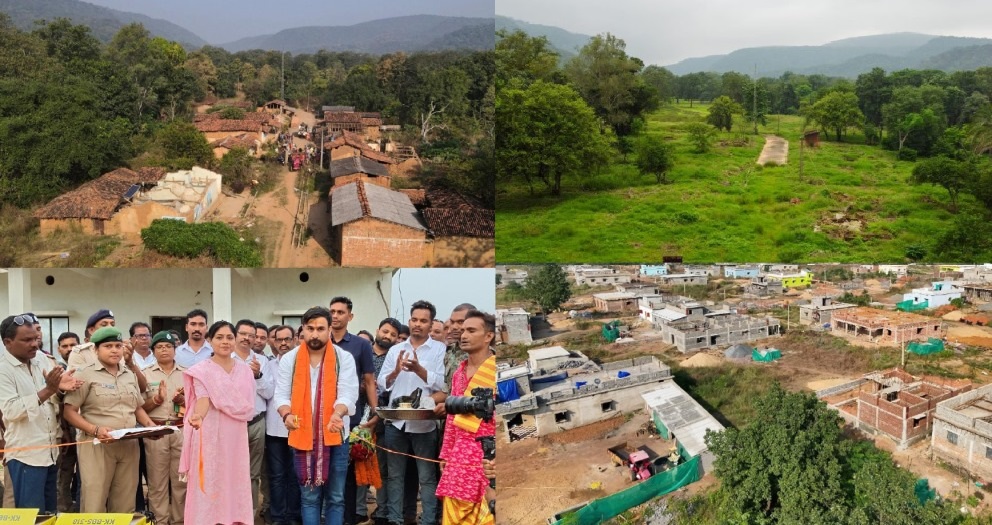
Bhubaneswar: Once home to nearly 400 families, four villages inside Odisha’s Debrigarh Wildlife Sanctuary are undergoing a remarkable transformation. Their relocation has opened up nearly 500 hectares of land for ecological restoration, creating a more secure and contiguous habitat for wildlife while offering displaced families an opportunity to rebuild their lives with dignity.
The relocation and rehabilitation programme, undertaken during 2022-23 and completed in April 2026, has removed permanent human settlements from the sanctuary, significantly reducing human interference in the protected landscape.
What were once village settlements are now being reclaimed as grasslands through the removal of invasive vegetation, promotion of native grasses and improvement of forage availability. The restored areas are expected to provide valuable feeding grounds for herbivores such as gaur, sambar and chital.
The transformation is particularly significant for Debrigarh, which shares an ecological connection with the Hirakud Wetland. Together, the forest, grassland and wetland ecosystems form a diverse landscape that supports wildlife movement, seasonal resource availability and ecological resilience.
With no human settlements remaining inside the sanctuary, the landscape has become more contiguous, allowing natural regeneration and restoration processes to take place with reduced disturbance.
“The relocation has created a substantial inviolate space for wildlife. The restoration of nearly 500 hectares into grassland is helping improve forage availability and habitat security for herbivores,” said Anshu Pragyan Das, Divisional Forest Officer (DFO), Hirakud Wildlife Division.
The conservation initiative, however, has not been limited to relocating people from the sanctuary. Nearly 400 families have been resettled in permanent colonies at Tangarpali and Lakhanpur in Bargarh district, with access to basic amenities and essential civic infrastructure.
Each family received Rs 15 lakh in rehabilitation assistance, with a substantial portion secured as fixed deposits to provide long-term financial security. The families were also provided assistance in settling their land rights under the Forest Rights Act, along with 10 decimals of homestead land, pucca houses and access to electricity, drinking water, roads, drainage and other facilities.
Schools, community halls, temples, playgrounds and cremation grounds have also been provided to meet the social and community needs of the relocated population.
To support their livelihoods, the rehabilitation package included paper-plate-making machines, sewing machines and agricultural equipment such as tractors, rotavators, cultivators and reapers, along with power weeders and battery sprayers.
Training and capacity-building programmes are also underway, with the Debrigarh authorities extending support to help communities adapt to their new surroundings and livelihood opportunities.
“Conservation cannot be sustained by relocation alone. The rehabilitation of families, livelihood support and the creation of essential infrastructure are equally important to ensure that people are not left behind in the process,” Das said.
The Debrigarh experience demonstrates how conservation and community welfare can be pursued together. By restoring former village landscapes and providing relocated families with housing, infrastructure and livelihood support, the initiative seeks to deliver both ecological and social benefits.
The recovery of wildlife habitats, strengthened landscape connectivity and improved living conditions for displaced families have together made Debrigarh an example of integrated conservation.
The challenge now lies in sustaining the restored grasslands, ensuring livelihood security for relocated communities and maintaining public confidence in conservation efforts.
In Debrigarh, the message is clear: creating space for wildlife need not come at the cost of human dignity. With responsible rehabilitation and ecological restoration, the two can move together towards a more resilient landscape.
Disclaimer : This story is auto aggregated by a computer programme and has not been created or edited by DOWNTHENEWS. Publisher: deccanchronicle.com