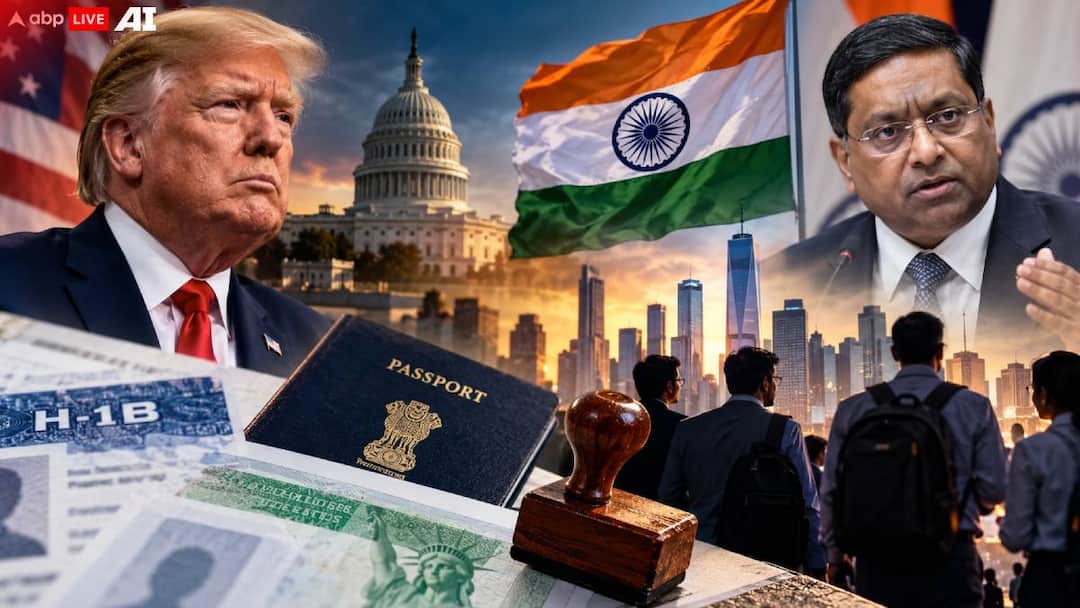
- India criticized US decision suspending PERM for certain companies.
- PERM suspension affects green card, not H-1B visa status.
- India emphasized skilled migration benefits, slammed US VP’s remarks.
- US justified suspension, citing companies’ visa exploitation practices.
India has criticised the Trump administration’s decision to suspend the processing of Permanent Labor Certification (PERM) applications for certain companies in the United States, warning that the move does not serve the shared interests of the two countries. Ministry of External Affairs (MEA) spokesperson Randhir Jaiswal said the decision could affect the green card process for eligible Indian employees but clarified that it does not automatically alter the validity of their H-1B visas.
Responding to the US Department of Labor’s decision, Jaiswal emphasised the economic benefits of skilled migration for both countries. He also pushed back against remarks by US Vice President JD Vance concerning foreign workers, describing the terminology used as offensive and dismissive of the contributions made by Indian professionals to the American economy.
ALSO READ: Trump’s Green Card Suspension Hits Microsoft, TCS, Infosys: Impact on Indians Explained
Concerns Over US PERM Suspension
Explaining India’s position, Jaiswal said, “We are aware of the US Department of Labor’s decision concerning the Permanent Labor Certification Program, known as PERM, for certain companies. It should be noted that PERM is distinct from the H-1B visa programme. The suspension of PERM applications does not, by itself, affect the validity of H-1B visas or the status of H-1B visa holders and their dependents, though it could have some impact on the permanent residency or green card process for eligible employees of the affected companies.”
#WATCH | Delhi: On the U.S. Department of Labor’s decision concerning the Permanent Labor Certification (PERM) programme for certain companies, MEA Spox Randhir Jaiswal says, “We are aware of the U.S. Department of Labor’s decision concerning the Permanent Labor Certification Program, known as PERM, for certain companies. It should be noted that PERM is distinct from the H-1B visa programme. The suspension of PERM applications does not, by itself, affect the validity of H-1B visas or the status of H-1B visa holders and their dependents, though it could have some impact on the permanent residency or green card process for eligible employees of the affected companies. It should also be clear that talent mobility adds value to both economies, that of India and that of the United States. While it creates opportunities for Indians, it equally benefits U.S. companies by providing access to cutting-edge talent, innovation, research, productivity, competitiveness, and job creation. Besides creating shareholder wealth in the United States, this is an area of tremendous mutual benefit for the two countries. Our expectation is that all stakeholders in this process will appreciate this fact. The steps announced by the U.S. do not advance the shared ambitions of both countries. We continue to follow developments on this particular issue.” He adds, “Regarding the comments made by the U.S. Vice President, let me say that we believe such descriptions are unwarranted and ignore the fact that Indian professionals in the United States are highly educated and skilled contributors to its economy and innovation ecosystem. Indeed, the history of the United States itself has been shaped by generations of immigrants whose labour, enterprise, and innovation have contributed to its growth and prosperity. Resorting to terminology that carries painful historical and colonial legacy connotations is deeply offensive.”
— ANI (@ANI) October 9, 2026
He added, “It should also be clear that talent mobility adds value to both economies, that of India and that of the United States. While it creates opportunities for Indians, it equally benefits US companies by providing access to cutting-edge talent, innovation, research, productivity, competitiveness, and job creation. Besides creating shareholder wealth in the United States, this is an area of tremendous mutual benefit for the two countries. Our expectation is that all stakeholders in this process will appreciate this fact. The steps announced by the US do not advance the shared ambitions of both countries. We continue to follow developments on this particular issue.”
The clarification distinguishes between temporary employment authorisation and the process associated with permanent residency. Indian professionals currently holding valid H-1B visas are not automatically affected by the PERM suspension, although eligible employees seeking employment-based green cards could face delays or complications.
India Calls Vance’s Remarks Offensive
Jaiswal also responded to comments made by US Vice President JD Vance about foreign workers, defending the contribution of Indian professionals to the United States.
He said, “Regarding the comments made by the US Vice President, let me say that we believe such descriptions are unwarranted and ignore the fact that Indian professionals in the United States are highly educated and skilled contributors to its economy and innovation ecosystem. Indeed, the history of the United States itself has been shaped by generations of immigrants whose labour, enterprise, and innovation have contributed to its growth and prosperity. Resorting to terminology that carries painful historical and colonial legacy connotations is deeply offensive.”
India’s response underscores the importance of skilled Indian workers to American businesses, particularly in technology, research and innovation. The government has maintained that the movement of skilled professionals creates economic opportunities on both sides rather than benefiting only the workers seeking employment abroad.
ALSO READ: US Green Card Curbs: TCS Plans 15,000 Local Hires Despite PERM Suspension
Why Has the Trump Administration Suspended PERM Applications?
The Trump administration has argued that certain companies exploit immigration programmes to replace American employees with foreign workers. Vance specifically criticised Microsoft, claiming that the company had laid off thousands of US workers while securing thousands of H-1B visas and green cards.
“Our message to Microsoft is: You’re a great American company, but you’ve got to hire great American workers,” Vance said.
He also referred to foreign H-1B employees as “foreign indentured servants”, arguing that their immigration status can leave them dependent on their employers.
The administration’s action covers Microsoft and Adobe, alongside major technology, IT services and outsourcing companies, including Cognizant, Infosys, Tata, Wipro, HCL and Capgemini. The US government said it would stop accepting new PERM applications and processing pending applications for certain companies.
The decision has drawn attention to the implications of immigration restrictions for businesses that rely on international talent, as well as for employees pursuing permanent residency in the US.
PERM Vs H-1B Visa: What Is the Difference?
PERM, short for Permanent Labor Certification, is a process administered by the US Department of Labor. It allows an employer to seek certification to hire a foreign worker permanently in the United States.
The employer initiates the process, which is intended to establish that there are insufficient qualified and available US workers for the position and that hiring a foreign worker will not adversely affect the wages and working conditions of similarly employed American workers.
Introduced in 2005, PERM replaced the older paper-based Alien Employment Certification system to streamline labour certification.
The H-1B programme serves a different purpose. It permits foreign professionals in qualifying specialty occupations to work temporarily in the United States, generally for up to six years, subject to applicable rules.
PERM, meanwhile, is a labour-certification step that can support an employment-based green card application. A green card grants permanent US residency.
In simple terms, an H-1B visa allows eligible foreign professionals to work temporarily in the US, while PERM addresses labour certification for permanent employment. The green card process is a separate stage towards permanent residency.
For Indian employees working for affected companies, the immediate concern is therefore the potential disruption to their permanent residency applications, rather than an automatic cancellation of their existing H-1B status. India said it would continue to monitor developments, reiterating that skilled talent mobility remains an area of significant mutual benefit for both countries.
Disclaimer : This story is auto aggregated by a computer programme and has not been created or edited by DOWNTHENEWS. Publisher: abplive.com