
Just months before the midterm elections, Democrats hope to convince voters that lawlessness under President Donald Trump’s administration is the biggest threat to their rights and pocketbooks. But the party’s past debates over crime and safety threaten to undermine that pitch.
Across the country, Democratic candidates are grappling with their previous positions calling to “defund the police” — a prominent demand during the protests that followed George Floyd’s death — by either reimagining public safety services altogether or redirecting some police departments’ funds to other social programs. Now, they are facing tough questions about their past positions.
Democratic leaders fear that the outlier opinions favoring police defunding may again tarnish the party’s brand and sink its chances of gaining ground in Congress, governor’s mansions and statehouses nationwide.
“It was a serious debate in 2020 that arguably cost us some seats that year and caused us to lose on something where we should have had the upper ground, because a few members of our party wanted to have a stylistic debate rather than one on substance,” said Antjuan Seawright, a Democratic strategist.
Seawright said to avoid being painted as politically toxic on safety issues, Democrats “have to define the narrative before others define us with the narrative.”
That task may become more challenging as the party grapples with a rising left flank that has captivated its base, just as Republicans move to make warnings about crime, immigration and growing support for democratic socialism core to their closing midterm message.
Wisconsin gubernatorial candidate reckons with past ‘defund’ rhetoric
In Wisconsin, a swing state known for razor-thin elections that President Donald Trump won in 2016 and 2024, insurgent democratic socialist State Rep. Francesca Hong has upended the Democratic gubernatorial primary by running far to the left in a state where independent and moderate voters are key in statewide races. A single mother and former line cook, Hong has captured the imaginations of liberal Democrats upset with the party establishment.
But she’s also raised concerns among more moderate Democrats that her past support for defunding the police would hurt her chances in the general election against Trump-backed Republican U.S. Rep. Tom Tiffany.
“I support defunding the police as a first step towards abolishing the police,” Hong said in a 2020 social media post after the police shooting of Jacob Blake, a Black man in Kenosha, Wisconsin. A year later, while serving in the State Assembly, Hong again posted about Blake, writing: “Police exist to uphold white supremacy. Defund then abolish. Reform can’t be an option.”
But as a candidate for governor, Hong had softened her tone while not disavowing her past statements. On Tuesday night, in the only televised debate ahead of the Aug. 11 primary, Hong said she did not support cutting police funding.
“The governor cannot defund the police and I’m not here to govern by slogan,” Hong said. “I’m here to make sure that I am the governor that is most serious about public safety, and that means investing in the things that we know prevent crimes.”
New York, Michigan politicians distance themselves from ‘defund’ calls
In neighboring Michigan, Democratic Senate candidate Abdul El-Sayed, a staunch progressive, has faced questions about his past support for defunding the police. Last November, CNN reported that the public health researcher and Rhodes scholar had deleted scores of posts expressing support for defunding the police. He now says he rejects the idea.
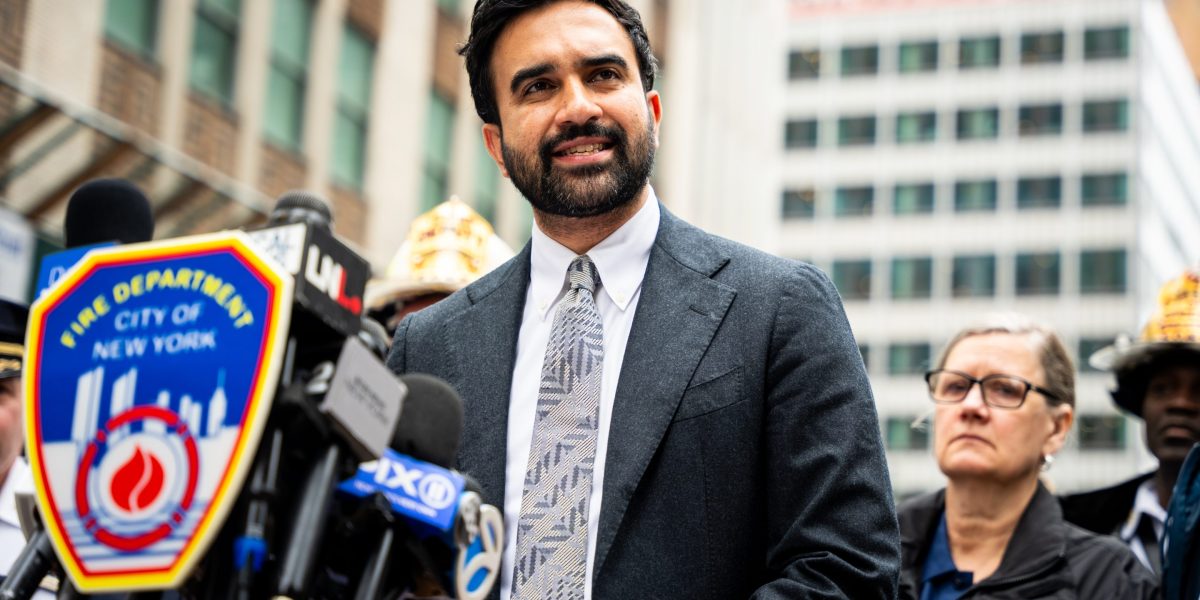
And in New York, Mayor Zohran Mamdani has tried to distance himself from his past criticisms of the city’s police department and a previous call to defund the agency. He is at times still dogged by a set of social media posts he made in 2020, at the height of the Black Lives Matter protests, where he described the department as “racist, anti-queer & a major threat to public safety” and pushed to “Defund this rogue agency.”
Mamdani apologized for the language during his campaign and stressed that he no longer wanted to defund the agency. He has since moved to ease lingering concerns by retaining his predecessor’s police commissioner, Jessica Tisch, an establishment moderate respected by the city’s business leaders and law enforcement community. That decision angered some of Mamdani’s progressive allies.
The backtracking illustrates how the politics of criminal justice have shifted since 2020, posing dilemmas for Democrats’ midterm strategy and their ability to enact their preferred solutions.
Memphis voters reject ‘defund the police’ but decry National Guard presence
The stakes are life and death for communities caught in the middle of the political debate.
In Memphis, Tennessee, residents are exhausted at being thrust into the national discourse over crime and safety. The president surged the city with National Guard troops last year as part of an “anti-crime” task force. The task force has faced renewed local backlash after federal agents earlier this month killed a man experiencing a mental health crisis and another person during an altercation while agents executed a drug warrant. The city’s local Democratic lawmakers claim that the tough-on-crime policies only temporarily reduced crime while troop presence was at its peak.
“They don’t like how it was done, how President Trump and the governor were able to snap their fingers, and all of a sudden we see federal agents flooding our city,” said State Sen. London Lamar, who represents Memphis and has faced tough questions from constituents and her statehouse colleagues about how to address crime in the city.
But Lamar added that outside of frustrated local progressive activists, residents outraged by the administration’s anti-crime crackdown were still skeptical of calls to “defund the police.”
“It’s not really sticking because, though it’s quietly kept, the vast majority of the community still wants law enforcement’s presence,” said Lamar. The debate is a useful distraction, Lamar said, from real conversations over how to boost public safety.
“Our challenges are being exploited for political gain,” she added.
Disclaimer : This story is auto aggregated by a computer programme and has not been created or edited by DOWNTHENEWS. Publisher: fortune.com






