Disability benefit review considers alternatives to cash payments
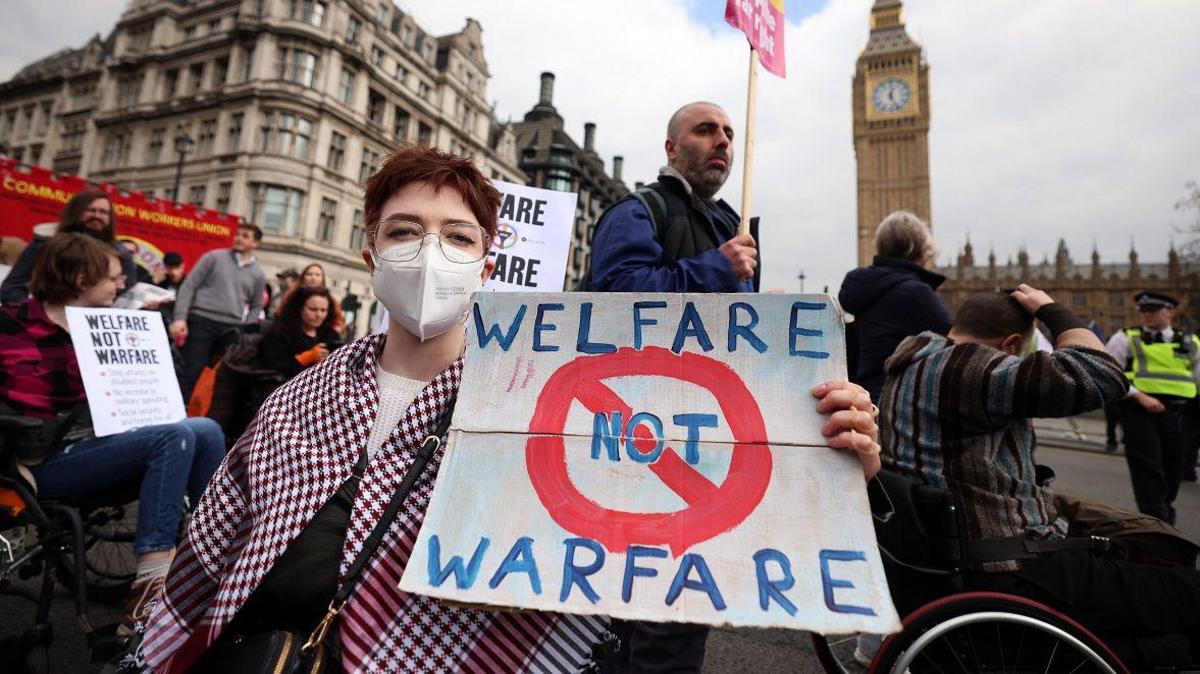 Image source, EPA
-
Published
A major review of the main disability benefit in England and Wales is considering whether claimants could be offered alternative support instead of cash payments in some cases.
Sir Stephen Timms, the minister leading the review, told MPs the government would not be “moving away” from providing cash to disabled people to help them with their extra living costs.
But the minister said the review was looking at whether some claimants of personal independence payments (Pip) could instead be pointed to other kinds of support.
Alternatives to cash payments could include NHS treatments, specialised equipment or employment support.
In initial findings published this week, external, Sir Stephen’s review found Pip was not working for millions of disabled people and needs fundamental change.
Declaring Pip was “not fit for purpose”, the interim report said people applying for the benefit had described the process as “dehumanising” and a barrier to work.
Pip claims, especially for conditions such as anxiety and ADHD, have soared in the years since the Covid pandemic, putting increasing pressure on the public finances.
Around 10 million working-age people (24%) report living with a disability, compared with under 17% in 2013/14.
The cost of Pip is expected to rise to more than £41bn by 2030, up from £15bn in 2020.
The review suggests a sweeping overhaul of the Pip assessment system is needed.
A Department for Work and Pensions spokesperson said the review’s final recommendations are due this autumn and “will lay the foundation for deep, sustainable reform”.
On Thursday the co-chair of the review, Sharon Brennan, told the BBC she and Sir Stephen were considering how they could change the Pip assessment process.
“At the moment, it’s a very blunt process,” Brennan said. “It’s a yes or no answer, do you get cash or not, and we’re not really having conversations with people about what extra support they need to live the lives they want to live.”
She said the review would question whether the different levels of cash support available to Pip claimants “really reflects the real-life impact of disability” in 2026, stressing that increasing “participation in the workforce” would be an important part of any reforms.
Speaking in the House of Commons on Thursday, Sir Stephen said the review “is clear that the provision of cash to meet the additional costs of disability is vital”.
He added: “We will not be moving away from the importance of that, but I think there is a question about whether the process can also point people towards help that may be valuable to them in addition to, or in some cases perhaps instead of, a cash payment.
“There is help and support that people need, and I think the process could help to point people to that.”
He said the system “may be able to point people to the right place in the health service”, adding the review was “looking at all those issues and we will come back with recommendations in our final report”.
The interim report says the needs of disabled people and their extra costs “vary significantly, and the current system does not always recognise these differences or offer appropriate support”.
Pip is a benefit people with long-term illnesses and disabilities can claim if they need help with extra costs associated with living, work and care. Eligibility is determined through an assessment.
Under the current system, claimants are scored on a zero to 12 scale by a health professional on everyday tasks such as washing, getting dressed and preparing food.
As of April, there were about four million claimants entitled to Pip in England and Wales.
Sir Stephen’s review was commissioned by Prime Minister Sir Keir Starmer after his government’s attempt to reform welfare last year.
Dozens of Labour MPs expressed concerns about plans to cut disability and sickness-related benefits payments to save £5bn a year by 2030.
Fearing MPs would vote down the reforms, the government U-turned, saying it would not change Pip rules until it had time to consider the review’s conclusions.
Sir Stephen told the BBC the review was not expected to make “crude proposals” on payment changes.
But he said the financial sustainability of the benefit would “be a concern as we reach these decisions”.
His recommendations will be put to the next prime minister, which is almost certain to be Andy Burnham after he secured the support of the vast majority of Labour MPs in the first tally of party leadership nominations on Thursday.
The Centre for Social Justice, a centre-right think tank founded by Conservative MP Iain Duncan Smith, has called for mental-health benefits to be tightened to more severe cases to save an estimated £7.4bn.
The think tank proposes using £1bn of those savings to expand NHS talking therapies, treatment and employment support.
“Britain is an international outlier in how reliant our system is on blunt cash payments,” said Joe Shalam, policy director at the think tank.
He said hundreds of thousands of people with mental-health conditions had been “parked and forgotten about” under the “broken status quo”.
-
-
Published23 hours ago

-
-
-
Published1 day ago
-
-
-
Published1 day ago

-
Disclaimer : This story is auto aggregated by a computer programme and has not been created or edited by DOWNTHENEWS. Publisher: BBC