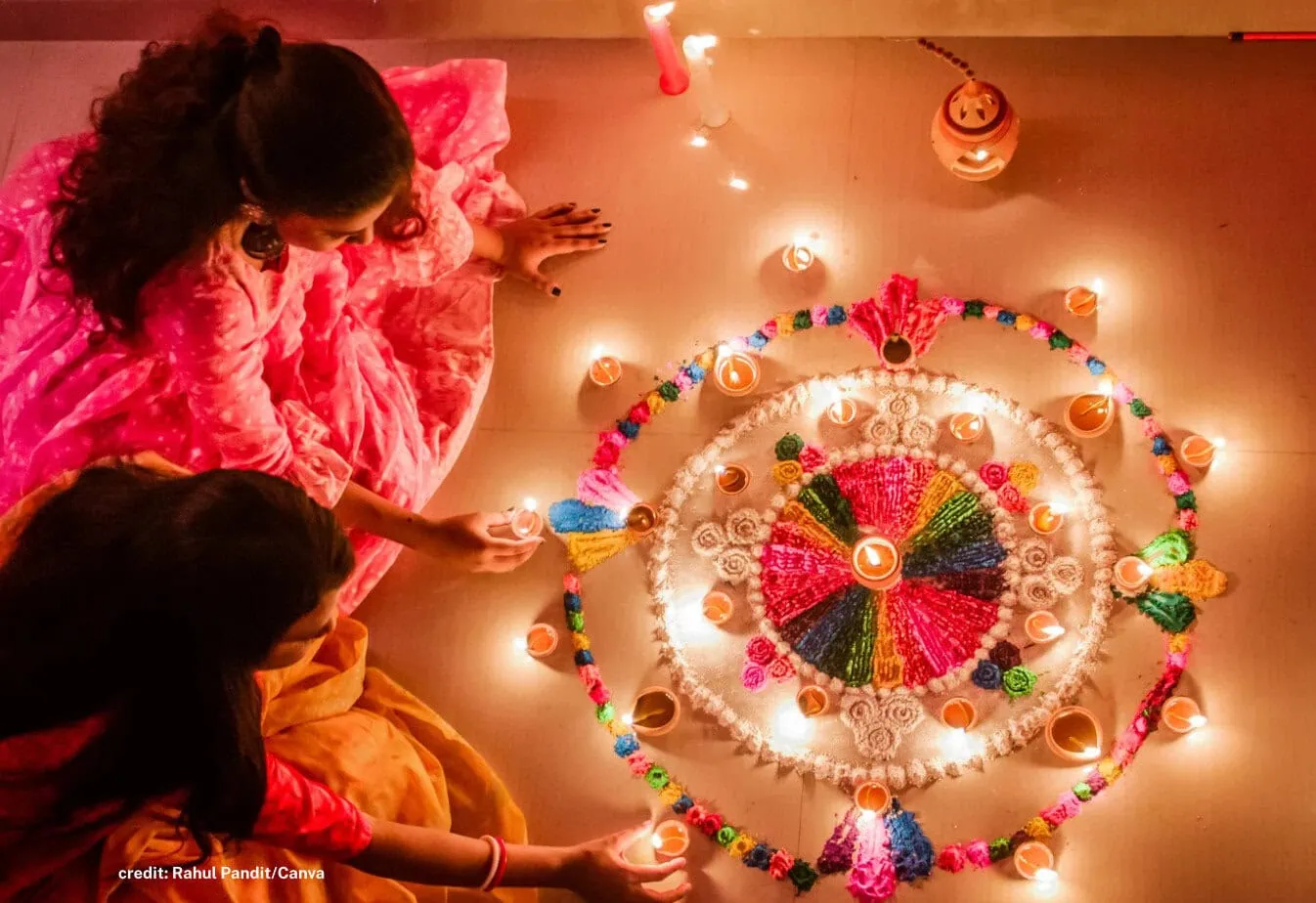
The noise of firecrackers, toxic smoke and bright flashes of light may mean a few hours of celebration for humans. But for animals, the Hindu Festival of Lights, Diwali, on Sunday can bring fear, injuries and even death.
The hunting of owls in the name of superstition makes their suffering even worse.
Across India, Diwali night brings dazzling fireworks, loud explosions and celebrations in homes and streets. But for some creatures, this night is far from joyful. It can be a frightening experience.
Pet dogs hiding inside homes, stray dogs running around in panic, birds frightened in their nests, bats sheltering in trees and owls searching for food at night all face different kinds of difficulties during the festival.
– Advertisement –
Noise causes fear and stress
“We call Diwali a festival of lights and happiness. But the question is, should our celebrations come at the cost of fear and suffering for other living creatures?” asks Babulal Jaju, Rajasthan regional coordinator of the Indian animal welfare organization People for Animals.
Dogs and cats, in particular, have a different hearing range from humans. Sudden loud explosions can trigger fear and stress in them. Some animals start trembling, bark continuously, try to hide or run around in panic. Many stop eating and move away from places they are familiar with.
A report by Guru Angad Dev Veterinary and Animal Sciences University in Ludhiana, Punjab, says the noise and pollution caused by firecrackers during Diwali can be harmful to pets.
According to the report, frightened animals may run uncontrollably, putting themselves at risk of injuries and even death. The smoke can also cause serious breathing problems.
Stray cattle, cats and dogs have nowhere safe to go. They have no quiet room or protected space where they can escape the noise. Frightened by explosions, they may run onto roads, collide with vehicles or lose their way. Stray dogs may also get into fights with dogs from other neighbourhoods.
Similar problems affect domestic animals. Horses, cattle and other livestock may panic, break their ropes, hit fences or suddenly run away. Although every animal reacts differently, the risk of accidents caused by fear is real.
Firecrackers pose a threat to birds
People often burst firecrackers near trees and in open spaces. Frightened by the sudden explosions, birds resting in trees take flight.
In the darkness, they may lose their way and end up in unfamiliar places. They can collide with trees, buildings and other obstacles, leaving them injured or disabled.
The impact is not limited to adult birds. Sometimes, birds that fly away in panic are unable to find their way back to their nests. Their chicks are then left without food and parental care. If their parents remain away for too long, the young birds may not survive.
Experts say the world of birds at night is very different from that of humans. Many birds rest in darkness, while nocturnal birds such as owls come out to search for food. Sudden explosions and bright flashes in the sky disturb their normal activities.
For small birds and those living in densely populated areas, finding a safe place to shelter can become even more difficult.
An international research review published in 2022 examined the impact of fireworks on wildlife. Drawing on examples from festivals around the world, including Diwali in India, it found that the noise and light produced by fireworks can affect wildlife behaviour, breeding and migration patterns.
Researchers warned that the effects may continue beyond the night of the celebrations.
In Bengaluru, Karnataka, wildlife rescue centers received a large number of injured animals for treatment during Diwali in 2024. According to the figures from one centre, 126 animals were rescued between October 30 and November 4. These included 109 birds, 11 reptiles and six mammals.
Firecracker pollution affects humans and wildlife alike
Dr Paras Jain, a consultant physician in Hanumangarh, Rajasthan, explains that burning firecrackers releases fine particles, certain metal compounds and pollutants such as sulphur dioxide into the air.
These pollutants affect not only humans but also animals and birds. Fine particles in the air enter the body through breathing and can cause health problems, particularly in sensitive creatures.
A scientific study on air pollution during Diwali recorded a significant rise in pollution and noise levels during the festival. It found that firecrackers considerably increased the amount of dust and fine particles in the air. Pollution levels in the area studied were much higher than normal.
The noise from firecracker explosions was also extremely loud, reaching an average level of 101 decibels. Such high noise levels cause discomfort and stress to humans and animals.
Vijay Kumar Koli, head of the Zoology Department at Mohanlal Sukhadia University in Udaipur and a bird expert, says noise pollution increases during the four to five days around Diwali. Burning gunpowder releases smoke and toxic pollutants into the environment.
The impact of smoke is not limited to breathing problems. Particles and chemical residues from firecrackers can also settle in soil and water. Most birds feed on the ground, while dogs and other animals may lick contaminated surfaces.
According to Dr Koli, the environmental impact of Diwali cannot be understood only through the haze visible the next morning or air quality readings. It is also important to study changes in animal and bird behaviour, injuries, rescue operations and the wider effects of pollution.
Owls pay the price for superstition
During Diwali, owls often pay a heavy price for people’s superstitions. Their illegal hunting, trade and use in alleged tantric rituals are well documented.
There are several beliefs associated with owls in Indian society. Some people consider the owl the vehicle of Goddess Lakshmi, while others associate it with wealth, good fortune or supposed tantric powers.
Wildlife traffickers exploit these beliefs to capture and sell owls. Reports of owls being sacrificed or their body parts being used in rituals continue to emerge.
Although the hunting and trade of all Indian owl species are prohibited under the Wildlife (Protection) Act, 1972, this illegal practice continues.
A report by TRAFFIC, an international organisation that monitors wildlife trade, documented the illegal owl trade in India. According to the report, 15 of the 30 owl species recorded in India had been found in the domestic live bird trade.
It also referred to owl sacrifices and the alleged use of their body parts in tantric rituals, warning of a possible increase in such trade around Diwali.
The report was based mainly on surveys conducted between 1992 and 2000, along with additional information collected between 2001 and 2008.
Releasing the report in 2010, Jairam Ramesh, India’s then Union Minister for Environment and Forests, said owls were as important to the ecosystem as tigers and other well-known wildlife species.
He stressed the need to highlight the threats facing owls during Diwali and take concrete action on the ground to stop their illegal trade.
He also said that Diwali should be a time of celebration across the country, not a time when wildlife is hunted because of ignorance and superstition.
Disclaimer : This story is auto aggregated by a computer programme and has not been created or edited by DOWNTHENEWS. Publisher: theanimalreader.com