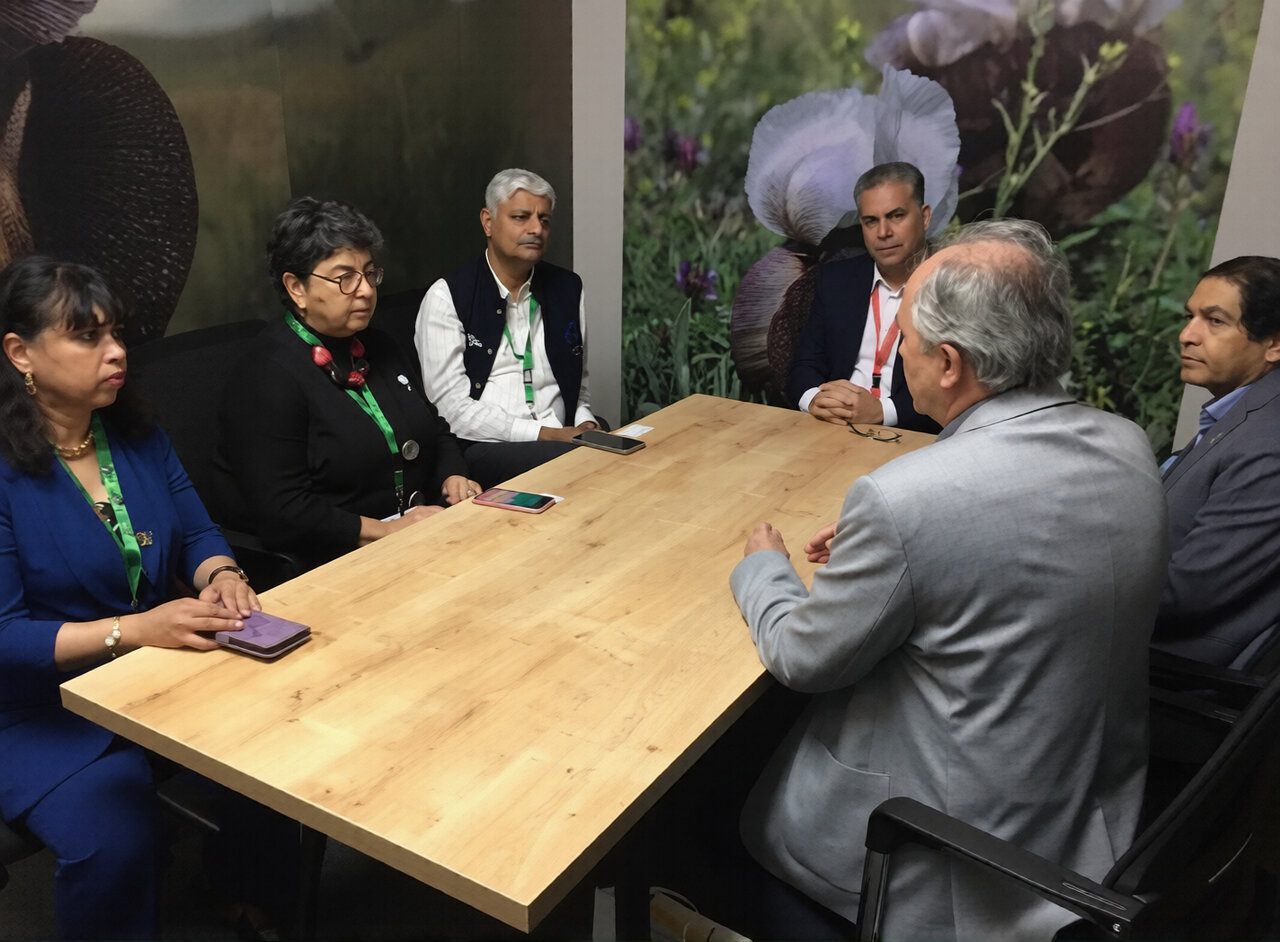
TEHRAN – Hamid Zohrabi, deputy head of the Department of Environment (DOE), and Vivek Menon, chair of the International Union for Conservation of Nature (IUCN) Species Survival Commission (SSC), have discussed ways to strengthen cooperation in developing management and conservation programs for endangered species.
The officials met on the sidelines of the 17th Conference of the Parties (COP17) to the Convention on Biological Diversity being held from October 19 to 30 in Armenia, IRNA reported.
The head of IUCN Eastern Europe and Central Asia Regional Office attended the meeting as well.
The talks particularly focused on conservation and restoration programs for the Asiatic cheetah, the great bustard, and the Persian zebra, onager, their respective habitats, as well as the reintroduction of the Persian fallow deer into its natural habitats.
Both parties also discussed enhancing technical and scientific cooperation and providing funding under sanctions.
Menon expressed hope that ongoing collaboration between IUCN officials and Iranian experts would guarantee the survival of endangered species, such as the Asiatic cheetah, in Iran.
COP17 is being held under the framework of the Convention on Biological Diversity, alongside the Twelfth meeting of the Parties to the Cartagena Protocol on Biosafety (CP-MOP-12) and the Sixth meeting of the Parties to the Nagoya Protocol on Access to Genetic Resources and the Fair and Equitable Sharing of Benefits Arising from Their Utilization (NP-MOP-6).
The two-week negotiations are being held in two stages: technical-level discussions followed by the ministerial segment.
The leaders’ summit took place on October 16, featuring an address by President Masoud Pezeshkian. It marked the first time a president of the Islamic Republic of Iran had attended a Conference of the Parties to the Convention on Biological Diversity.
Addressing the summit, Pezeshkian called for “peace diplomacy” to protect biodiversity, condemning the devastating environmental impact of wars of aggression as ecocide and urging the international community to establish effective, transparent and enforceable mechanisms to safeguard natural heritage during wartime.
According to the latest report by the IUCN Red List, about 154 vertebrate animal species and around 25 percent of plant species in the country are at risk of extinction, with 117 species being classified as critically endangered in the national list. Persian zebra, Asiatic cheetah, black bear, great bustard, and yellow deer are among animals that are in danger of extinction.
Among extinct animals, the Hyrcanian tiger and Persian lion are the two feline species that have disappeared forever in the country. Fortunately, the Persian zebra and the Persian yellow deer are examples of successful conservation efforts where scientific measures and local community participation have resulted in the species’ recovery.
Genetic map for endangered species being developed
The DOE is developing a genetic map of endangered wildlife species to increase their chance of survival, create a breeding plan, manage their population, and address the risks facing them in their natural habitats.
Effective conservation of endangered species is almost unattainable without a precise understanding of population genetics. To this end, genetic and molecular studies of key wildlife species in the country have been put on the agenda, ensuring that management decisions are based on accurate scientific data, IRNA quoted the head of the National Museum of Natural History and Genetic Resources, Leila Ezzeddinlou, as saying.
Preserving genetic diversity within and between populations, preventing declines in effective population size, avoiding inbreeding and genetic erosion, conserving genes adapted to diverse environmental conditions, and providing genetic resources for species restoration, propagation, and introduction or reintroduction programs are among primary objectives of these studies, she added.
Referring to three research agreements signed between the DOE, the College of Agricultural and Natural Resources of the University of Tehran, and Gorgan University, the official said that as part of the cooperation, a project is underway to investigate the genomic diversity and phylogeny of Levant viper and Latifi’s viper populations, employing conservation and therapeutic approaches based on genomic markers.
Moreover, the development of genetic profiles and maps for the Asiatic cheetahs, black bear, and Persian yellow deer, as keystone and threatened species, has kicked off.
The other part of the agreements focuses on the assessment of genetic variation, inbreeding, and kinship relationships within the Persian zebra population, which is being conducted in collaboration with Yazd’s provincial DOE department. The initiative plays a key role in managing small populations and preventing the loss of genetic biodiversity, she highlighted.
MT/MG
Disclaimer : This story is auto aggregated by a computer programme and has not been created or edited by DOWNTHENEWS. Publisher: tehrantimes.com