TEHRAN – It is unclear whether Josh Greenbaum, a “Board of Peace” adviser, intended his remarks to Israeli media to distance the controversial board from Zionist war crimes and massacres in Gaza.
It is also unclear whether the statement to Yedioth Ahronoth a few days ago was an attempt to pressure the Israeli government into meeting at least some of its obligations under the ceasefire agreement in the Strip.
More than 30 months have passed since the agreement was reached, yet there has been no meaningful progress, either in stopping the massacre of Palestinian civilians, more than 1,680 of whom have been killed since the fragile agreement came into effect, while more than 5,500 others have been injured.
Were the remarks intended to lift the suffocating and deadly blockade and reopen the crossings?
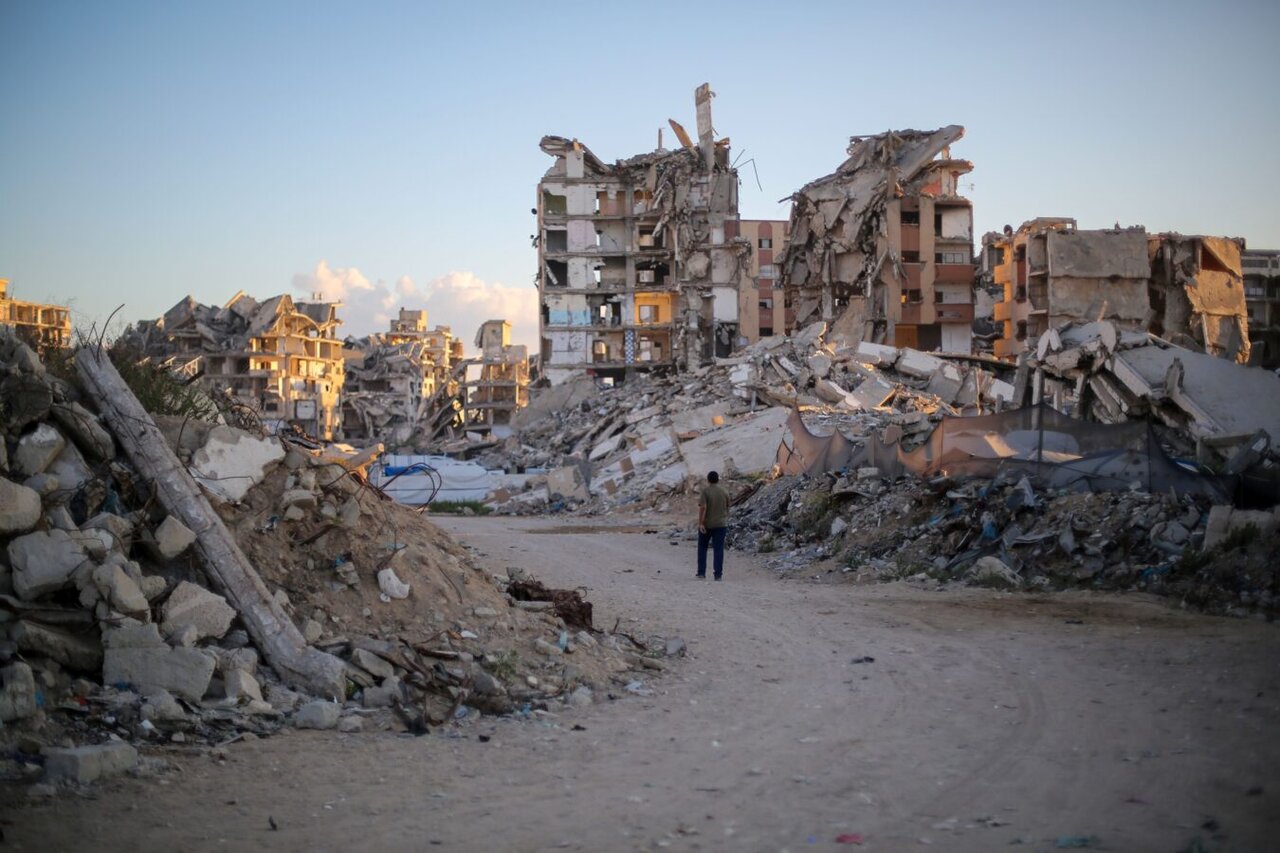
The occupying regime has turned the blockade into a deadly weapon, further weakening the already frail bodies of Gaza’s surviving population, whose living bodies are exposed to hunger, poverty and disease as a helpless and complicit world watches and does nothing.
In his statement, Greenbaum said that the “Board of Peace” felt it was going around in circles. He stated that Hamas had agreed to disarm, but that political figures within Netanyahu’s government had prevented progress on this issue.
He also pointed to several straightforward decisions that any Israeli leadership should be able to make, such as allowing the International Stabilization Force to begin operating, permitting members of the Civil Guard to travel to Egypt for training, and allowing humanitarian aid to flow into the Strip before winter sets in. He added:
“The board has been extremely patient and has given [the Zionist regime] enough room. But what frustrates us is that, now that the elections are behind us, we are seeing no progress on Netanyahu’s promises to Trump.”
Greenbaum’s remarks cannot be viewed in isolation from other statements made by members of the “Board of Peace” particularly its executive chairman, Nikolay Mladenov.
Nor can they be separated from UN statements or international humanitarian and health groups, all of which have held the occupying regime responsible for the worsening security, humanitarian and health conditions in the devastated Strip.
On several occasions, they have called for a complete end to the aggression, the reopening of border crossings, the entry of humanitarian aid, and full implementation of U.S. President Trump’s ill-fated plan. As events have shown, the plan has given the regime complete freedom to do whatever it wants in Gaza without requiring it to meet its own obligations.
It has not even managed to stop the relentless machinery of war, which continues to claim the lives of dozens of Palestinians every day.
Meanwhile, Israeli Occupation Forces (IOF) have seized more land beyond what is known as the so-called Yellow Line. Its military operations have even extended deep into areas designated as safe, through abductions, assassinations and the destruction of homes and other buildings, as well as the entry of tanks and military vehicles into the heart of these areas. This was seen just days ago in the northern part of the Nuseirat refugee camp.
On January 22, the charter of the “Board of Peace” was officially signed during a ceremony held in the Swiss city of Davos. The charter was based on the “Comprehensive Peace Plan” put forward by Trump in September 2025, which consisted of 20 points supposedly aimed at ending the U.S.-backed genocidal war.
The main purpose behind establishing the “Board of Peace” was to reshape conditions in Gaza amid the regime’s genocide.
This was to be done through a political and security framework designed primarily around the regime’s interests, one that would, in one way or another, help it achieve objectives it had failed to accomplish during the war. This time, however, those efforts would take place under an international umbrella that would provide legitimacy for whatever Tel Aviv wished to do.
According to its official description, the “Board of Peace” is an international transitional body tasked with overseeing the reconstruction of the Strip and managing its transitional period. It includes an “Executive Board” and an “International Stabilization Force,” as well as the “National Committee for the Administration of Gaza.”
However, the board’s actions have quickly revealed that its real priority is to reshape Gaza’s political and security landscape in line with a Zionist vision.
It has also clearly linked progress on reconstruction, civilian administration and humanitarian aid to security arrangements centered on the complete disarmament of the Palestinian resistance.
Over the past few months, the “Board of Peace” has failed to carry out any of the responsibilities assigned to it or fulfil the tasks entrusted to it. In fact, available evidence suggests that it has made no attempt to do so.
It has even avoided discussing IOF violations, condemning them or calling for them to stop. Instead, it has devoted almost all its attention to the disarmament of Palestinian resistance forces, holding them responsible for the failure to implement the truce agreement.
Several key moments in the record of this controversial board illustrate its clear bias towards Tel Aviv. One example was the statement made by former British Prime Minister Tony Blair, a member of the board’s Executive Board, during a briefing to the UN Security Council on April 28.
Blair explicitly linked the lifting of restrictions on Gaza to the disarmament of the Palestinian resistance. He also argued that Hamas, in its current form, could have no role whatsoever in administering the Strip, whether directly or indirectly.
Another revealing moment came in the “Board of Peace” report submitted to the Security Council in mid-May. The report stated that reconstruction in Gaza could not begin until “Hamas and all armed groups in Gaza are fully disarmed,” describing this as the “decisive variable” and the factor that would open the door to every other element of the plan.
The same report avoided holding the IOF responsible for its daily violations and attacks in the Strip. It also ignored the ongoing killings and assassinations, the regime’s continued military expansion, and the tightening of the comprehensive blockade.
Nikolay Mladenov, the board’s High Representative and Executive Director, acknowledged that no meaningful progress had been made in implementing the core elements of the ceasefire agreement.
However, he blamed this failure on the refusal of Palestinian resistance forces to fulfil their obligations and hand over their weapons.
In doing so, he deliberately overlooked the regime’s widespread violations and its clear refusal to honor its own commitments. These violations have escalated over recent months to the point where they now threaten the complete collapse of the truce agreement, as many international parties have warned, including some of the countries that helped guarantee the agreement.
Alongside the board’s clear foot-dragging, in what appear to be coordinated steps agreed upon with the Israeli government, Tel Aviv has obstructed the agreement’s transition into its second phase.
It had already stripped the first phase of almost all its substance and has openly prevented the agreement from reaching its intended outcome: a complete end to the aggression, the lifting of the blockade and the launch of reconstruction.
This obstruction can be viewed in several measures. One is the occupying regime’s refusal to allow the “National Committee for the Administration of Gaza” to enter the Strip. The committee was established as a Palestinian technocratic body tasked with administering Gaza during the transitional period and overseeing relief efforts, reconstruction and humanitarian aid.
The IOF has also blocked the International Stabilization Force from entering the Gaza Strip.
It has refused to allow the force to establish positions, whether inside or outside the so-called Yellow Line. It has not even permitted it to conduct engineering surveys of the locations where its personnel are supposed to be deployed. These locations lie along the so-called Yellow Line, as specified in the truce agreement.
Alongside these obstructions, the regime has continued its aggression across the entire Strip, carrying out air, artillery and naval attacks around the clock. It has also continued expanding the so-called “Yellow Zone” far beyond the boundaries set out in the agreement.
Over the past five months, the IOF has expanded the areas under its control from around 52% of the Strip’s total area, when the genocidal war subsided and the agreement came into effect, to more than 70%.
It is clear that the path set out by the “Board of Peace,” which ties reconstruction, the delivery of humanitarian and medical aid, and improvements in Gaza’s living conditions to the disarmament of resistance forces, is primarily intended to establish political and security arrangements that serve the Zionist vision.
It offers no guarantees that humanitarian or living conditions will improve, nor does it provide any mechanism to force the IOF to honor its obligations.
This means that the board is using reconstruction and the easing of humanitarian restrictions as tools of political and security pressure to impose the regime’s conditions on Gaza’s future. This approach also aligns with discussions between the U.S. and the “Board of Peace” about implementing an alternative plan in the so-called green zones”.
This would involve bringing in the “National Committee” and the “International Stabilization Force” and launching limited reconstruction projects.
Such a move reflects an effort to impose arrangements through which the regime redraws Gaza’s political and security map, dividing the Strip while making basic human rights conditional on political control and loyalty, rather than linking them to ending the genocide.
Disclaimer : This story is auto aggregated by a computer programme and has not been created or edited by DOWNTHENEWS. Publisher: tehrantimes.com