
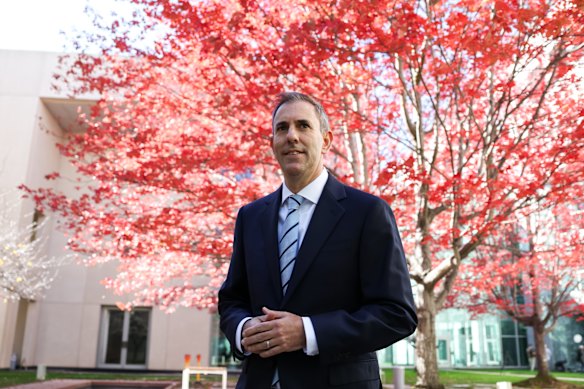
Jim Chalmers is on the brink of handing down the most ambitious budget of the five he’s put together as treasurer. But the degree of difficulty is also the highest he has ever faced.
At the heart of the budget will be a winding back of tax breaks for negative gearing and capital gains tax (CGT), as well as potential changes to the tax treatment of trusts. The number of NDIS participants will be cut, with savings targets of a mammoth $35 billion over four years, while there will also be a modest $300 tax offset for workers.
Budgets always have a theme and this year it is resilience and reform. But the real theme of this budget is tackling intergenerational inequality, a step that is long overdue in the view of many Australians.
Already, concerns are being raised by the opposition, News Corp and the property sector (among others) about the planned changes (before the details have been released) and the impact they will have on the property market and the supply of housing. Anthony Albanese, who promised numerous times during the last election campaign not to touch negative gearing or CGT, is being criticised – fairly – for breaking an election promise.
But some of the criticism about the shape and tenor of this budget also misses the point.
If Chalmers and Albanese follow through on all the measures foreshadowed – and actually get them through the parliament and into law – the 2026 budget could be remembered for delivering some of the biggest tax changes on the revenue side since John Howard and Peter Costello in 1998.
Under Scott Morrison, tax cuts were delivered across the board for wage earners and business, but little was done about raising additional money to fill structural holes in the budget. Joe Hockey’s infamous 2014 budget contained a series of broken promises and attempted major cuts to health, education and more, but much of it was never implemented.
Wayne Swan’s attempt at a reforming budget after Ken Henry’s tax review in 2010 delivered some change, but much of it was overshadowed by a fight with the mining sector over a proposed Resource Super Profits Tax that famously helped to eject then-PM Kevin Rudd from his job.
In other words, Australian governments have a poor recent record of delivering tax changes, particularly when it involves taking a tax break away from a group of taxpayers.
So why have Albanese and Chalmers decided to embark on such ambitious changes after four years of risk-averse governing?
Albanese has told colleagues recently that he has changed his mind on negative gearing and CGT because the government has gotten most of its election agenda through the parliament and, with a thumping 94 seats, he has no intention of sitting around for two years and twiddling his thumbs. He wants to implement progressive tax reforms and after four years of steady-as-she-goes, the first budget of his second term is the one for difficult decisions.
Breaking election promises is risky but the prime minister believes that, much like with his changes to the stage 3 tax cuts in early 2024, people will make up their minds on this budget based on the details of the policy.
That brings us back to the budget’s real theme, intergenerational inequality. Albanese and Chalmers, along with their cabinet colleagues, have decided that the risk of not pulling every available lever on housing affordability is greater than the risk of acting.
More and more Australians, particularly Millennials and Gen Z, feel like they’re missing out, that they will never be able to buy a home, start a family or even pay off their university loans. That “missing out” feeling is everywhere, once you start looking for it.
It was a major factor in the defeat of the Voice to parliament referendum because so many Australians were convinced that, while they were missing out, Indigenous Australians were being given extra rights and privileges.
And it’s at the heart of One Nation’s pitch to voters, which is essentially that “real” Australians are missing out on housing and work because foreigners are taking their jobs or homes. Those sentiments are increasingly present in the Coalition’s political rhetoric, too.
Never mind that Australia needs more foreign workers to build the houses, apartments, roads and rail lines the country is crying out for. Weaponising grievance has been ever-present in democratic politics since Cleisthenes was in short pants in ancient Athens.
But at a time when more and more Australians have real problems to complain about, such as high petrol prices, rising interest rates and other cost-of-living pressures, it’s fertile ground for harvesting votes.
Instead of simply handing over more cash to voters (though they’re doing a bit of that), Labor – by tackling tax reform and trying to change how the budget raises revenue and from where – is placing a giant bet on voters having stagnation fatigue. That is, Albanese and Chalmers are gambling that more voters are fed up with the status quo than are not, and that those voters desperately want the system to change, so they might have a chance of buying a house, starting a family or merely paying their monthly bills.
Albanese had previously argued against winding back negative gearing and capital gains tax breaks and argued that increasing housing supply was the best solution to the housing crisis. He was right when he said it and he’s still right now. Making changes to those taxes will help first home buyers somewhat. That’s because there will likely be fewer investors competing for properties, but it is not a cure-all. Greater supply is still the more important solution.
What these tax changes do is send a big signal to a growing cohort of younger voters, those same Millennials and Gen Zs, that the government has heard their concerns and is responding rather than defending the status quo.
Coalition leader Angus Taylor risks further alienating the very voters the opposition desperately needs to win back by defending the status quo, as some of his colleagues realise.
The decision to break promises and deliver tax reform in this budget could set Labor up for another two terms in office, or damn it to lose a swag of seats at the next election.
James Massola is chief political commentator at The Sydney Morning Herald and The Age.
The Opinion newsletter is a weekly wrap of views that will challenge, champion and inform. Sign up here.
 James Massola is chief political commentator. He was previously national affairs editor and South-East Asia correspondent. He has won Quill and Kennedy awards and been a Walkley finalist. Connect securely on Signal @jamesmassola.01Connect via X or email.
From our partners
Disclaimer : This story is auto aggregated by a computer programme and has not been created or edited by DOWNTHENEWS. Publisher: www.smh.com.au


