However, less visible shedding or having healthier-looking hair is not the same as new growth, Jenna Queller, MD, a board-certified dermatologist in Palm Beach, points out. That’s why you see language like “leads to fuller looking hair” rather than “reverses hair loss” on hair-care products; the latter is a medical claim only FDA-approved drugs can make. Ketoconazole shampoos’ viral popularity “should not be confused with strong clinical evidence for hair regrowth,” Dr. Queller says.
Dr. Campbell, Dr. Kobets, and Dr. Shaurya all think it shows enough potential to be a worthwhile trick to try. “I wouldn’t consider [ketoconazole shampoo] a primary hair-loss treatment, as the evidence is still fairly limited,” Dr. Campbell says. “But there is enough data to make it a reasonable add-on.” Dr. Shaurya concurs. “It’s inexpensive, low-risk, and easy to work into a routine, so I suggest it often, especially when someone also has flaking, itching, or an oily scalp,” he explains. “But it’s never my only treatment for someone actively thinning, and diagnosis comes first.” For example, someone experiencing hair loss could be dealing with iron deficiency, thyroid problems, stress shedding, or alopecia areata (an autoimmune disease), and a shampoo simply can’t fix that.
While derms are fine with patients using the shampoo as part of a routine, it doesn’t replace existing treatments with more clinically proven results. For example, Dr. Queen’s go-tos for hair loss are topical minoxidil, low-dose oral minoxidil, and, in select patients, spironolactone or finasteride. Other options, she adds, include platelet-rich plasma (PRP) injections and low-level laser therapy.
Risks of using ketoconazole for hair loss
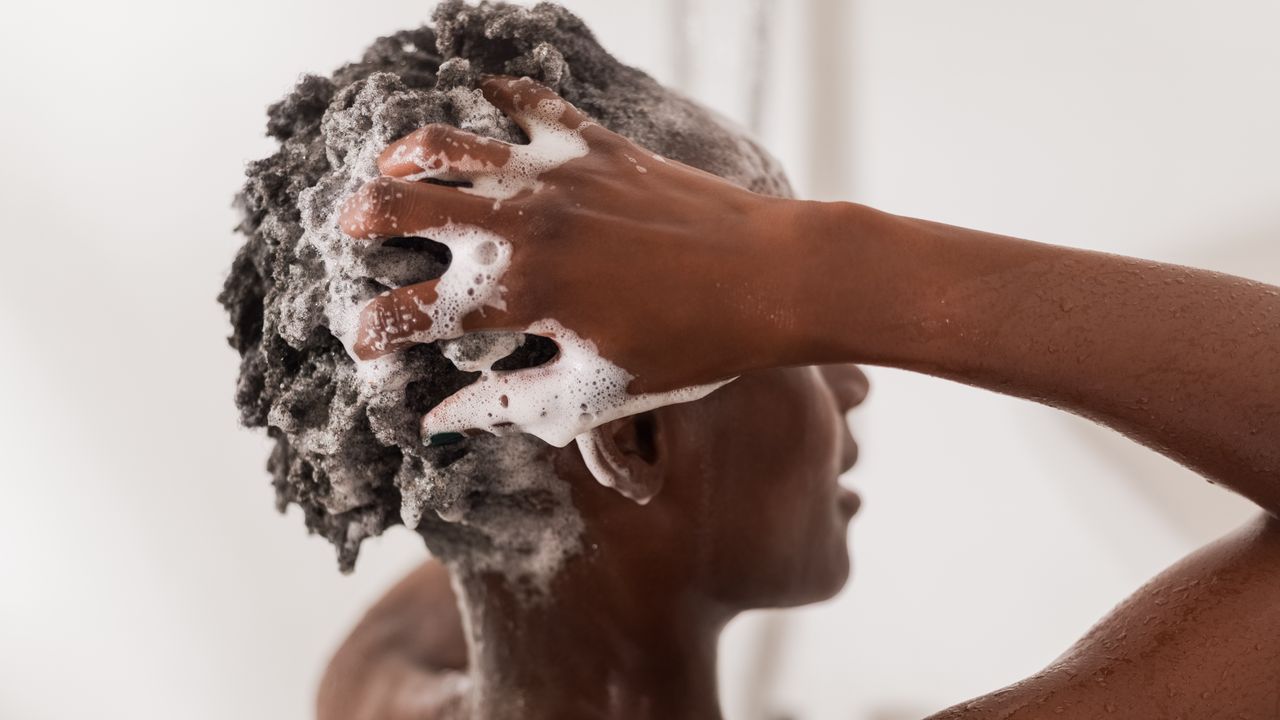
Dr. Queen cautions her patients not to overuse ketoconazole shampoo, as it can leave the hair shaft dry and brittle; this is particularly of note for menopausal women using the shampoo, as dry hair is another fun side effect of the hormonal shift. (People with damaged hair, chemically treated hair, and textured hair may also experience this side effect.) Since ketoconazole shampoo can be drying, Dr. Queen advises, it’s not a bad idea to follow up with a moisturizing shampoo and conditioner or try a conditioning mask post-shampoo.
Dr. Queller agrees, saying, “Ketoconazole shampoos can cause dryness, irritation, or changes in hair texture in some people, potentially making hair more prone to tangling and breakage, particularly if it is already fragile or chemically treated.” This could be why some people have claimed that the shampoo caused them to lose hair, but Dr. Queller notes that “reports alone don’t establish that ketoconazole directly causes hair loss.” In general, results are not one-size-fits-all; a quick scroll through the #femalehairloss subreddit reveals a fairly even split between those who found success and those who did not.
A final word
When in doubt, talk to your derm. “The problem with TikTok is that it removes the ‘diagnosis’ step,” says Dr. Campbell. “A product that helps someone with inflammatory scalp hair loss won’t help someone with androgenetic alopecia, and vice versa.” If you find joy in doing your own research, Dr. Kobets recommends looking at sources outside of any apps with an algorithmically-driven infinite scroll , like reading published studies on PubMed, and asking “Studied in whom, for which type of hair loss, and in what formulation?” when you’re in research mode. “An ingredient working in a laboratory doesn’t prove your shampoo grows hair,” she says. “Look for comparison groups, measured results, and other treatments participants were using.” Before-and-after photos can help, but lighting and styling can also make a difference, she adds.
Disclaimer : This story is auto aggregated by a computer programme and has not been created or edited by DOWNTHENEWS. Publisher: www.allure.com