
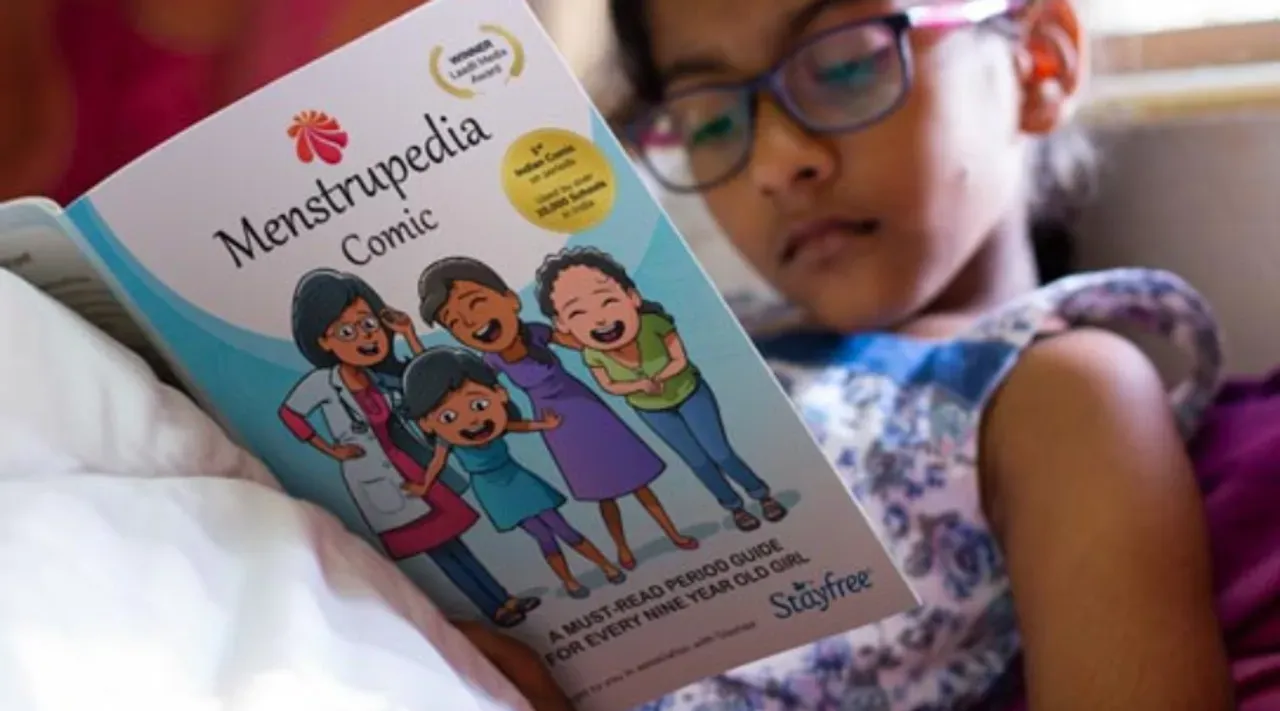
Picture an ordinary Tuesday afternoon in Class 8, when your 13-year-old daughter starts her period an hour before the school bell and two days earlier than expected.
She asks her teacher for permission to leave, walks down the corridor and reaches the girls’ toilet, where the next few minutes will quietly show whether her school has met the law.
If the door locks, the tap runs, and soap sits beside the basin, she is already ahead of girls whose schools offer none of these things.
If they are missing, an ordinary afternoon can turn into the kind of humiliation the court linked with absenteeism.
That short walk is exactly what the Supreme Court had in mind when it made menstrual health a matter of constitutional right, and it gives parents a practical way to test their daughter’s school.
The ruling behind the checklist
On 30 January, 2026, a bench of Justices J B Pardiwala and R Mahadevan held in Dr Jaya Thakur versus Government of India that the right to life under Article 21 includes the right to menstrual health.
Dr Jaya Thakur, a social worker, had approached the court in a writ petition under Article 32, asking for free sanitary pads for girls in Classes 6 to 12, separate toilets and awareness programmes.
The judges tied the outcome to the Right to Education Act, reasoning that a girl who cannot manage her period at school is denied barrier-free access to education.
The case had a longer runway. On 10 April, 2023, a bench that included Justice Pardiwala asked the Centre to frame a national policy on menstrual hygiene for school-going girls, with low-cost napkins and safe disposal at its core, and the 2026 judgment made that policy binding for Classes 6 to 12 while keeping the case alive through a continuing mandamus.
The directions apply to every school, whether government-run or privately managed, in cities and villages alike, so the same checklist holds everywhere.
Checks one to five, from the toilet door to the pad
The first check is whether the toilet is functional, gender-segregated, and connected to usable water, which is exactly what your daughter needs at that door.
The second is privacy and accessibility, including for children with disabilities, and the third is a working washing area with soap and water available at all times.
Accessibility matters as much as privacy, because a toilet that a child using a wheelchair cannot enter fails the second check, however clean it looks.
/filters:format(webp)/english-betterindia/media/media_files/2026/10/12/3-2026-10-12-18-28-39.jpeg)
A parent visiting for a meeting can simply ask to see the girls’ toilet, turn the tap and look for soap, which takes little time and answers three checks at once.
The fourth is the pad itself. The court wants free sanitary napkins kept within easy reach, preferably inside the toilet premises through a vending machine or, failing that, at a designated place.
Ask where the pads are kept and who holds the key, because a stock locked in a staff room defeats the purpose of keeping it within reach.
The fifth is the kind of napkin on offer. In September, the bench replaced its earlier oxo-biodegradable requirement with biodegradable, biocompatible and compostable napkins that meet ISO 17088 read with IS 5405, and it asked states to move gradually towards options such as cloth pads and menstrual cups.
The court gave two reasons, and both matter to parents. Biodegradable napkins are free from harmful chemicals, bleaching agents, and synthetic fragrances that carry long-term health risks, and they lighten the waste burden today’s children will inherit, which is why the judges suggested that states begin by teaching girls to use reusable napkins safely.
Checks six to ten, from the corner to the classroom
Back in the corridor, the sixth check is a menstrual hygiene management corner, stocked with spare innerwear, spare uniforms, disposal bags and other essentials for menstrual emergencies.
/filters:format(webp)/english-betterindia/media/media_files/2026/10/12/4-2026-10-12-18-30-45.jpeg)
That corner exists for moments exactly like your daughter’s, when a period arrives early and she needs to change and return to class.
Ask to see the corner and look inside it, since the court listed its contents and a corner without them exists in name only.
The seventh check is disposal, since every toilet unit needs a covered bin that is cleaned regularly, and the school needs a safe, hygienic, and environmentally compliant way of disposing of sanitary waste under the Solid Waste Management Rules.
The eighth and ninth checks sit inside the classroom. The court directed the National Council of Educational Research and Training and the State Councils of Educational Research and Training to build gender-responsive content into their curricula, so parents can ask whether the school teaches it as ordinary health knowledge and whether its teachers have been trained to deliver it.
The stakes are measurable. In an analysis the court cited, only 48% of 97,070 adolescent girls in India knew about menstruation before their first period, and the judges linked such gaps with absenteeism and girls dropping out of school.
The tenth check is whether anyone is verifying all of this. District Education Officers must inspect schools periodically, covering toilets, washing facilities, napkins, waste disposal and awareness measures, and they must collect anonymous feedback from students.
Ask whether your school has been visited, and whether students were asked what they thought of the facilities.
What the court found when it checked
The court has warned that private schools which fail to comply risk losing their recognition, and that state governments will be held accountable for lapses in public schools.
Progress is real in places. Dadra and Nagar Haveli and Daman and Diu, Karnataka, Jammu and Kashmir, Odisha, Chandigarh, Arunachal Pradesh and Puducherry reported full or near-full coverage of menstrual hygiene corners, and Bihar has set up Sakhi Sahayta Desks in its secondary and senior secondary schools.
/filters:format(webp)/english-betterindia/media/media_files/2026/10/12/5-2026-10-12-18-35-39.jpeg)
At its 1 September, 2026 hearing, the Union reported that of 39,439 girls’ toilets identified as still needing to be made functional, 30,458 had been constructed, 4,236 were under construction and 4,745 remained a gap.
The bench also criticised some state reports as showing “non-application of mind or rather mere formality”, pointing to Tamil Nadu’s claim of toilet saturation despite having far fewer schools with gender-segregated toilets than its total number of schools, and to an illegible report from Punjab.
The judges also asked states to be more vigilant about children with special needs, who face barriers that go beyond ordinary challenges of schooling.
Future reports must now list the schools that still lack each facility, along with the cause of each gap and the time needed to close it, while District Education Officers form teams of teachers to conduct surprise inspections.
The Supreme Court also directed States and Union Territories to report the gaps that remain, rather than simply listing facilities already provided.
In its 1 September 2026 order, the bench stated that District Education Officers should form teams of teachers to conduct surprise school inspections and collect feedback from students.
For a parent, that means the checklist is more than a wish list, because every item on it is a direction the court has already given.
None of it requires a legal degree, only a visit and a few plain questions.
Walk your daughter’s school through those ten checks, and the girl in Class 8 who raised her hand on a Tuesday afternoon will find her answer waiting at the door.
Sources:
‘Supreme Court Expresses Dissatisfaction With States’ Compliance On Menstrual Hygiene In Schools‘: by Yash Mittal for LiveLaw, Published on 16 September, 2026
‘Right to Menstrual Health part of Right to Life: SC issues directions on Free Sanitary Pads, Menstrual Hygiene Management corners in schools‘: SCC Online, Published on 30 January, 2026
‘Supreme Court directs implementation of menstrual health facilities in schools‘: Supreme Court Observer, Published on 18 February, 2026
‘Dr. Jaya Thakur v. Government of India & Ors., 2026 INSC 97 (Judgment)‘: by the Supreme Court of India, Published on 30 January, 2026
‘Dr. Jaya Thakur vs Government Of India on 1 September, 2026 (Order)‘: by the Supreme Court of India for Indian Kanoon, Published on 1 September, 2026
Disclaimer : This story is auto aggregated by a computer programme and has not been created or edited by DOWNTHENEWS. Publisher: thebetterindia.com







