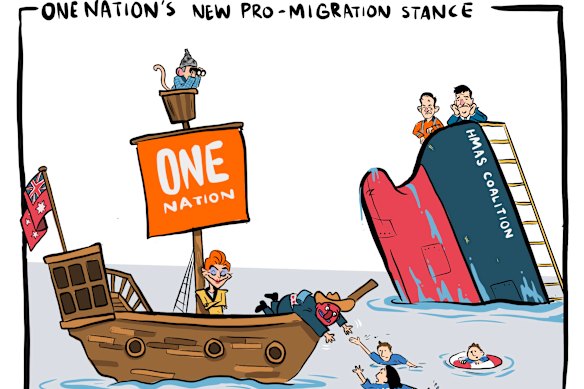
Unfortunately, it would seem that politics is ruled by sentiment rather than logic (“Labor has time to turn the tide but it needs to reveal a plan pretty soon”, November 27). The feeling is that people are suffering from the rising cost of living, and as everything is supposedly the government’s doing, it should get the blame. This is evidenced by the fall in Anthony Albanese’s popularity and that he is no longer preferred prime minister (“Opportunity is knocking for Taylor”, November 27). But really, is the Coalition and Angus Taylor (or worse, One Nation) the solution to these problems? As pointed out, their rejection of government savings and their proffered tax cuts would just make matters worse. To offset these, any spending cuts they might suggest (not that they have yet) would have to be austere. Meanwhile, the electorate seems to have forgotten that most of the rise in inflation is due to Trump’s war in Iran and the costly building of data centres. Raising interest rates can’t address these things and just heightens the suffering. Yes, government spending has also contributed, but that’s the thing that everybody focuses on. As if reducing government spending will bring inflation under control (which it probably won’t). David Rush, Lawson
Unless a miracle happens, I can’t see Albo winning the next election. That leaves us with Angus Taylor as the only alternative. However, I think he needs a catchy, trendy new name to lift his profile. We need to run a competition and let the public decide. My suggestion: AngoT. Mokhles Sidden, Strathfield
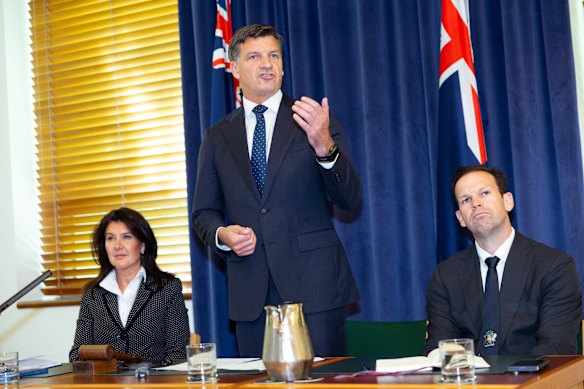
James Massola acknowledges Labor’s considerable achievements. However, he could have added the restoration of Australia’s relationship with France following the submarine debacle, the careful rebuilding of relations with China, the strengthening ties in the South Pacific and managing the unpredictable relationship with the United States. These are significant diplomatic achievements. The government has also concluded a free trade agreement with the EU and legislated a Digital Duty of Care for social media and online platforms. Inflation and cost-of-living pressures remain concerning, but these are not uniquely Australian problems. Inflationary pressures have affected economies across the developed world, driven by international energy prices and wars. Inflation has also been fuelled by the excess liquidity still working its way through the economy from the lingering effects of substantial pandemic-era government stimulus. Comparing Australia to similar G20 countries, our overall economic performance is hardly the outlier that some critics would have us believe. The question remains: would those critics, with their alternative policies, genuinely deliver a better outcome for all of us in this volatile world? Brian Hastings, Drummoyne
With the government needing more revenue and unemployment rising, it’s time to tax all companies sending jobs offshore. This may deter such actions. We need an immediate and strong response to this immorality. We need Keating and Howard to speak up, before Pauline uses this as ammo. Ashley Berry, Toolijooa
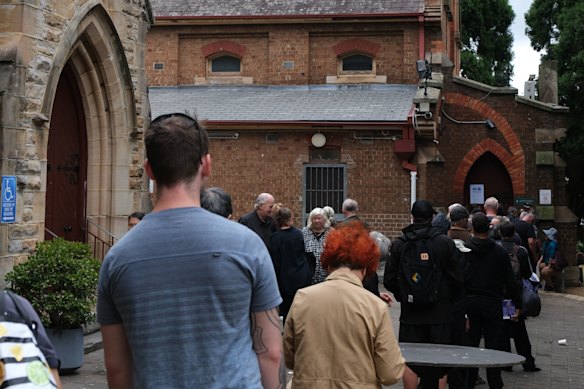
Last week I walked along Macquarie Street in Sydney in the afternoon. There, opposite Sydney Hospital, was a charity dispensing food and groceries to people caught by rising inflation. The queue stretched back two blocks. It comprised all sorts of people of different ethnicities, some in family groups. This is apparently “normal”. None of these people were anything like the collection of sole beggars to be found hunched in broad daylight on street corners in the city. Julia Bovard, North Sydney
There are worse movies
Amusing analysis of the treasurer’s role in the economy (“Jim Chalmers is Captain Hindsight. If he were a movie, you’d walk out”, smh.com.au, November 26). The tragedy is, almost all of Australia’s budget has a simple explanation: we are much better off than the past. We live longer, have better food, clothes, housing, healthcare, education, luxury goods, holidays. The OECD average of government expenditure is about 31 per cent of GDP. America’s is a bit less, but it runs an enormous deficit, and life expectancy there is a lot less than ours – in fact, seven years less, which matters as aged care is a big part of the budget. All the big ticket items in the budget, like healthcare, aged care, education, defence, law and order, and family benefits, are fixed or growing. That is why governments struggle to bring the budget into surplus. It is also why the Coalition can’t contemplate losing our export base of coal and natural gas (and iron ore). Labor struggles but on the whole has done a good job under difficult circumstances. Productivity comes from technology you either develop yourself (largely in the private sector, where Australia lags all comparative economies) or buy and pay the premium for, or, as we have here, you have low productivity growth. If elected, don’t expect One Nation or the Coalition to tackle productivity with a research-and-development moonshot: it’s not going to happen. Noel Thompson, Riverview
There’s more to life than the economy, and, capped by the recent treaty signed with the Solomon Islands, the government deserves recognition and congratulations for its achievements in the Pacific. Peter Lane, Margaret River (WA)
Libs ignore costs
Opposition energy spokesman Dan Tehan, whose party has promised to abandon the net zero target, has nonetheless criticised the Labor government for not meeting its emissions targets, and said that it should instead focus on “energy affordability and security” (“Climate goals under threat as renewable delivery lags”, November 27). In their usual critical view of everything, the Liberals have conveniently ignored the report from former Reserve Bank deputy governor Guy Debelle, now a non-executive director of the independent think tank e61, who stated that Australia’s wholesale power prices would be up to 50 per cent higher if the country had embraced coal, gas or nuclear power rather than renewables and batteries. Alan Marel, North Curl Curl
Dan Tehan criticising Labor for failing to reach its emissions reduction targets is like the gun lobby in America criticising the government for not reducing the number of shootings. Ken Enderby, Concord
Australia may be nearing its 2030 climate goal, but we’re way off track for 2035 and what is needed to really address the crisis. It’s easy to blame the Albanese government for waving through more and more coal and gas. But the real handbrake is the Coalition, which has abandoned net zero altogether. Climate change doesn’t vote along party lines, and neither should climate policy. Karen Lamb, Geelong (Vic)
Backing Pocock’s plan
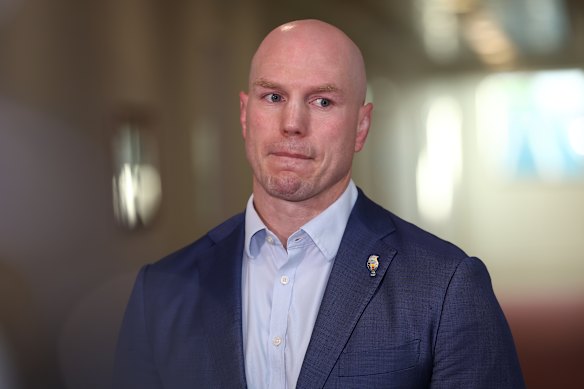
Well, that’s good news, parliament having passed the necessary laws to have the LNG companies reserve 20 per cent of their output for home usage (“Labor refuses to say how much bills will fall under new gas reservation scheme”, smh.com.au, November 27). Now, for the 25 per cent tax on their turnover. The aim is to charge a 25 per cent tax on the turnover, not profit, of the gas companies that are making billions out of our – Australia’s – resources. Through their creative accounting, combined with their being allowed to write off their initial costs against their revenue, they have been able to reduce their profits down to a level where the PRRT doesn’t apply. The aforementioned turnover tax is being driven by ACT independent senator David Pocock. Labor is yet to come on board. The LNP, true to form, has opposed the proposal. Senator Pocock needs to know that the whole of Australia is behind him. Stewart Copper, Maroubra
Fleeing the party
Irrespective of one’s feelings for One Nation, one can’t fault the logic and principle per se of Liberal senator for South Australia Leah Blyth on her rejection of the Coalition – and especially the Liberals – as a dead loss as alternatives to Labor (“Blyth mutiny: One Nation’s bounty leaves Libs fuming”, November 27). One need only be reminded of her until-now colleagues, Liberal senator Michaelia “ABC AFP raid, then whiteboard” Cash, and Nationals senator Bridget “Sports Rorts” McKenzie, to share Blyth’s due sense of hopelessness and doom. Alex Mattea, Kingston (ACT)
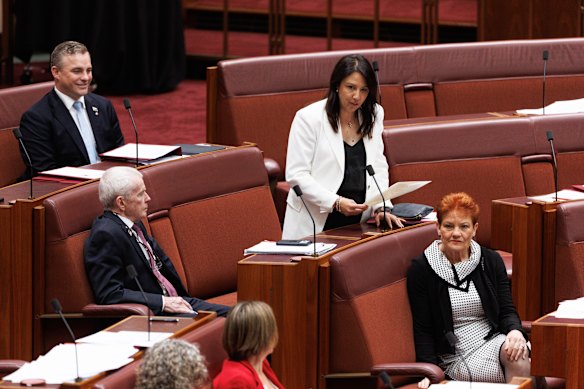
What is the point of a political party endorsing a candidate, spending money to promote them, when once they are in parliament they skip to another party without penalty or so much as a by your leave? The rules should be that they are disenfranchised and have to be re-elected. Marjie Williamson, Blaxland
Leah Blyth defected to One Nation because she was put in an unwinnable position on the Liberal Party ticket for the next election. Full stop. Toni Lorentzen, Fennell Bay
Plight of the Concorde resonates
What a loss to Liberal Party leadership. Sussan Ley’s article (“Mach my words: Concorde was an audacious plane the likes of which you’ll never see again”, November 27) is brilliantly engaging. A beautiful piece. Her knowledge and love for flight, and for The Concorde Project, is a cleverly crafted statement of the best of Liberal Party ideals. Was it because she is a woman or because she is too intelligent to lead the Liberal Party – or both? Maralyn Lawson, Greenwich
Could you please stop publishing well-written interesting articles by ex-politicians? I found myself enjoying Sussan Ley’s article, her passionate advocacy for Concorde and her calls for more ambition in national goals. I prefer to stew in my own political biases and found it uncomfortable finishing the article and finding myself liking Sussan Ley. Peter Harrison, O’Connell
Sussan Ley, you had me soaring with your ode to the Concorde. Zeny Giles, New Lambton
Ideas are easy, but taking them to fruition is extraordinarily difficult. Part of that difficulty comes from naysayers and the petty minded. Way too often those negative people come from the party that Sussan Ley once led. Greg Baker, Fitzroy Falls
I enjoyed Sussan Ley’s informative article on the Concorde. I was reminded of an Ashes Test match at the Oval in London in the early ’90s where Merv Hughes was enduring some (always witty) heckling from the England fans. At that moment, a Concorde flew overhead, quite low. A heckler yelled out, “Look at that, Merv, you Aussies could never build something like that!” Without turning around, Merv pointed to himself and held up two fingers, then pointed back at the crowd and held up his hand with his fingers indicating a zero – because the series was 2-0 Australia’s way. Gerry Foley, South Turramurra
Nothing but the truth
A truth forum with the ability to keep findings private (“‘Dishonesty is normalised’: Barrister to run scandal forum”, November 27)? Sir Humphrey should co-chair it. Jeremy Brender, West Richmond (SA)
“Cricket Australia will on Friday unveil the terms of reference for the truth forum to be presided over by Fiona McLeod, SC.” It seems that some truth serum wouldn’t go astray. David Gordon, Cranebrook

OMG. We are running a truth-telling forum to get the truth about what overpaid male adult sportsmen did on the field. But we won’t allow one for our Indigenous bothers and sisters, who were murdered, raped, enslaved, underpaid, taken away from their parents and are drastically over-represented in the prison system. Truth is found only when you dig. I can’t give a toss about our cheating cricketers; I am ashamed of being an Australian when they become a topic of national interest. John Rome, Mount Lawley (WA)
I hope the Cricket Australia forum finally answers the key question – who bought the sandpaper? Ray Thompson, Randwick
A plea for public housing
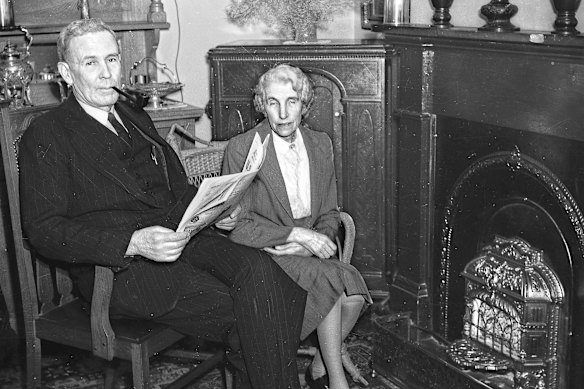
Your correspondent (Letters, November 27) argues that we should bring back public housing on public land. In 1954, when the population of NSW was 3.5 million, 1200 people attended a ceremony in Bathurst (population then 16,000) for the opening of a NSW Housing Commission estate of 60 new homes. The development was named Chifley Park as a memorial to Bathurst’s greatest son, prime minister Ben Chifley, who in 1945 had signed the landmark Commonwealth-State Housing Agreement which established the framework for co-operation between the Commonwealth and the six state governments to address Australia’s severe postwar housing shortage. In her speech, Chifley’s widow Elizabeth said, “I understand there are 57 families accommodated in this project and this means that 57 families are better housed, and better contented, with their children being given better chances and opportunities through the influence of a stable and settled life. I can think of no better memorial to my late husband who, as you know, took such a deep interest in social improvement.” In 1954, governments were building public housing on a scale that recognised housing as a social responsibility, not simply a market commodity. Today, we have governments focusing on delivering “affordable housing” that remains beyond the reach of most of the very people it is supposed to help. Perhaps it is time to rediscover the ethos of the Chifley and post-Chifley years. John Payne, Kelso
Your correspondent asks: “Is the NSW government totally insensitive to the aesthetics of development and only concerned to reach a target?” (Letters, November 27) Look around you and the only answer is YES. The only way out of this dismal future is for the people of NSW to shout NO to the ongoing destruction of their neighbourhoods and the built environment by unambiguously voting the Minns government out at the next election. Janet Keller, Centennial Park
Your correspondent is correct; previous state governments have sold off and failed to provide more public housing. Here’s an idea: instead of this false and confusing “affordable housing”, why doesn’t our government acquire say one in every 20 units in a development for public housing, giving our communities a better mix of population. Brian McDonald, Willoughby
No dogma in hospitals
The Catholic takeover of 14 private hospitals exposes the fundamental flaw in subsidising religious and private healthcare with taxpayer dollars (“Fresh fears for women’s health in hospital deal”, November 27). Allowing Calvary Health Care to ban lawful, essential procedures such as IVF, contraception and pregnancy terminations for serious fetal abnormalities discriminates against women and strips patients of bodily autonomy. Even worse, denying terminally ill patients access to voluntary assisted dying forces vulnerable people into cruel, unnecessary transfers and inhumane end or extension of their lives. This crisis is a direct result of a two-tier system that funnels public funding and Medicare rebates into private operators while leaving the public system stretched thin. If governments redirected that public largesse into our universal public hospitals, every Australian would be guaranteed comprehensive, non-discriminatory care that is free from religious dogma. Healthcare should be governed by medical science and patient need, never institutional doctrine. State governments must refuse to grant hospital licences unless operators guarantee full access to all legal medical services. Robyn Dalziell, Kellyville
Now coaching has cachet
As a retired state primary school teacher, it is very concerning to read in the Herald of the extreme levels of pressure imposed on young students to ensure they will have a chance of gaining a position in a selective secondary school, by extended hours attending a coaching college on weekends but also beyond their daily school requirements. They are being denied the involvements not only in team sports and competitions but time to develop their own cultural and artistic abilities and interests. Living in a suburb where coaching colleges proliferate, it has become very apparent that, quite independent of the abilities of the young students to sit for the selective school exam on their own merits and abilities, another criterion has emerged – that of “cultural parent prestige”. At what age will these parents allow their children to pursue their secondary and tertiary education based on their own merits and intellects, free from the pressure of coaching? Margot McGuirk, Castle Hill
Here’s to the quiet virtues
Your correspondent (Letters, November 27) notes that “genuine love cannot be coerced”. Some 2000 years ago, another inveterate letter writer, with whom I share the same given name, famously described the proactive essence of love as being patient, kind and enduring. In a world where bitter interpersonal and intergroup conflict too often seem to be the norm, it is timely to be reminded that positive outcomes are more likely to be achieved through the exercise of these quiet virtues than by vociferous tirades. Paul Casey, Callala Bay
Do not privatise water treatment
I could barely believe my ears when I heard Jess Wilson promising to privatise the main Melbourne wastewater treatment plants. The sophistry of the rhetoric was also interesting in claiming that this wasn’t a selloff but a long-term operational lease. This shouldn’t fool anyone. She also claimed that this wouldn’t result in higher charges. So, the new private operator will run it at a profit, which the government does not have to do, and keep the charges the same. Pigs might fly. Has anyone in the Victorian Liberal Party heard about the Thames water debacle in Britain? Polluted waterways, leaking pipes, government bailouts and a probable renationalisation. We really are slow learners. Alan Phillips, Mosman
Dan and Jacinta may have left Victoria bitter, but please don’t fall for Pauline’s sour grapes. We’ve seen what a protest vote for incompetent populism has done to America. Whatever you do, put One Nation last. Phil Bradshaw, Naremburn
Data centres need H2O too
I was a citizen of Blacktown for more than 25 years. If I were still there I would be pushing the Blacktown City Council to demand that the state government urgently legislate to require, as part of the approval process, that each data centre be required to construct and maintain indefinitely a desalination plant capable of providing sufficient water to meet its needs and that such plants be linked to the metropolitan water infrastructure (“Southern hemisphere’s biggest data centre set to grow even more”, November 26). It is obvious that data centres should also be required to install considerable solar and wind farm energy supplies. Tom Cooke, Pearce (ACT)
- To submit a letter to the Sydney Morning Herald, email letters@smh.com.au. Click here for tips on how to submit letters.
- The Opinion newsletter is a weekly wrap of views that will challenge, champion and inform. Sign up here.
Disclaimer : This story is auto aggregated by a computer programme and has not been created or edited by DOWNTHENEWS. Publisher: www.smh.com.au