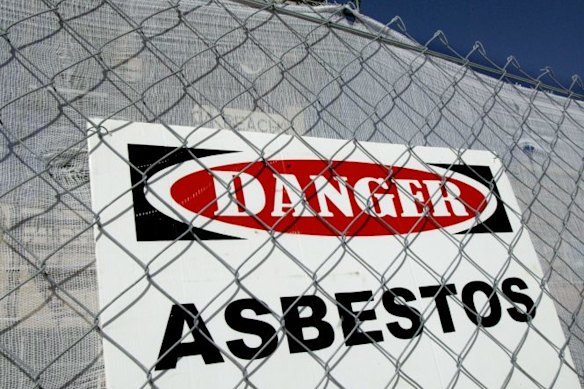

A Queensland man has been awarded Australia’s largest-ever asbestosis compensation payout.
Robin Smith, who developed the condition after exposure to asbestos while working as a plumber for decades in Mackay, won $1,897,000 in compensation, plus legal costs.
Now in his late 70s, Smith was exposed to asbestos between 1981 and the mid-1990s while employed with the Queensland government’s Mackay Harbour Board, now known as the North Queensland Bulk Ports Corporation Limited.
During his employment, he used a demolition saw to cut into asbestos cement pipes while working on the water lines throughout the port.
Asbestosis is a chronic lung condition caused by inhaling asbestos fibres. It can take 10 to 60 years to present and there is no cure.
Smith, represented by Slater and Gordon Lawyers, went to trial from August 17-20 against Amaca Pty Ltd (previously known as James Hardie & Coy), North Queensland Bulk Ports Corporation, and WorkCover Queensland for Smith’s earlier deregistered employers.
The resulting judgment, handed down on October 8 in the Queensland Supreme Court, is the first asbestosis judgment in the state.
The court heard that Smith’s disease is progressive, irreversible, and will be fatal. He now has a life expectancy of about five to six years.
Smith sought damages for pain, suffering and his loss of enjoyment of life, and compensation for past and future expenses. Of the total damages awarded, he received $800,000 for his pain and suffering.
Slater and Gordon lawyer Sean Sweeney said it was deeply concerning that Smith experienced such extreme asbestos exposure into the 1990s, and that employers ought to have known better.
Asbestos products were banned in Australia on December 31, 2003.
“Asbestos remains a very present and ongoing risk for Australians,” Sweeney said. “It can still be in our homes, workplaces and schools, so we must remain vigilant.”
Start the day with a summary of the day’s most important and interesting stories, analysis and insights. Sign up for our Morning Edition newsletter.
From our partners
Disclaimer : This story is auto aggregated by a computer programme and has not been created or edited by DOWNTHENEWS. Publisher: www.smh.com.au