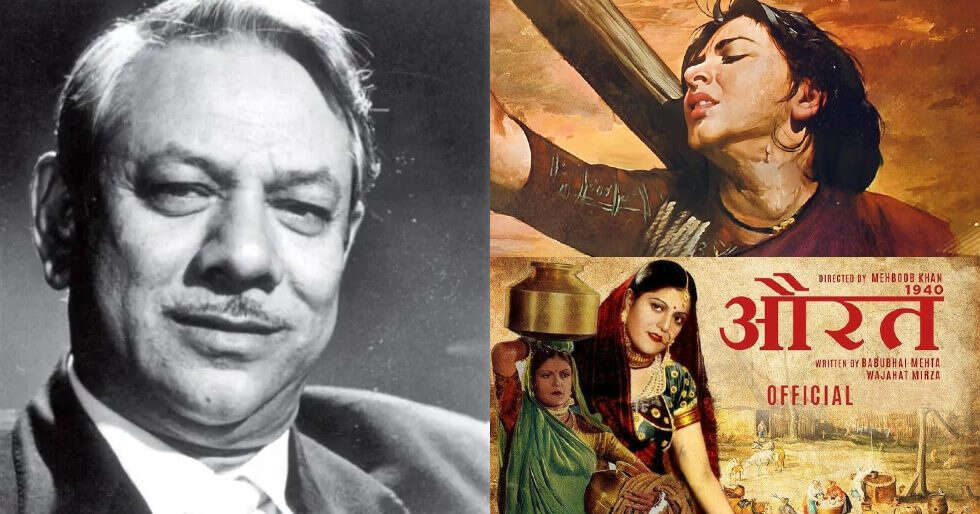
Filmfare’s Editor-in-Chief Jitesh Pillaai revisits the towering legacy of Mehboob Khan, the visionary filmmaker who transformed Indian cinema with classics like Mother India, Andaz and Amar, while building a cinematic empire marked equally by brilliance, ambition and controversy.
In his words:
There are people who put their entire lives on the line to chase their passion. What made an uneducated boy who ran away from home the leading light of the movie business? Mehboob Khan pioneered not just a trend of great films, but he also ushered in a new era of filmmaking, often being compared to Hollywood’s Cecil B DeMille.
The maker who gave Nargis, Dilip Kumar, Nimmi and Nadira some of their most pioneering works in Andaz (1949), Taqdeer (1943), Aan (1952), Humayun (1945), Amar (1954), Mother India (1957), besides scores of amazing musicals like Anmol Ghadi (1946) and Anokhi Ada (1948) and of course Aurat (1940), from which Mother India was remade. Besides snagging Mother India the richly deserved nomination in the Best Foreign Language Film category. Great men empower; he gave us a legacy of wonderful films besides the mammoth Mehboob studio, which is home to many a classic.
Great men also are afflicted with hubris, irascible temper, mercurial bouts, and perhaps uncontrollable libido, leading to professional and personal fallouts that marked the end of a great career when he was barely 58 years old. His blow hot, blow cold relationship with Dilip Kumar and Raj Kapoor, his various excesses, including his love of food and women, his ego clashes with his immediate creative and technical crews, are all documented with dignity and grace in his biography by Bunny Reuben. His brief affair with a dance actress caused much chagrin to his second wife, Sardar Akhtar. Her sister, Bahar, was married to another movie mogul, AR Kardar.
But we will remember Khan for the magic of Nargis in Mother India, the spectacular Andaz (1949), and the anti-hero in Amar (1954). Despite his own ego and frailties, he soldiered on to make the industry a place to reckon with, besides putting us on the International map. In Reuben’s biography, Mehboob: India’s Demille, he recalls with sharpness and affection, the chequered career of a movie mogul. Several cliches abound in the book, and there is both deification and criticism. Suffice to use another cliche: They don’t make them like that anymore.
Also Read: Editor’s Take: Why Sathyan Anthikad’s Films Still Feel Like Home
Disclaimer : This story is auto aggregated by a computer programme and has not been created or edited by DOWNTHENEWS. Publisher: filmfare.com