The UAE government has announced the official Eid Al Adha dates that will be observed in the region based on moon sightings. The UAE announced that Monday, May 18, will mark the first day of Dhu Al Hijjah, as the crescent moon was sighted on Sunday evening. Eid Al Adha falls on the 10th day of Dhu Al Hijjah, the final month of the Islamic lunar calendar. Therefore, it will be observed on May 27. This means that the Day of Arafah will be on May 26.
When is the Eid Al Adha long weekend?
The UAE moon sighting committee has officially confirmed that Eid Al Adha 2026 will begin on Tuesday, May 26, which marks Arafat Day. The three days of Eid Al Adha will then follow on Wednesday, May 27, Thursday, May 28, and Friday, May 29. According to UAE public holiday law, this schedule creates a six-day break for the private sector, while school students and public sector workers can expect a nine-day holiday. Private sector employees are still awaiting a formal announcement from the Ministry of Human Resources and Emiratisation to confirm the exact number of days off. However, the Ministry of Education and the Federal Authority for Government Human Resources have already confirmed extended breaks for students and government employees, respectively.
The confirmation came after the moon sighting committee spotted the crescent of Dhu Al Hijjah on the evening of Sunday, May 17, signaling the end of Dhu Al-Qa’dah (the 11th month of the Islamic Hijri calendar). Consequently, Monday, May 18, is the first day of Dhu Al Hijjah, the final month of the Hijri year. Arafat Day falls on Dhu Al Hijjah 9, and Eid Al Adha is observed on days 10, 11, and 12. Unlike the solar-based Gregorian calendar, the Islamic Hijri calendar relies on moon cycles, with months lasting either 29 or 30 days—determined only on the final day of each month. Under UAE law, Eid Al Adha is a three-day holiday, preceded by a separate day off for Arafat Day.
How to Extend Your Break into a ‘Super Weekend’
For those looking to maximize their time off, the calendar offers a strategic opportunity. While the official holiday covers Monday to Friday, employees can effectively turn this into a 9-day extended holiday by utilizing the two weekends that bookend the break.
Here is the breakdown:
Saturday, May 23 – Sunday, May 24: Regular weekend (Already off)
Monday, May 25 – Friday, May 29: Eid Al Adha holiday (Public sector)
Saturday, May 30 – Sunday, May 31: Regular weekend (Already off)
The result: By taking no extra annual leave, employees will be off from Saturday, May 23, through Sunday, May 31 – a full nine days away from the desk.
If nine days still isn’t enough, smart planning can stretch your break into a truly epic getaway. By taking just 2–3 days of annual leave from either the working days before or after the holiday window, you can significantly extend your time away from the office.
Option A: Extend the front end
Take Monday, May 18 – Wednesday, May 20 off (3 days of leave). This bridges the week before the holiday. Your break would then run from Saturday, May 16, through Sunday, May 31 – a total of 16 days (includes two full weekends + the 5-day Eid break).
Option B: Extend the back end
Take Tuesday, June 2 – Thursday, June 4 off (3 days of leave). Your break would run from Saturday, May 23, through Sunday, June 7 – also 16 days in total.
Option C: The golden compromise (2 days of leave)
Take Thursday, May 21, and Friday, May 22 off (2 days). This connects the preceding weekend directly into the Eid holiday, giving you from Saturday, May 16, through Sunday, May 31 – a massive 15-day break using just 2 annual leave days.
Leveraging Friday Half-Days & Remote Work Setups
Not everyone can take full days off, but you can still make use of flexible work arrangements to increase your time away from the office:
Friday half-day advantage: Many UAE workplaces already operate on reduced Friday hours. If your office has a half-day on Friday, May 22, you could effectively check out by noon that day. Combine this with taking just a half-day of leave on Thursday, May 21, and you’ve gained an extra 1.5 days of travel or rest time without burning full leave days.
Remote working setups: If your company offers hybrid or remote work options, consider requesting to work remotely from your destination on the days immediately before or after the holiday. For example, work remotely on **Thursday, May 21, and Friday, May 22**, from a staycation hotel or your home city. You’re technically “working” but have already eliminated your commute and can transition seamlessly into holiday mode the moment your tasks are done.
The strategic Friday: If remote work isn’t possible, taking just Friday, May 22, as a single day of leave – especially if your office already has a light Friday schedule – can turn the preceding weekend into a 4-day mini-break that then flows directly into the 9-day Eid holiday.
With a combination of the official 5 days, two bookending weekends, 2–3 strategically placed leave days, and smart use of half-day Fridays or remote work policies, you can realistically craft a break lasting anywhere from 9 to 16+ days with minimal impact on your annual leave balance.
The Moon Sighting Factor
As with all Islamic holidays, the exact dates remain subject to the traditional sighting of the moon. The UAE’s moon-sighting committee will convene on Sunday, May 17 to observe the crescent of Dhul Hijjah (the final month of the Islamic calendar).
According to astronomical calculations, Dhul Hijjah is expected to begin on Monday, May 18. If the moon is sighted on May 17, this timeline holds. However, if the moon is not sighted, Dhul Qadah will complete 30 days, shifting Dhul Hijjah to begin on Tuesday, May 19. That would consequently shift the Eid holiday by one day.
Earlier predictions from the Sharjah Academy for Astronomy, Space Sciences and Technology (affiliated with the University of Sharjah) suggested that Wednesday, May 27, is likely to be the first day of Eid Al Adha.
Key dates to watch:
Arafah Day: Expected to fall on Tuesday, May 26 (the 9th of Dhul Hijjah).
Eid Al Adha: Expected to begin on Wednesday, May 27.
Note for Private Sector Employees
While the above dates are currently binding only for government employees, private sector workers should not feel left out.
“Although this is just for the public sector, the private sector’s holidays are expected to be announced soon,” a standard practice in the UAE, where the Ministry of Human Resources and Emiratisation (MoHRE) typically issues a separate circular granting equal or similar days off for private companies.
Historically, private sector employees in the UAE receive the same number of official holiday days as their public sector counterparts, though the exact start date can sometimes differ by a day.
Spiritual Significance
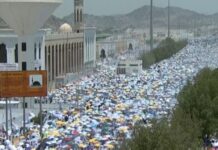
Eid Al Adha, known as the “Festival of Sacrifice,” coincides with the annual Hajj pilgrimage to Makkah in Saudi Arabia. Arafah Day, which falls on the 9th of Dhul Hijjah, is considered the most significant day of the Hajj journey, holding immense spiritual weight for Muslims worldwide.
For now, public sector workers can mark their calendars for a potential 9-day reprieve from May 23 to May 31, while private sector employees are advised to await the upcoming formal announcement from MoHRE. And with a little creative leave planning, half-day strategies, or remote work arrangements, that break could become the longest weekend of the year.
-For more on luxury lifestyle, news, fashion and beauty follow Emirates Woman on Facebook and Instagram
Images: Instagram & Supplied and Feature Image: Instagram @fatmaa
Disclaimer : This story is auto aggregated by a computer programme and has not been created or edited by DOWNTHENEWS. Publisher: emirateswoman.com