
London: A Russian mastermind is being blamed for arson attacks on a home and car linked to British Prime Minister Keir Starmer, after a court found two men guilty of starting fires ordered by an anonymous boss they called “El Money”.
British authorities said the attacks were designed to spread fear in the prime minister’s family and attack the United Kingdom, highlighting the growing threat from foreign ringleaders who pay low-level criminals to do their work.
The case has parallels with attacks elsewhere in Europe that have been blamed on Russia or its proxies, while Australian agencies blamed Iranian agents last year for using a “fee for service” model to hire criminals to spread terror.
Two men were convicted on Monday in London’s Central Criminal Court for lighting the fires that targeted Starmer’s property or former property in May 2025, but their Russian-speaking boss is yet to be identified.
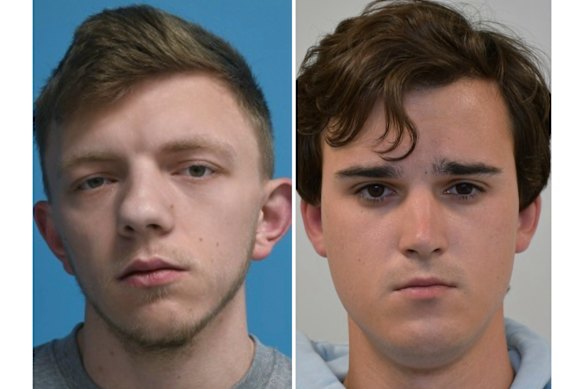
Roman Lavrynovych, 22, who was born in Ukraine, set fire to a townhouse in north London that was home to Starmer’s sister-in-law as well as a Toyota RAV4 the prime minister had once owned. The court found the Ukrainian man guilty of conspiracy to commit arson.
Stanislav Carpiuc, 27, a Romanian who was born in Ukraine, was convicted of two charges of arson while being reckless about the danger to life.
While nobody was injured in the fires, the attacks provoked fears about attempts on the prime minister’s life given his strong support for Ukraine in the war with Russia.
The court heard that “El Money” hired Lavrynovych to put anti-Islamic posters on the walls of mosques in London, in an apparent attempt to fuel community discord.
When the ringleader saw a message from Lavrynovych on the Telegram online service seeking work, he hired him for the arson attacks, the court heard.
Lavrynovych claimed he committed the crime because he needed money and asked for £3000 ($5700) in cryptocurrency. He said he did not know who owned the property when he lit the fire and that he did not know who Starmer was.
The court was told he never received any money for setting the three fires.
A third individual, Petro Pochynok, 35, was acquitted of arson.
Commander Helen Flanagan, the head of the counterterrorism team at the Metropolitan Police, said the motive could not be established because the man behind the attacks had not been found.
“Clearly the tasking was to intimidate and create fear for the prime minister and to attack the UK,” she said.
“Our message to anyone who might be approached in this way, or thinking about doing similar, is to think again.
“As we’ve seen here, you will not get paid as you are promised, you will be identified and brought to justice, and the only thing you will be left with is facing the prospect of a lengthy jail sentence.”
While the court did not disclose the ringleader’s name, The Financial Times reported on Monday that “El Money” was linked to a group of hackers called NoName057(16), which has attacked western government systems.
The messages from “El Money” on the Telegram service included praise for Russia and its president, Vladimir Putin, as well as attacks on Ukraine and its people.
“It is obvious that Putin is the leader of the white race,” he said in one discussion, the BBC revealed.
The Russian embassy dismissed the suggestions of state involvement in the attacks, saying Russia posed “no threat” to Britain and had “no aggressive intentions” toward the country.
But several cases across Europe have found small-time criminals guilty of attacks that appeared to help Russia, either by targeting the country’s enemies, damaging infrastructure or fuelling ethnic discontent.
In France last year, a group of Bulgarians were found guilty of defacing a memorial to the victims of the Holocaust on the orders of a boss who was never found.
In Poland, authorities investigated an explosion on a railway line south of Warsaw that stymied deliveries to Ukraine.
In Germany early last year, a court convicted a German man of Russian descent of planning an arson attack on military facilities and railways to weaken support for Ukraine.
An arson attack on a London warehouse in March 2024 led to the arrest of six men who were later convicted of causing the fire that destroyed aid destined for Ukraine.
One of the main arsonists, Dylan Earl, 21, was a part-time drug dealer who signed up for the attacks after being in contact with a series of online accounts that appeared to be set up by the Wagner Group, the mercenaries once loyal to Putin. Earl was sentenced to 17 years in prison.
 David Crowe is Europe correspondent for The Sydney Morning Herald and The Age.Connect via X or email.
From our partners
Disclaimer : This story is auto aggregated by a computer programme and has not been created or edited by DOWNTHENEWS. Publisher: www.smh.com.au