At 12:20 pm last Tuesday, an official in the Louisiana secretary of state’s office opened a mailed letter and white powder fell out. The office was immediately evacuated and the employee was rushed to the emergency room. The employee was not injured and subsequent tests showed that the substance was not harmful. By Wednesday, the office was back open.
“Tuesday’s event did not impact any election operations in preparation for the upcoming election,” Trey Williams, a spokesperson for Louisiana’s secretary of state, tells WIRED.
But the incident was not isolated. A WIRED investigation has found that over the course of the following days, election offices in at least 31 other states were targeted with similar letters as they prepared for the midterms that are now just two weeks away. Many of the states have made public statements acknowledging the receipt of these letters, but WIRED’s accounting of all the incidents shows the full scale of this campaign for the first time.
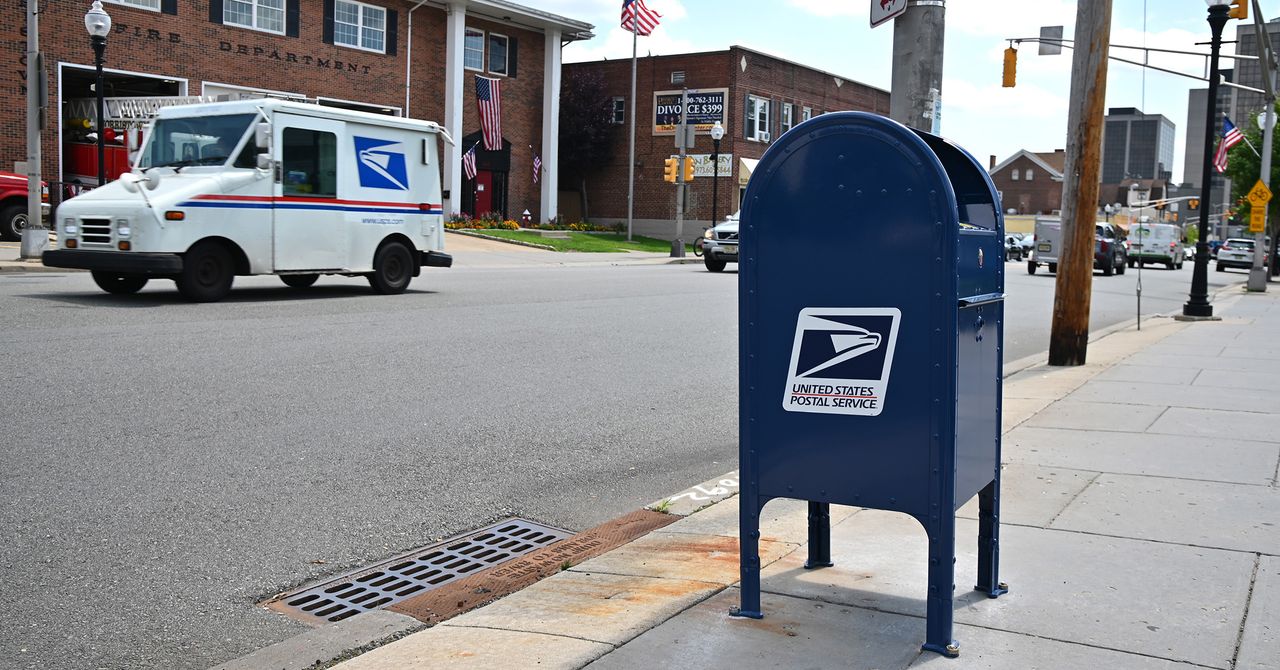
The vast majority of letters were intercepted by the United States Postal Service before they reached their intended targets, state officials tell WIRED, but in Arizona, Delaware, Oklahoma, South Carolina, and Louisiana the letters were not intercepted, leading to election offices being evacuated when white powder was discovered.
The states that confirmed receipt of a letter are: Alaska, Arizona, California, Connecticut, Delaware, Florida, Georgia, Idaho, Illinois, Kansas, Louisiana, Maine, Maryland, Massachusetts, Minnesota, Mississippi, Nebraska, New Hampshire, New Mexico, North Dakota, Ohio, Oklahoma, Oregon, Pennsylvania, South Carolina, South Dakota, Tennessee, Utah, Virginia, Washington, Wisconsin, and Wyoming.
Election officials in 10 states—Vermont, Michigan, New York, Rhode Island, Texas, West Virginia, Colorado, Kentucky, Indiana, North Carolina—and DC tell WIRED they have not received any suspicious packages. The eight remaining state election offices did not respond.
The white powder contained in the letters that have been opened so far has been reported as not harmful, but election offices remain on high alert.
“We are deeply concerned by these incidents,” the National Association of Secretaries of State and the National Association of State Election Directors wrote in a joint statement. “As we have each stated in the past, threats against election officials and workers have no place in our democracy. Those who administer our elections should never fear for their safety while carrying out their essential duties.”
As news of the letters being sent emerged last week, federal agencies alerted other election offices in some states that a potentially dangerous package was on the way. The FBI notified authorities in Alaska on Friday that an envelope was expected to arrive the following day. At about 9 am Saturday morning, the USPS identified the suspicious package, the Juneau Independent reported.
In Utah, officials told WIRED on Friday that they were preparing for a threatening letter to be sent. “We have been in contact with postal service employees who are actively monitoring our mail for a similar letter so they can intercept it before it reaches our office,” a spokesperson for Utah lieutenant governor Deidre Henderson told WIRED. On Sunday, Henderson posted an image of the suspicious letter that had been intercepted to Threads. The letter was sent in a white envelope with a handwritten address on the front.
The top left hand corner of the letter lists the sender as DSA, seemingly standing for the Democratic Socialists of America organization, with the New York ZIP code associated with the group. The DSA has denied any involvement in the campaign.
Like many election officials responding to this apparent intimidation, Henderson was defiant. “Nothing is going to disrupt the midterm election,” she said. “We won’t let it happen.”
The US Postal Service directed WIRED to the FBI when reached for comment, and the FBI refused to say how many letters it had identified as part of this campaign or whether it had any leads on who was behind the campaign.
“The FBI and US Postal Inspection Service are investigating a series of suspicious mailings sent to various addresses nationwide, including Secretary of State offices and their related election offices,” the FBI tells WIRED in a statement. “Some of the letters contained an unknown substance and we are working closely with our law enforcement partners to respond to each incident.”
“Based on the events in other states, we were notified to expect a suspicious letter, but it was intercepted by the USPS and [Homeland Security Investigations] before it got to our office,” Elizabeth Jonson, a spokesperson for the Mississippi secretary of state, tells WIRED. “It has now been turned over to the FBI, and we were informed the contents were non-hazardous.”
A Department of Homeland Security spokesperson says that its “Federal Protective Service has responded to a series of suspicious-letter incidents affecting congressional offices in federal facilities over the past week,” though they did not comment on the letters sent to election offices.
The letters targeting election offices coincided with similar letters being sent to congressional offices across the country, targeting both Democratic and some Republican lawmakers including senators Ted Cruz, Chris Murphy, and Alex Padilla. One letter was sent to Michigan representative Hillary Scholten, a Democrat, who said in a statement that it warned of an impending “civil war” beginning after the midterms.
“Threats and intimidation have no place in our elections,” Michel Moore, the co-chair of the Committee for Safe and Secure Elections, tells WIRED. “Professionals responsible for administering and protecting our elections have established plans, practiced their responses, and are working together to keep election workers and voters safe.”
Disclaimer : This story is auto aggregated by a computer programme and has not been created or edited by DOWNTHENEWS. Publisher: wired.com